Blog
6 min read
Jan 08, 2026

SOSEO strategy explained: Your guide to social search optimization

Emplifi Team Social Media Marketing Experts
Man looking at laptop, analysing his social search strategy

Key points

  • Social platforms are now search engines, with Gen Z and Millennials actively discovering products, places, and ideas directly inside TikTok, Instagram, and YouTube.
  • SOSEO helps brands get found by high-intent audiences, optimizing social content to appear in search results and Explore feeds rather than relying on follower reach alone.
  • Social search rankings are driven by multiple signals, including keywords in captions and audio, visual context, engagement velocity, and account credibility.
  • With the right listening and analytics tools, brands can uncover real search behavior, optimize content for discovery, and measure long-term visibility beyond the feed.

Move over Google – there’s a new kid on the block, and its name is social search.

Gen Z is now 46% more likely to turn to social platforms like Instagram and TikTok instead of traditional search engines like Google, with Millennials close behind at 35%. As a result, product discovery has shifted dramatically – users are finding their new lunch spot or skincare routine directly inside social apps.

This change has created an entirely new discipline for marketers to master: Social Search Engine Optimization, or SOSEO.

In this guide, we’ll break down what SOSEO really means and the practical steps you can take to make your content discoverable long after it’s posted.

Why social is the new search

Social-first discovery is now the norm

Search behavior has changed dramatically over the last few years. Nearly half of all younger users now turn to TikTok or Instagram instead of Google when searching for things like restaurant recommendations, travel inspiration, or product reviews.

Social platforms offer more visual results and can be seen as more trustworthy, especially when content is delivered by real people rather than a long list of blue links.

That trust is translating directly into action. More than half of Gen Z and Millennials have made a purchase through social media in the past three months, significantly outpacing Gen X and Boomers. Add to that the power of user-generated content – which 65% of consumers say influences their decisions, and it’s clear that social media is no longer just discovery. It’s a storefront, and audiences are ready to buy.

For brands, this means visibility can no longer depend on ranking on page one of Google alone. If your content doesn’t surface in social search results or Explore feeds, you’re invisible at the exact moment of intent.

What SOSEO actually means

SOSEO stands for Social Search Optimization. Essentially, it’s how brands optimize social content so it appears when users actively search for specific content on platforms like TikTok, Instagram, or YouTube.

Social search works differently to social algorithms that focus more on serving personalized content to users who are scrolling their feed.

Whereas your social strategy may be focused on serving your existing followers, SOSEO is about being found by people who don’t know you yet.

It helps you reach new audiences who are looking for exactly what you’re selling. In other words, your content needs to fulfil their query as soon as they type it into the search bar.

Why social search traffic is higher value

Just like the traffic that comes via search engines, users that come from social search are looking for something specific. With social media being the no. 1 channel for product discovery for Gen Z, Millennials, and Gen X, social search offers the perfect opportunity for brands to be there at the right moment.

For instance, when someone searches for ‘best carry-on luggage’ or ‘how to style wide-leg jeans,’ they’re signaling a clear need. Content that shows up at this exact point can lead to more engagement, and ultimately, more sales. SOSEO helps brands tap into that high-intent demand at scale.

How social search works

Unlike Google which predominantly focuses on text, social platforms interpret your content from multiple angles to understand what it’s about and who it’s for.

Videos and visual indexing

Algorithms now analyze video frames, on-screen text, and imagery to infer context. A video showing a beach, a suitcase, and a boarding pass, for example, will be categorized very differently from a talking-head product review, even if the caption is similar.

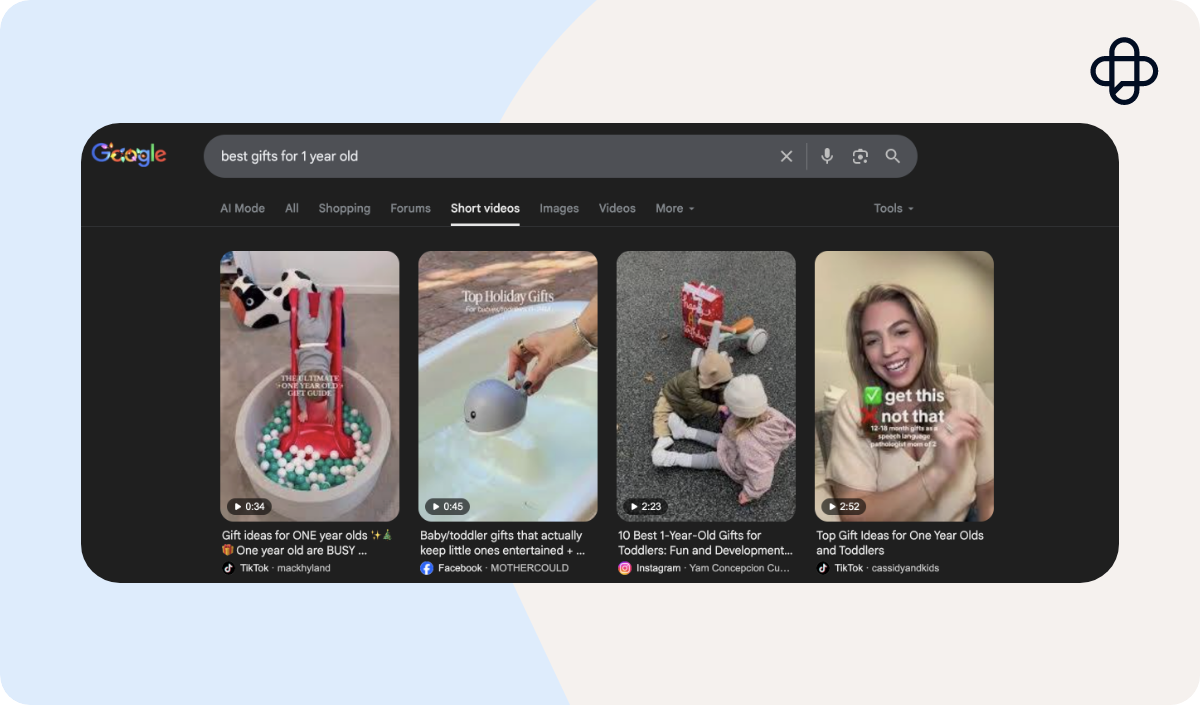
Short-form videos, in particular, have become hugely popular across social media with platforms like TikTok and Instagram Reels – so much so that Google created its own ‘Short videos’ tab to collate content from platforms like TikTok, Facebook, Instagram, and YouTube.

Screenshot showing a search for best gifts for 1 year old on YouTube

Video content can play a vital role in expanding your reach. When Banco del Pacifico created new video content for use across their channels, they used Emplifi to track the results, and saw a dramatic increase in engagement.

Emplifi showed us the importance of video content to increase our metrics. We sustained a 43% retention rate by the first half of the video and reached up to 6.95K users informing about credits in one video of 16 seconds long.
Carlos Coloma
Digital Marketing Analyst

With video ranking on Google as well as social channels, it can be worthwhile building video into your content strategy to maximise your potential reach.

Audio and transcription

Spoken words matter. Platforms automatically transcribe audio and use those transcripts as a ranking signal. Saying your keywords out loud can be just as important as writing them. Including alt text on photos and videos can also improve SEO ranking and accessibility.

Key ranking signals

While each platform has its own nuances, social search ranking is typically influenced by:

  • Keyword relevance in captions, titles, and spoken audio
  • Engagement velocity shortly after posting
  • User interaction history and interests
  • Account credibility and consistency within a topic area

Hashtags vs. keywords

Hashtags still play a role, but they’re no longer the backbone of discoverability. Today’s algorithms favor semantic keywords used naturally in sentences. Instead of stuffing captions with tags, high-performing content reads like it was written for humans rather than algorithms.

With all of this in mind, let’s take a look at how you can create a winning SOSEO strategy.

Step one: Discovery and keyword research

Effective SOSEO starts with listening to what your audience is already talking about.

Listening before optimizing

Social listening tools like Emplifi allow brands to uncover the real language their audience uses. By analyzing conversations, comments, and trending topics, teams can identify recurring questions, pain points, and phrases that signal intent.

This insight is far more valuable than generic keyword lists pulled from traditional SEO tools.

Emplifi helps you see what your audience is searching for quickly and easily, with top keywords across each channel. It also highlights emerging trends to build into your content plan. These key tools combined give you a great starting point when it comes to SOSEO.

Using social search autofill

One of the simplest keyword research techniques lives directly inside the platforms themselves.

Typing a phrase into the TikTok or Instagram search bar reveals autocomplete suggestions based on real user behavior. These long-tail queries – like ‘skincare routine for dry skin’ or ‘carry-on packing hacks’ – are prime SOSEO opportunities.

Competitive insight

Analyzing high-performing competitor content reveals which topics and keywords consistently drive reach. Patterns quickly emerge around phrasing, formats, and themes that algorithms reward.

With Emplifi’s listening and analytics tools, you can stay ahead of competitors by monitoring industry-wide conversations, and prioritizing keywords that show both volume and relevance.

Social listening tools to stay one step ahead of the conversation.

See how Emplifi can help your team to outpace the competition.

Step two: Optimization tactics (the on-page SEO of social)

Once you’ve identified your keywords, you’ll need to optimize your content at every layer.

Profile optimization

Your profile is your homepage. Bios and About sections should clearly state what you do using industry-relevant keywords. A concise, descriptive bio improves both search visibility and user understanding in seconds.

Think about your username and page title too. Do they match what your audience is looking for?

If you have a bricks-and-mortar business, always add an address to show up in local search results.

Content optimization

Every piece of content you upload should be SOSEO-optimized. These small tweaks can make a massive difference when it comes to visibility.

Here’s what to focus on:

  • Visuals: Add on-screen text overlays immediately. The first second matters, both for humans and algorithms.
  • Audio: Say your keywords naturally within the video. Clear pronunciation improves transcription accuracy.
  • Captions: Write complete, descriptive sentences that mirror how users search, rather than relying on hashtags alone.
  • Metadata: Use Alt Text thoughtfully and rename video files before uploading to reinforce context. For example, rather than using video-003.mp4, try morning-skincare-routine.mp4

These signals help platforms confidently categorize your content and surface it in the right searches for the right audience.

Step three: Measuring and tracking success

Unlike traditional SEO, social platforms offer limited visibility into search performance. There’s no universal ‘Search Console’ for social media like there is for Google (although a unified analytics platform like Emplifi can help you see what’s moving the needle.)

What to track instead

Effective SOSEO measurement focuses on indicators of discoverability, including:

  • Impressions originating from Search or Explore
  • Profile visits from non-followers
  • Long-tail view growth weeks after posting
  • Saves and shares, which signal lasting relevance

Turning data into direction

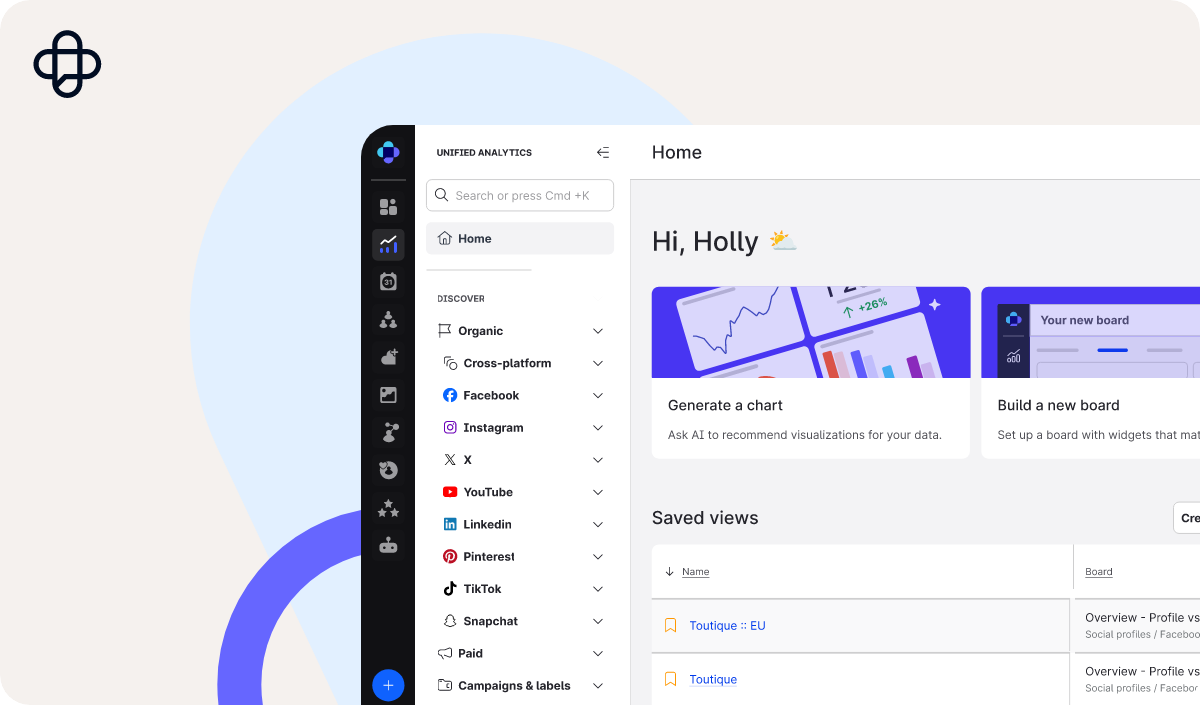
With Emplifi’s unified analytics tools, your team can see which topics, keywords, and formats consistently drive reach over time. AI-driven recommendations help you optimize content performance and get the most out of your marketing spend.

Having data like this at your fingertips makes it much easier to create a solid content strategy that helps you reach new audiences via SOSEO.

Emplifi unified analytics dashboard

Platform-specific SOSEO strategies

TikTok

TikTok excels at problem-solving content. Tutorials, explanations, and ‘how-to’ formats perform best, especially when keywords are spoken early and clearly as these can be picked up in your auto-captions.

@tinaprokas How to get glass hair this is the exact hair routine I use to get glossy hair every time!! I’ve left a little checklist of the routine at the end of the video incase you wanna screenshot and try it yourself!! #hairgloss #glossyhair #glasshair #healthyhair ♬ original sound - Tina Prokas

Include keywords in your titles too so users can instantly see what your content is all about, and the algorithm can feed your video to new audiences. 

Instagram

Instagram search is becoming more keyword-driven, limiting hashtags that users previously attributed to their reach. 

Instead, focus on precise captions and strong Alt Text to help content surface beyond the feed. Creating consistent short form videos via Reels will also help you rank higher – Instagram itself says, ‘Reels is the best place to grow creatively, grow your community and grow your career.’

Meta, Instagram’s parent company, also state that a verification badge will help with search optimization, boosting your visibility in search results on Instagram.

YouTube and Shorts

YouTube bridges social and traditional search, and actually features in Google search results more often than not.

Titles and descriptions that mirror classic SEO practices increase discoverability both on-platform and in Google results. Here, you should always rename any uploaded video files to mirror your content and keywords.

Make full use of YouTube’s search bar to understand the keywords people might be searching for & include them in your title and description as well as mentioning them throughout the video.

Final thoughts: Hook the right audience with a comprehensive SOSEO strategy

Social search is a huge behavioral shift, and it’s not changing anytime soon. Brands that optimize for intent today will own discovery tomorrow.

Start building a strategy that makes your content searchable, discoverable, and measurable. With Emplifi’s social listening and analytics tools, you can uncover the keywords that matter, track long-term visibility, and turn social search into a sustainable growth engine. Get a demo with Emplifi, and see how social search can drive real discovery and demand for your brand.

Frequently Asked Questions

Traditional SEO focuses on optimizing websites to rank in search engines like Google using backlinks, page structure, and on-page keywords. SOSEO (Social Search Engine Optimization) applies similar principles to native social content, helping posts surface in platform search results and Explore feeds on TikTok, Instagram, and YouTube. While both rely on relevance and intent, social platforms prioritize engagement signals, content format, and recency far more heavily.

Start with social listening tools like Emplifi to uncover the exact phrases and questions your audience is already using in real conversations. Pair this with search bar autofill on TikTok and Instagram to identify high-intent, long-tail queries. Reviewing competitors’ top-performing posts also reveals which keywords consistently drive discovery.


Yes, Alt Text gives platforms additional context about what your content contains, helping algorithms better understand and categorize your posts. It also improves accessibility for screen readers, which many platforms actively support and reward. While not a primary ranking factor, Alt Text strengthens overall content relevance when combined with strong captions and engagement.

Some social content can appear in Google search results, particularly YouTube videos and public Instagram posts. Posts with clear titles, descriptive captions, and strong engagement are more likely to be indexed. Optimizing social content like traditional SEO increases its chances of showing up beyond the platform itself.

Social content can begin surfacing in search or Explore results within minutes of posting, especially on fast-moving platforms like TikTok. However, long-term discoverability depends on sustained engagement, relevance, and keyword alignment over time. Posts that continue receiving interactions often gain extended visibility weeks or even months later.

Insights from Emplifi

Explore our latest blogs and comprehensive guides designed to help you master customer experience strategies and drive growth.

Ready to fuel your CX and social media marketing?

Discover how Emplifi boosts efficiency, increases revenue, and scales your social media management — whether you have a small team or a complex product. Let’s talk today.

What can you expect?

  • A partner who cares about your strategy and objectives
  • Live demo showing how we differentiate from the pack
  • No pressure, just advice
Get a demo

Outpace your competition with easy-to-use, innovative solutions

We’re recognized as a market leader in innovation, customer support, and ease of use from these organizations.