Blog
7 min read
Apr 09, 2026

Social CX in 2026: Why social is the new operating system for the modern customer experience

Gabriel Tay Director of Business Consulting at Emplifi
Customer service agent replying to customer via Emplifi platform

Key points:

  • Social media is no longer just a marketing channel. It’s a core part of the customer experience.
  • Siloed social and support workflows lead to slower responses and fragmented customer journeys.
  • Proactive engagement on social allows brands to identify and resolve issues before they escalate, turning potential complaints into opportunities to build trust and loyalty.
  • A unified Social CX platform like Emplifi connects teams, data, and interactions to deliver faster, more consistent service.

Social media has evolved far beyond brand awareness. It’s now a core driver of customer experience (CX). 

Today’s consumers use social platforms to discover new brands, ask questions in comments and DMs, evaluate products, make purchasing decisions, and seek support when issues arise.

These interactions happen in real time and in public or private spaces, making social a critical, always-on touchpoint across the entire customer journey.

But when social remains siloed within marketing and disconnected from your support team, customer experience becomes fragmented.

That’s why Social CX is fast becoming an essential focus for brands.

Social CX describes how brands manage and optimize customer interactions across social media, spanning engagement, support, and service in real time, unifying marketing, customer care, and operations into a single, cohesive experience.

Let’s take a look at how your team can build Social CX into your social media marketing strategy.

What you’ll learn in this guide

In this guide we cover:

  • How social media evolved from a marketing channel to a customer experience engine
  • Why social media is now the primary channel for customer interactions
  • Why marketing and customer support must be unified in Social CX
  • What a unified Social CX workflow looks like
  • How to scale proactive social customer care with AI and automation
  • How public resolution shapes Social CX
  • What infrastructure is required for a social-first customer experience strategy?
  • How Emplifi enables a unified CX operating system

How social media evolved from a marketing channel to a customer experience engine

Early social media functioned primarily as a broadcast channel. Brands scheduled content and measured success through reach and engagement, while customer support remained siloed in traditional channels like phone and email.

Today, that model no longer holds. As customer expectations have shifted, social platforms have evolved into real-time, two-way communication channels, laying the foundation for modern Social CX.

Consumers now turn to social media not just to discover brands, but to interact with them directly and they expect fast responses. In fact, Emplifi data shows that brands risk losing up to one-third of customers if they take more than 24 hours to respond to a direct message and only 8% of customers are willing to wait more than 48 hours for a reply.

In many industries, expectations are even higher. In fast-moving sectors like retail and telecommunications, customers increasingly expect same-day, if not near-instant, resolution.

Team members looking at laptop, checking their customer feedback

Build a marketing strategy that drives results

Download our roadmap template to plan, prioritise, and scale

Download template

At the same time, traditional support channels are becoming less appealing. Long wait times on phone calls or delayed email responses create friction, while social platforms like Facebook, Instagram, TikTok, and X offer immediacy, convenience, and transparency. Customers can see when a brand has viewed their message, reinforcing expectations for timely engagement.

Emplifi pro tip: 55% of frequent social media users most commonly use Facebook for customer service-related issues, while 47% use Instagram. Identifying where your customers are most active is critical to delivering an effective Social CX strategy.

Why social media is now the primary channel for customer interactions

Social media platforms now offer more advanced features for both brands and consumers, including real-time messaging through direct messages (DMs). As a result, social media has become a primary entry point for customer communication, with 56% of consumers preferring to message brands rather than call customer service.

For organizations, social has shifted from being upstream of customer experience to its epicenter. Customers don’t just engage with content; they ask questions, resolve issues, and expect support directly within social platforms.

Because these interactions are often public, their impact extends far beyond a single customer. Every response, or lack of one, signals how a brand operates. In fact, 58% of consumers say brand responses on social media are important when forming perceptions.

This makes social media performance more than a measure of engagement. It is directly tied to customer satisfaction, brand perception, and ultimately, business outcomes.

As the volume and speed of these interactions continue to grow, managing Social CX manually becomes increasingly unsustainable. This is where AI, and increasingly, autonomous AI, plays a critical role.

By detecting customer intent, prioritizing conversations, and enabling faster, more consistent responses, AI helps brands scale real-time engagement and move from reactive support to proactive, always-on customer experience management.

Community showcasing the prioritization and the simple feed.

Why marketing and customer support must be unified in Social CX

Despite this shift, many organizations still operate with a divide between marketing and customer support. Social media teams are responsible for publishing content and monitoring engagement, while support teams manage service requests through separate systems.

But this only creates friction at a time when your team needs to move fast.

For instance, customer issues may require manual escalation where community managers relay information to support, wait for a response, and then reply to the customer. This delay raises the risk of miscommunication and creates inconsistency.

When you’re receiving hundreds, if not thousands, of messages a day, these issues multiply. Response times rise, customer satisfaction drops, and team motivation suffers.

What a unified Social CX workflow looks like

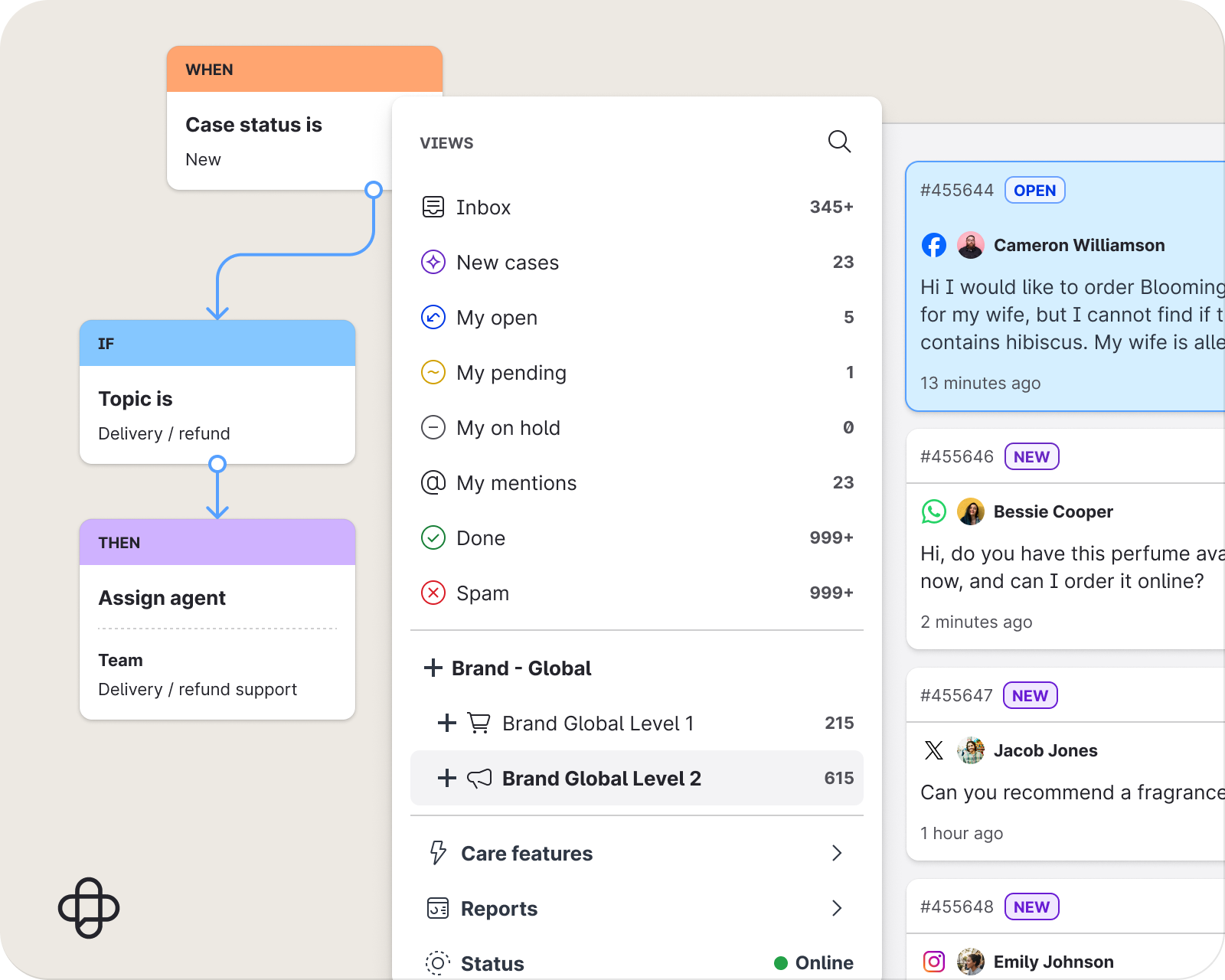
A unified autonomous CX platform connects community managers and support agents in one place, turning social interactions into trackable workflows.

That means:

  • Every comment, mention, and direct message is automatically captured in a unified inbox
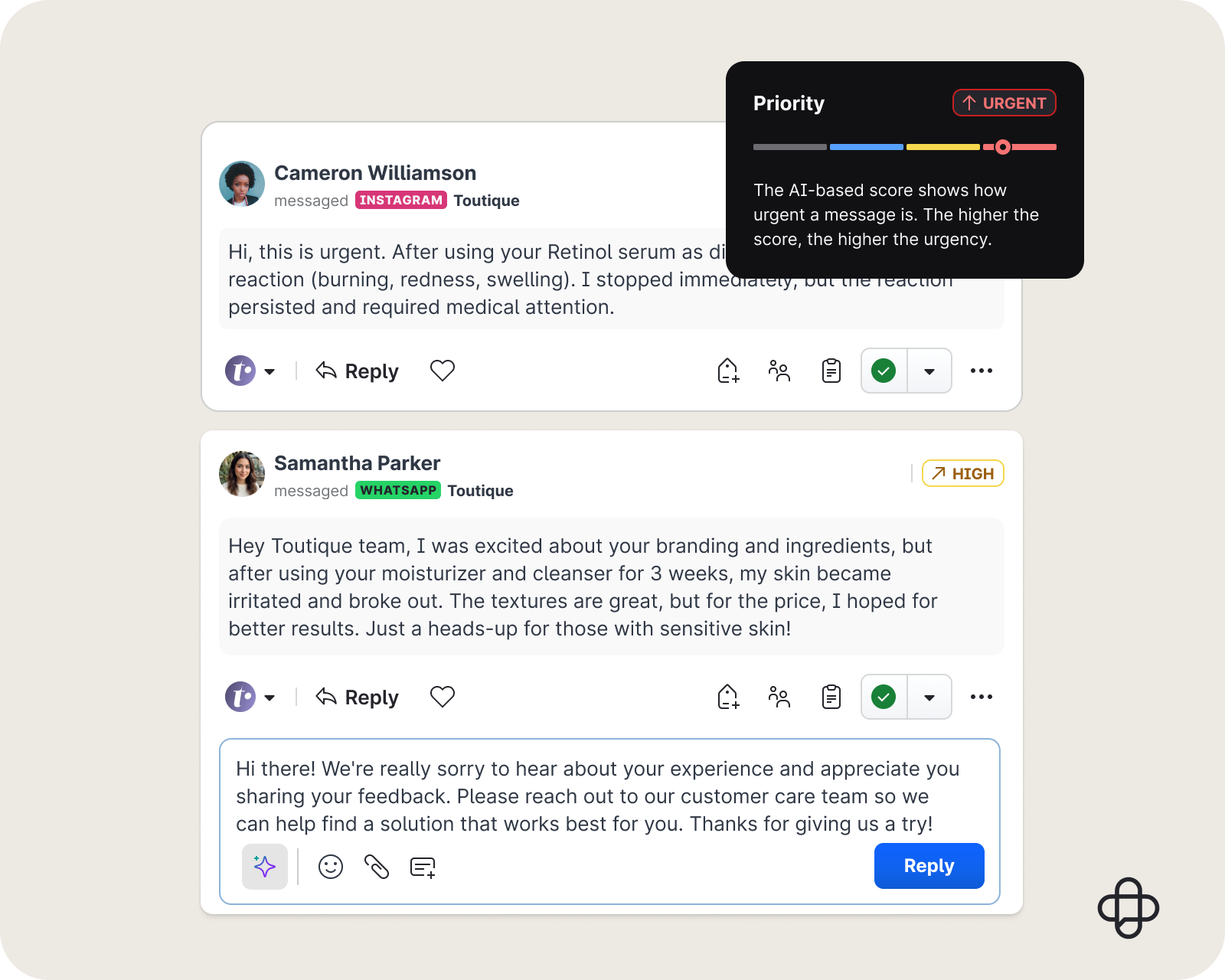
  • Interactions are routed to the right team based on priority, intent, or sentiment
  • Conversations are enriched with customer data and logged directly into the CRM
  • Teams can track, manage, and resolve social interactions like any other support ticket

Instead of siloed tools and manual handoffs, social becomes a fully integrated part of your customer care infrastructure.

Siloed approach Unified Social CX
Separate marketing and support teams Aligned teams with shared workflows
Manual escalation between teams Automated routing based on intent
Delayed and inconsistent responses Faster, consistent responses
Limited visibility into customer context Unified view of interactions
Disconnected tools and data silos Integrated platform with CRM sync

Most importantly, it ensures that whether a customer reaches out via Instagram, TikTok, or any other platform, they receive the same level of care and continuity as they would through a traditional support channel.

Emplifi Care workflow

How to scale proactive social customer care with AI and automation

Traditional support is reactive, relying on customer-initiated contact and team response. This works in stable environments but is less effective inside high-visibility social spaces where issues can quickly escalate into viral complaints.

Reactive support Proactive Social CX with AI
Waits for customers to report issues Detects issues early through sentiment and keyword signals
Responds one conversation at a time Identifies patterns across multiple conversations
Issues escalate before action is taken Flags risks early before they become widespread
Private, one-to-one responses Public acknowledgment reduces uncertainty at scale
High volume of repetitive inquiries Deflects repeat queries and reduces support load

On the other hand, social media allows brands to identify patterns and trends in real time so that they can address wider concerns as soon as possible. When multiple customers raise similar issues, such as delivery delays or product defects, these signals can be detected early via AI and automation.

By leveraging AI-driven tools that can flag spikes in negative sentiment or important keywords, your team can identify potential crises early and address problems before they escalate.

Instead of waiting for negative inbound messages to increase, they can acknowledge issues publicly, reducing customer uncertainty.

This can shift brand perception with 46% of customers saying they won’t have a reason to leave after a bad experience if the issue is resolved well. Plus, it reduces pressure on contact centers by deflecting repeat queries.


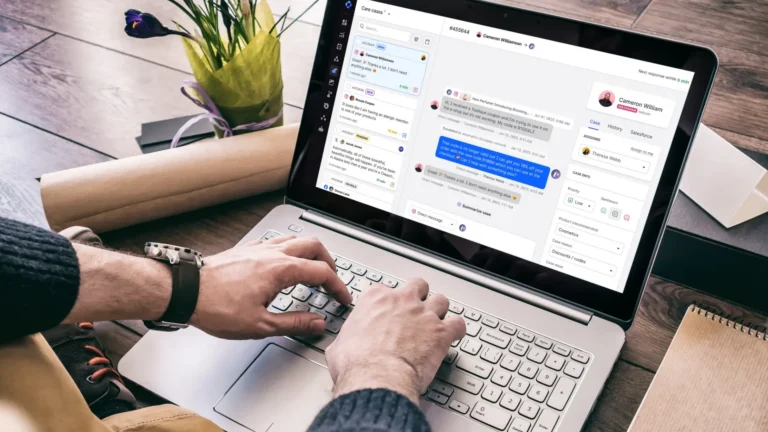
Customer agent typing on laptop

Turn social customer care into your competitive edge

Our 20 minute product tour will show you how

Take a product tour

How public resolution shapes Social CX

Unlike other support channels, social customer care is visible. When a brand responds in public, the interaction becomes part of a wider story.

A single well-handled interaction can influence not just the individual customer but a broader audience observing the exchange.

For example, Vessi saw increasing volumes of customer conversations across social channels, particularly during peak demand periods. Their two-person social team struggled to prioritize urgent queries with native platform analytics, and couldn’t tap into trends or keywords with the limited data available.

By using Emplifi’s social listening and workflow automation, the brand was able to surface customer concerns like ‘wet socks’ in real time, and tag comments so they were distinguishable by theme.

This wealth of data allowed them to curate shared notes and saved replies, making it easier to collaborate and send the correct information to their customers.

They were also able to:

  • Identify and prioritise urgent customer interactions in real time
  • Route conversations to the right teams automatically
  • Reduce manual workload while maintaining response quality

This resulted in 50% faster response times, while enabling the team to scale support more efficiently.

More importantly, social feedback became part of a structured workflow, allowing Vessi to improve both response speed and overall customer experience.

Emplifi has really helped us filter urgent things so we can respond when it matters, and the reporting capabilities are just chef’s kiss. The insights don’t just shape our strategy, they help us actually understand our customers.
Taylor Knight
Social Media Manager at Vessi

What infrastructure is required for a social-first customer experience strategy?

Managing social natively may work for small teams with limited customer dialogue, but at enterprise scale, it quickly grows unsustainable.

Each platform operates independently, with its own interfaces. That fragmentation makes it difficult to:

  • Keep consistent response standards
  • Track conversations across channels
  • Measure performance holistically
  • Coordinate teams effectively

Without a central system, organizations lack the control and visibility to ensure consistent customer experiences.

How Emplifi enables a unified CX operating system

This is where platforms such as Emplifi play a key role.

Emplifi is a customer experience platform uniting social media management, care, and analytics. Instead of switching tools, teams manage every customer interaction in one place.

Key capabilities include:

  • A unified inbox for all social channels
  • Workflow automation for routing and prioritization
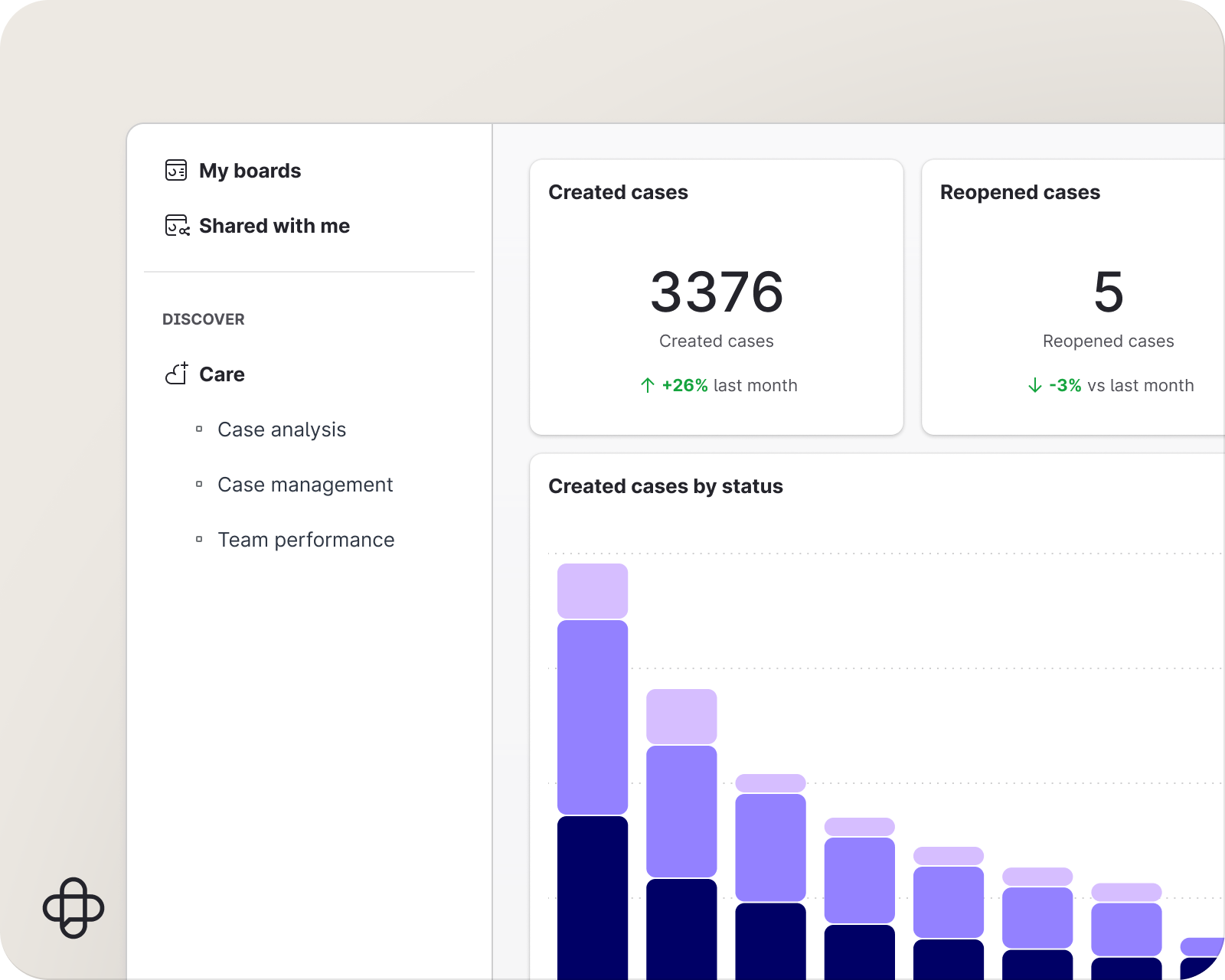
  • Integrated analytics to measure performance and sentiment
  • Collaboration tools that connect marketing, support, and operations

Cases per agent

This allows organizations to treat social media as an integral part of customer experience, rather than a disconnected awareness channel.

For instance, Salomon used Emplifi to deliver social customer care at scale across its global network of channels.

As customer conversations increased across more than 80 social profiles, Salomon needed a way to unify communication between its social media teams and customer service partners.

By implementing Emplifi’s social customer care platform, the brand was able to centralise interactions and connect social directly with systems like Salesforce.

With Emplifi in place, Salomon achieved:

  • 99.8% of cases handled efficiently through a connected system
  • 70% faster case handoffs with seamless routing to customer service teams
  • 45% reduction in response time after moving from community management to Care

Customers now receive a faster, more consistent experience while the Salomon team works within a more efficient integrated system.

With Emplifi, transitioning from Community to Care is seamless. I can simply flag an issue, like a warranty request, and with just one click, it’s routed to the right team. It’s really that easy. What used to take multiple steps now just flows effortlessly into the hands of the experts.
Salomé Mougel
Social Media Marketing Assistant

Final thoughts: Why the future of customer experience is social-first

Social media is no longer just a communication channel. It is a core part of the infrastructure that connects customer interactions and internal workflows.

It’s where trust is built and issues can be resolved quickly to meet customer expectations.

Delivering an omnichannel CX strategy requires more than adding social to the mix. It requires rethinking how customer experience is designed and delivered, with social at its core.

If your social strategy is still operating in isolation, now is the time to integrate Social CX into your broader customer experience strategy.

Unify your social, care, and customer data into one seamless experience. Book a demo with Emplifi to get started.

Social CX (social customer experience) refers to how brands manage customer interactions, support, and engagement across social media platforms. It includes responding to enquiries, resolving issues, monitoring sentiment, and using insights to improve the overall experience.

Social media acts as an operating system for CX because it sits at the centre of the customer journey. It connects discovery, engagement, support, and feedback within a single environment, allowing brands to manage the entire experience in real time.

Effective social customer care improves response times, increases customer satisfaction, and builds trust. This leads to higher retention, reduced churn, and stronger brand loyalty, all of which contribute to long-term revenue growth.


Enterprise brands scale social customer service by using a centralized platform that unifies channels, automates workflows, and provides real-time insights. This allows teams to manage high volumes of interactions efficiently while maintaining consistency and quality.

Emplifi brings social media marketing and customer care into a single platform, allowing teams to manage conversations, assign tasks, and track performance in one place. By centralising workflows and providing a shared view of customer interactions, Emplifi helps marketing and support teams collaborate more effectively and deliver consistent experiences across every channel.

Emplifi improves response times by using automation, intelligent routing, and a unified inbox to prioritise and distribute incoming messages. This ensures that urgent or high-impact enquiries are handled quickly, while giving agents the context they need to respond efficiently without switching between tools.

Insights from Emplifi

Explore our latest blogs and comprehensive guides designed to help you master customer experience strategies and drive growth.

Ready to fuel your CX and social media marketing?

Discover how Emplifi boosts efficiency, increases revenue, and scales your social media marketing — whether you have a small team or a complex product. Let’s talk today.

What can you expect?

  • A partner who cares about your strategy and objectives
  • Live demo showing how we differentiate from the pack
  • No pressure, just advice
Get a demo