For years, companies have relied purely on surveys to understand customer experience. You send a follow-up email after a purchase asking them to rate their experience from one to ten.
But what are the chances of customers actually responding?
Only around 20 – 30% of customers fill out email and web based surveys, and the ones who do are usually the happiest or the angriest. That leaves a massive gap in the middle where the majority of real customer experiences actually live.
Meanwhile, customers are sharing their honest opinions somewhere else entirely: social media.
They’re posting product reviews on TikTok, discussing service frustrations on Reddit, and praising or criticizing brands in Instagram comments and YouTube videos.
This is feedback you’re unlikely to gather from a simple survey.
A modern Voice of the Customer (VoC) strategy needs to capture these conversations, analyze them at scale, and turn them into actionable insight. With AI-powered tools like Emplifi’s autonomous CX software, you can transform unsolicited social feedback into better products, stronger service, and smarter decision-making.
Traditional feedback tools like CSAT and NPS surveys have long been used to measure customer experience. But there are a few drawbacks to relying solely on these surveys for customer feedback:
In reality, customers rarely wait for a survey to share their opinion. They talk about brands organically across social platforms and communities, sharing everything from product experiences to frustrations around features, shipping delays and customer support interactions.
This kind of unsolicited feedback analysis reveals what customers actually think, and can be crucial in honing your CX strategy.
For example, a product issue might appear in hundreds of TikTok comments or Reddit threads long before it shows up in survey results. If you aren’t tuned into these conversations, you could be missing the most authentic form of customer feedback.
That’s why the concept of building a social media analysis into your VoC strategy has become key for brands who want to gain a holistic understanding of their customers’ concerns.
Social VoC expands the idea of customer feedback beyond traditional surveys. Instead of relying on direct responses alone, it aggregates customer conversations happening across your digital channels.
A Social VoC strategy encompasses:
Together, these signals paint a much more complete picture of the customer experience.
But with millions of these conversations happening every day across many different platforms, it’s impossible to manually review each one.
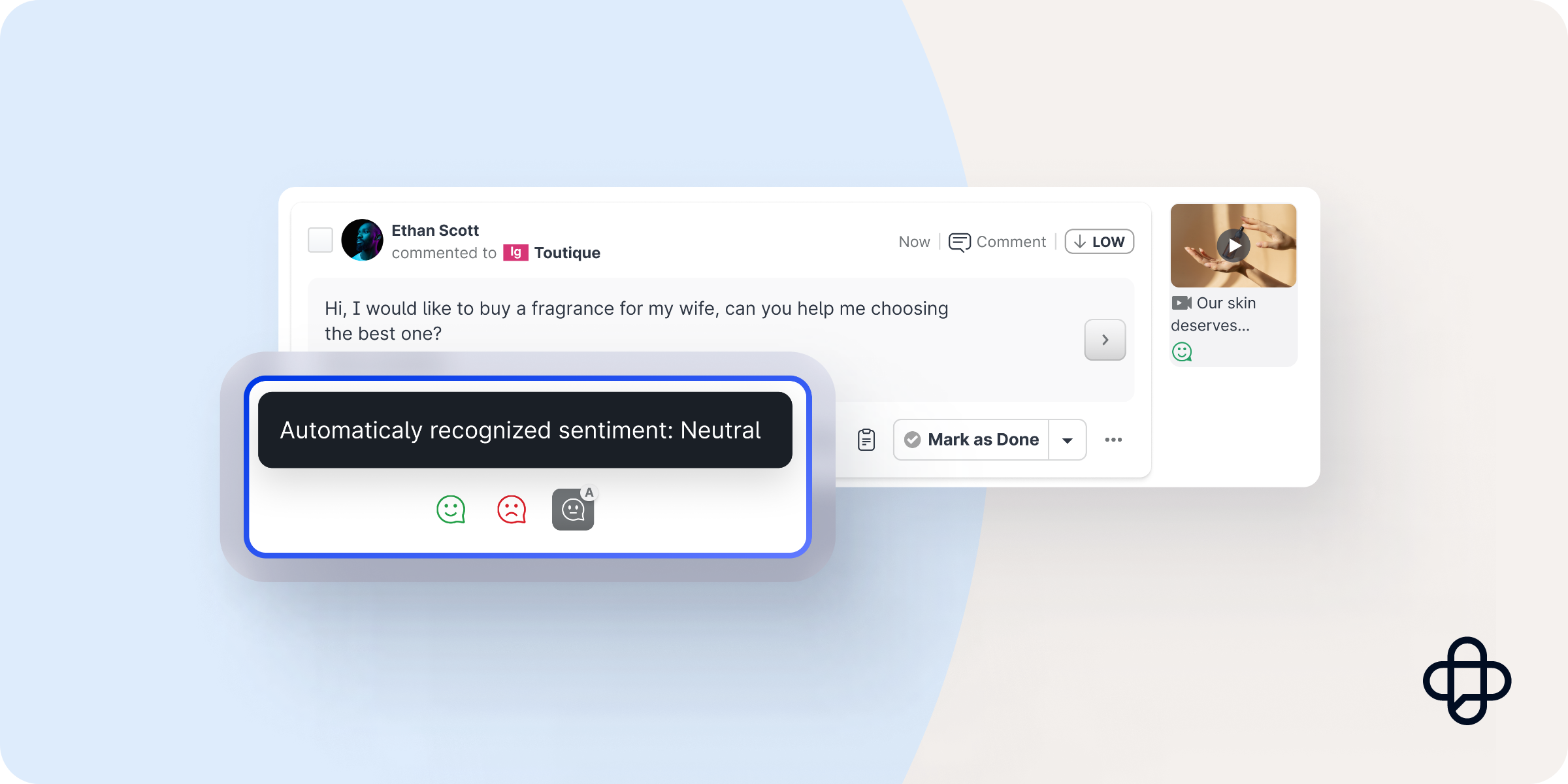
This is where an AI-powered tool like the Emplifi AI CX platform can help you manage feedback at scale. It captures and analyzes massive volumes of social data, so that scattered conversations are unified in one place by:

One of the biggest missed opportunities in VoC programs is organizational silos.
Traditionally, social media insights stay within marketing teams. But customer feedback is just as valuable for product development, CX teams, and leadership.
Social media feedback often highlights:
If hundreds of customers complain that a shoe fits too narrow or a software feature is confusing, that insight needs to reach the product team as soon as possible.
Your VoC strategy should connect insights across departments so they can drive real improvements, instead of languishing in a social media report.
AI-powered platforms help by automatically categorizing and routing feedback. For example, tools like Emplifi can:
Instead of anecdotal feedback, product teams gain access to quantified customer insight, making social media a key source of product intelligence.
Customer care is a key part of a VoC strategy with customer experience often judged by how quickly brands respond to problems. For instance, 35% of consumers expect a brand response within an hour when engaging on social media.
But to stay ahead of the curve, you need to anticipate issues before they escalate. AI-powered sentiment analysis makes this possible.
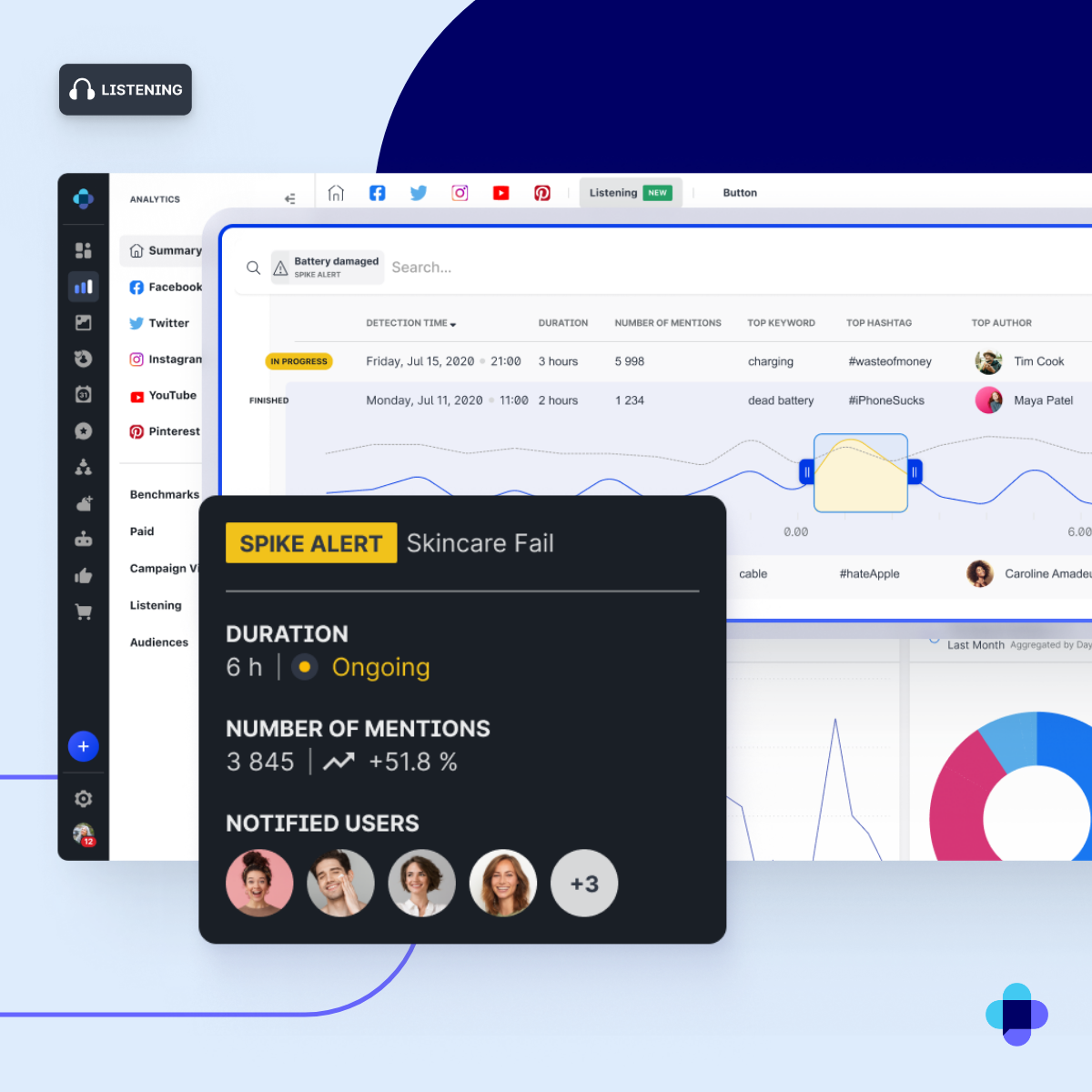
By monitoring conversation trends in real time, brands can detect sudden spikes in negative feedback that signal potential problems.

Examples include:
Instead of waiting for support tickets to flood in, your CX team can respond early with proactive communication.
This might include:
When brands acknowledge concerns publicly and resolve issues transparently, customers often become stronger advocates.
This kind of social media customer experience management can significantly impact brand perception, with 58% of consumers saying brand responses on social media are important. In many cases, a thoughtful public response to a complaint can be seen by hundreds or thousands of other customers, amplifying its impact far beyond a private support interaction.
Discover how leading brands manage social strategies more efficiently.
Once you’ve ensured you’re capturing feedback across multiple digital channels, you can connect those insights to business outcomes.
You might measure how customer sentiment influences metrics such as:
For example, identifying a recurring product issue through social feedback might allow teams to resolve the problem quickly, reducing support tickets and preventing churn.
Similarly, identifying emerging product preferences can guide product development and marketing strategy.
That’s why a successful VoC program will typically operate as a continuous feedback loop:
This closed-loop system ensures that customer feedback doesn’t just sit in dashboards, it actually makes a meaningful difference.
Crayola uses Emplifi’s AI-powered social listening to turn online conversations into real-time insight.
Analyzing social discussions across platforms like TikTok, the team can quickly identify emerging trends and understand how audiences interact with its products.
This approach has delivered measurable impact:
Instead of manually reviewing thousands of social posts, AI surfaces the conversations that matter most, helping Crayola respond faster and adapt its strategy in real time.
It’s a clear example of how Voice of the Customer social media analysis can move brands from reactive monitoring to proactive insight.
To make VoC truly effective, you need the right tools and processes to turn feedback into action.
A strong VoC strategy should include:
When these elements work together, you gain a deeper understanding of your customers, and can continuously improve the experience you deliver.
Platforms like Emplifi help bridge the gap between raw customer conversations and actionable insight by combining social listening, customer care, and CX analytics in one platform.
Customer experience is no longer defined solely by surveys and support tickets.
The real Voice of the Customer lives in the conversations customers are already having, across social media, forums, and online communities.
Brands that capture and analyze this feedback gain a powerful advantage: the ability to identify problems earlier, adapt faster, and build stronger relationships with their audiences.
Capture the real, unfiltered Voice of the Customer across every digital channel and turn feedback into better experiences with Emplifi’s autonomous CX tool.
Voice of the Customer (VoC) refers to the overall strategy of collecting and analyzing customer feedback to improve products and experiences. Social listening is one component of VoC that focuses specifically on conversations happening across social media and digital channels.
AI-powered listening tools analyze large volumes of social media conversations, reviews, and comments using natural language processing and sentiment analysis. This allows brands to identify themes, trends, and customer concerns quickly.
Social VoC doesn’t necessarily replace surveys, but it complements them by capturing unsolicited feedback that surveys often miss. Together, these sources provide a more complete view of the customer experience.
Product teams can analyze social conversations to identify feature requests, usability issues, and emerging customer needs. This insight helps prioritize product improvements and inform future development decisions.
The Emplifi CX platform brings together social media management, social listening, influencer marketing, and customer care in one unified environment. By centralizing data from social channels, reviews, and customer conversations, teams can monitor sentiment, identify trends, and manage customer interactions without switching between tools.
Emplifi uses AI-powered analytics to surface key insights from social conversations and customer feedback. These insights can then be routed to the right teams — such as marketing, customer care, or product — so organizations can respond faster, improve customer experience, and make data-driven decisions.
Discover how Emplifi boosts efficiency, increases revenue, and scales your social media marketing — whether you have a small team or a complex product. Let’s talk today.