



Blog
12 min read
Mar 24, 2026

Rethinking CX in travel and hospitality: the new imperative

Emplifi Team Social Media Marketing Experts

Key points

  • 76% of customer complaints on social media go unanswered in travel & hospitality
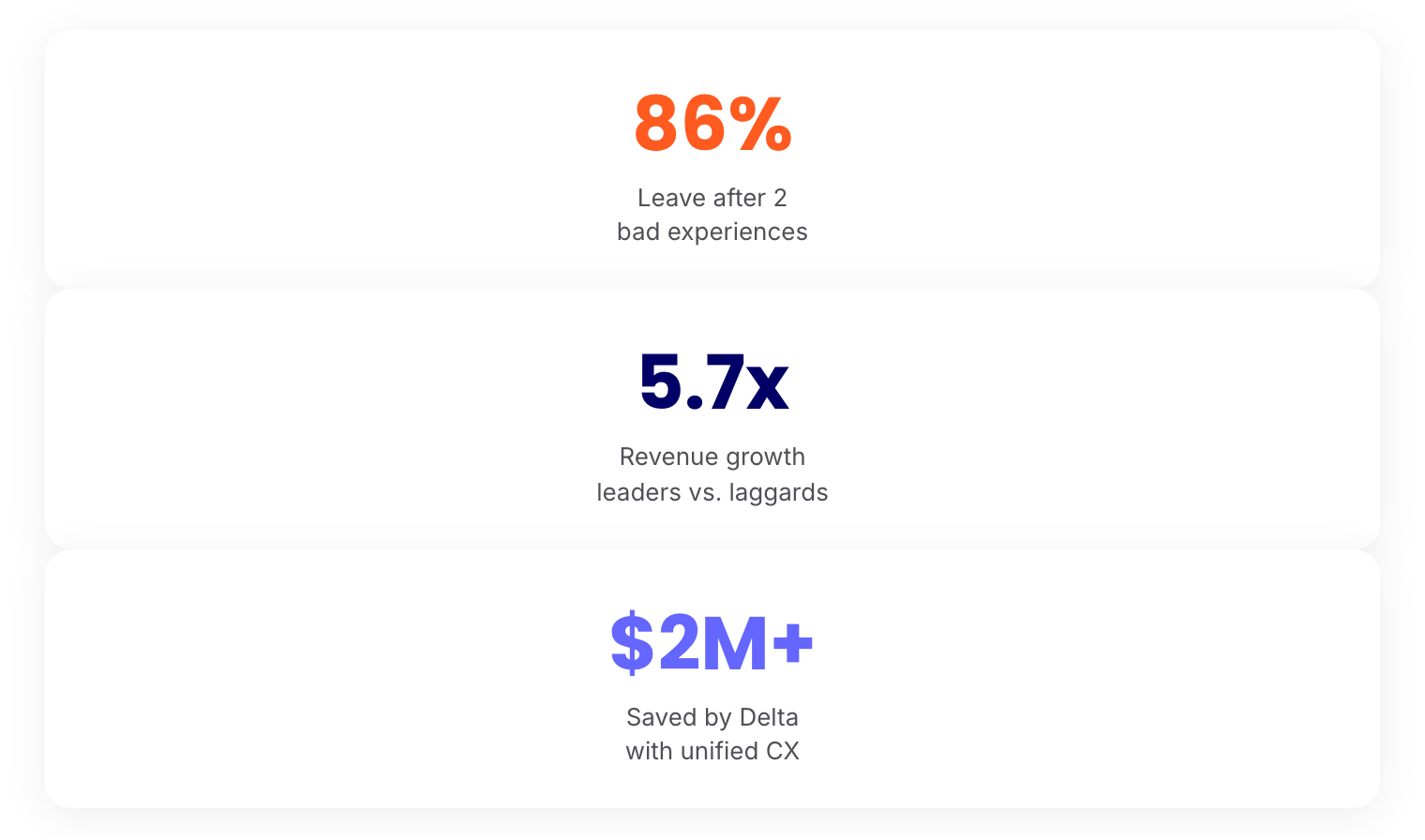
  • 86% of consumers leave a brand after just two poor experiences
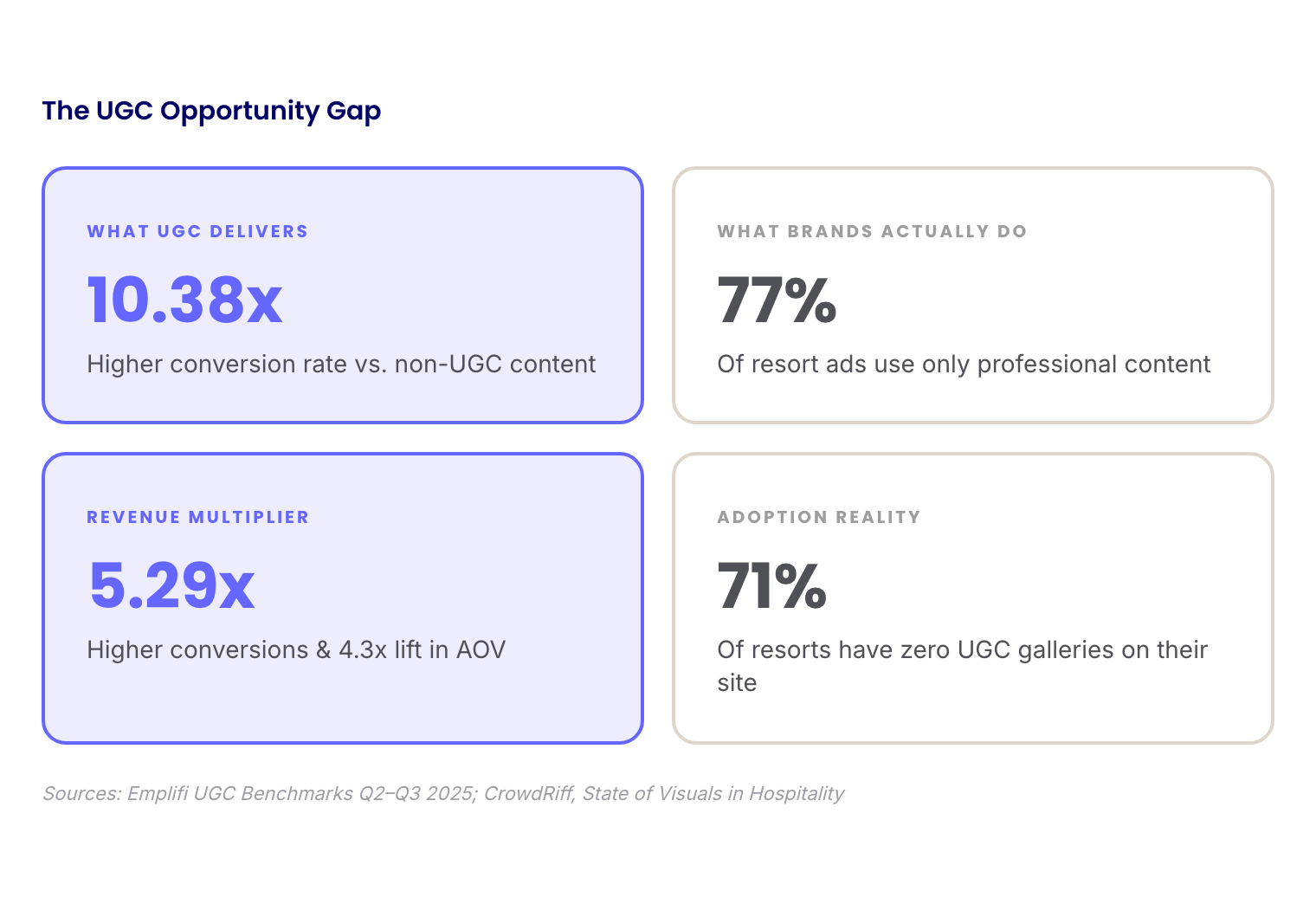
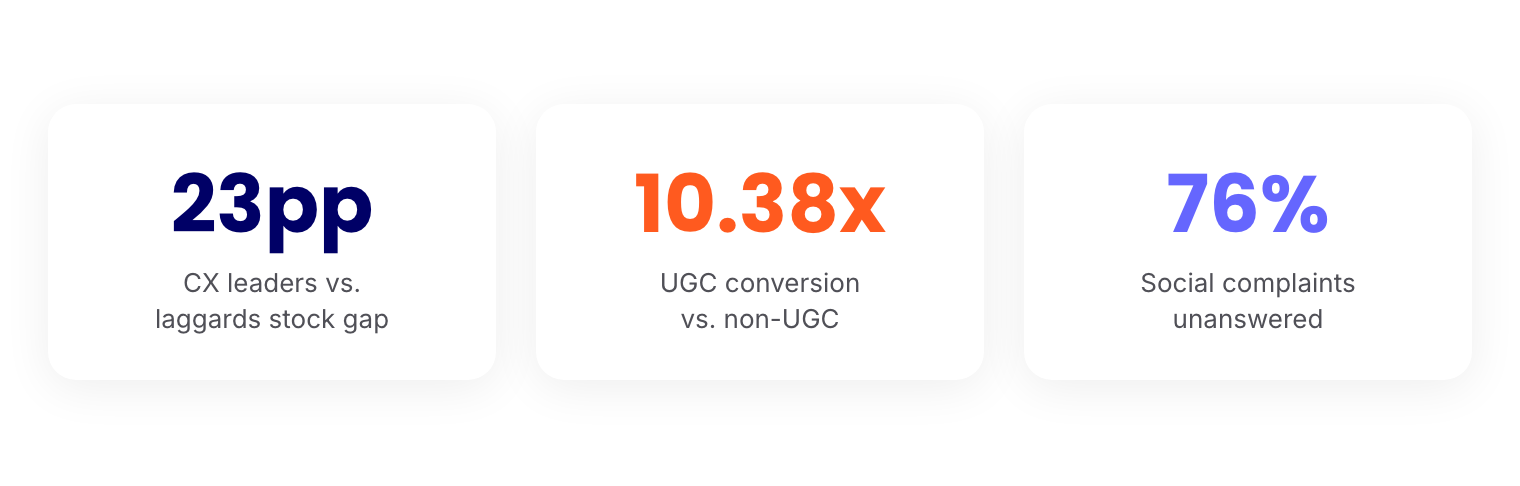
  • UGC drives 10.38x higher conversion rates, yet 77% of resort ads use only professional content
  • Brands using unified CX platforms see 26% higher first-contact resolution and 40%+ faster resolution speeds

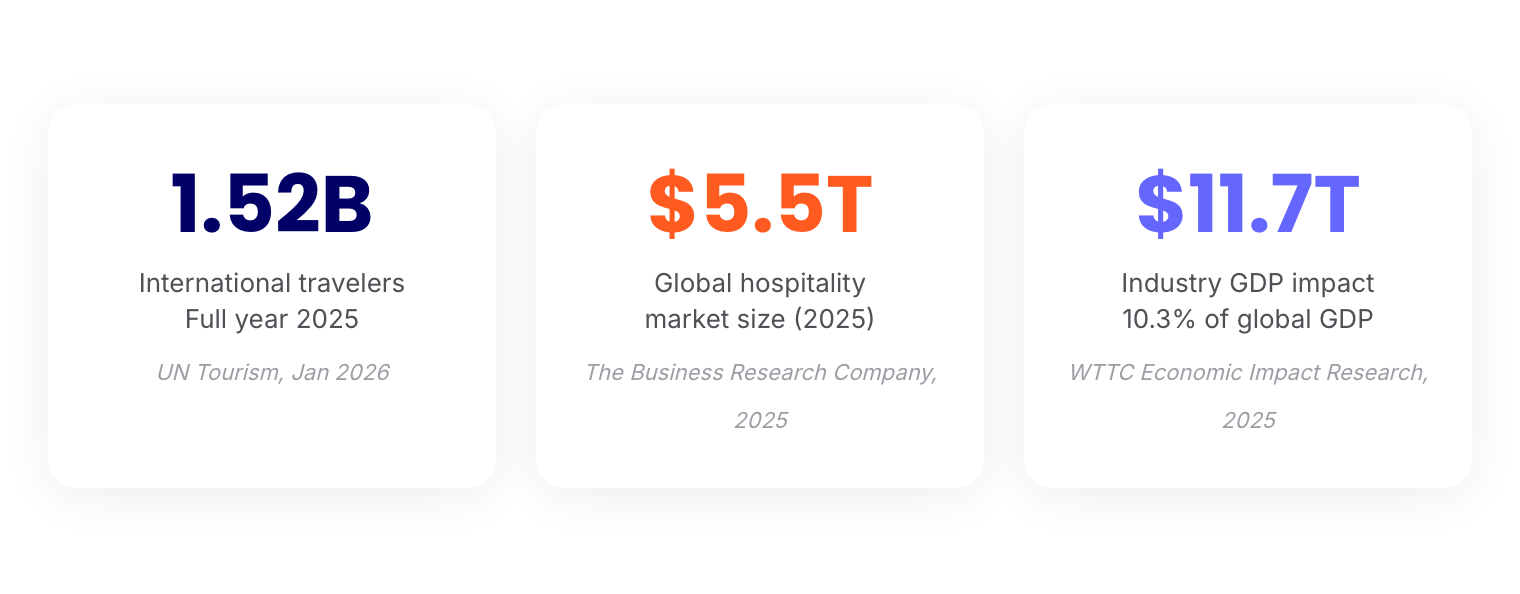
Travel and hospitality is in a paradox. Global tourism reached a new post-pandemic record of 1.52 billion international travelers in 2025, up 4% year-over-year. The hospitality market expanded to $5.5 trillion, and the industry’s GDP impact hit a record $11.7 trillion, roughly 10.3% of global GDP.

Yet the brands best positioned to capture this record demand aren’t the ones with the biggest budgets. They’re the ones that listen, respond, and act on customer signals, in real time, across every channel.

01 stat row 152B


The CX performance gap

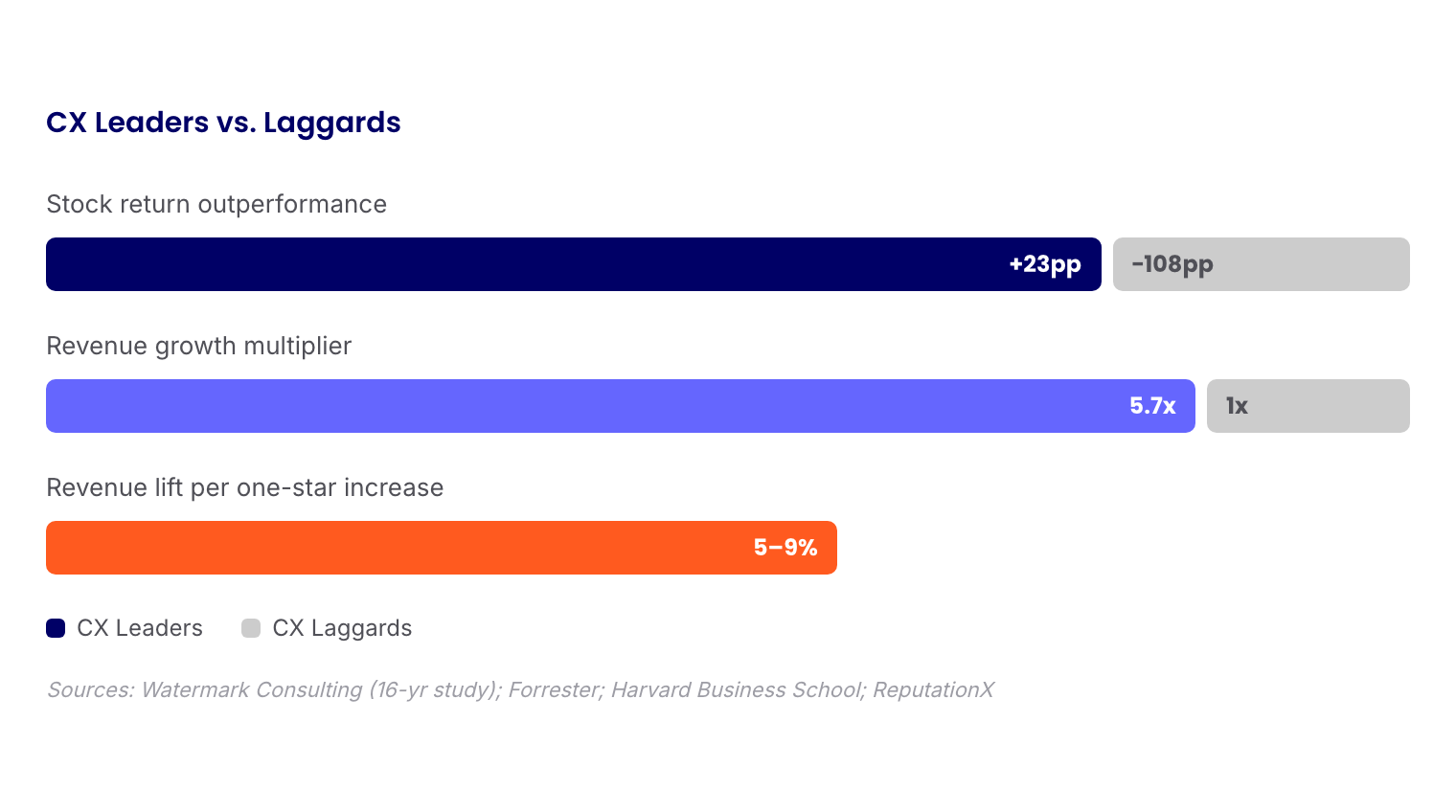
A 16-year Watermark Consulting study found CX leaders outperformed the S&P 500 by 23 percentage points in cumulative stock returns, while CX laggards trailed by 108 points. Forrester data shows CX leaders grow revenue 5.7x faster than laggards.

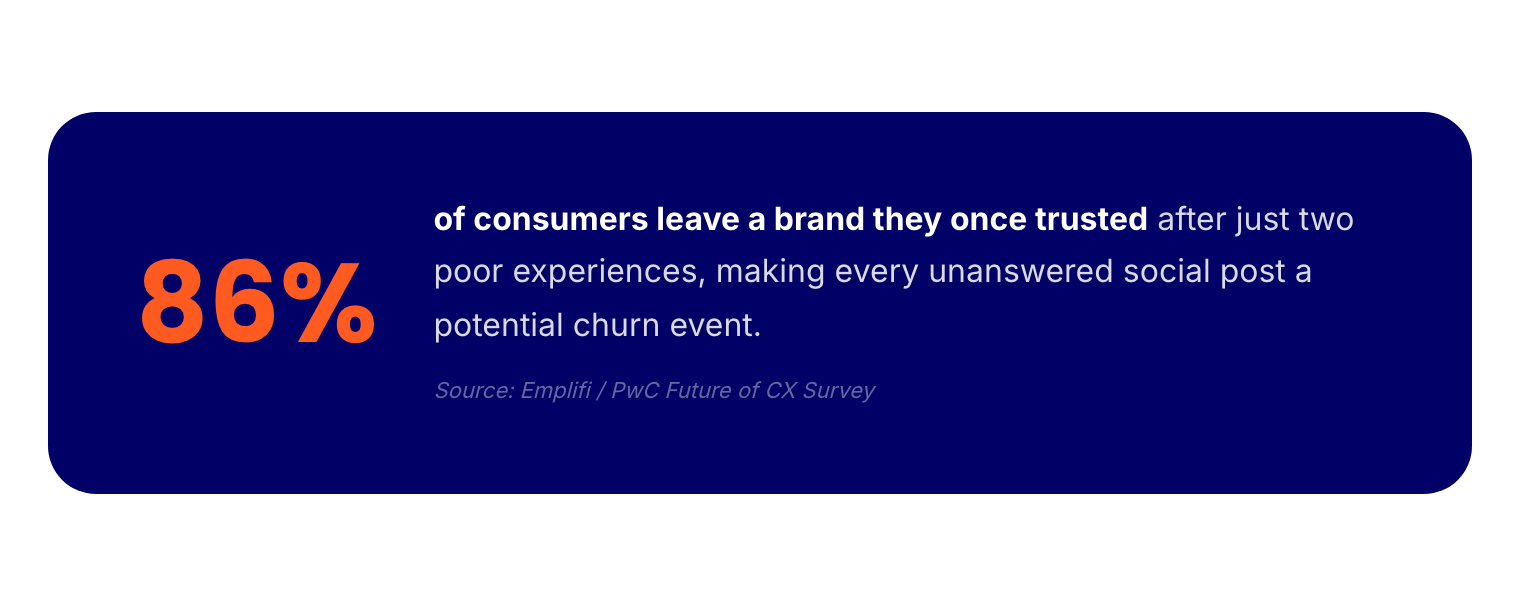
In hospitality, the stakes are even sharper: a one-star improvement in a hotel’s online rating can lift revenue by 5–9%. Yet 86% of consumers will leave a brand they trusted after just two poor experiences.

02 bar chart CX Leaders

03 pull quote 86pct


Social media as the new CX layer

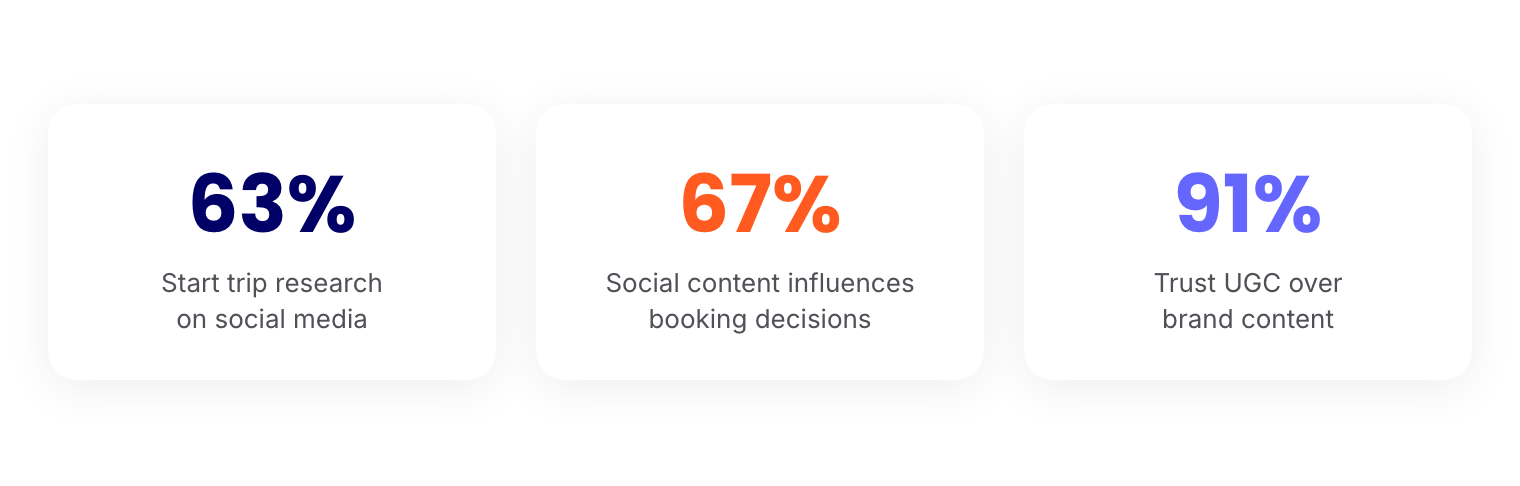
Google’s dominance as the starting point for travel research is eroding. 63% of travelers now start trip research on social media, and 67% say social content directly influences their booking decisions. Meanwhile, 91% of consumers trust user-generated content over brand-produced materials.

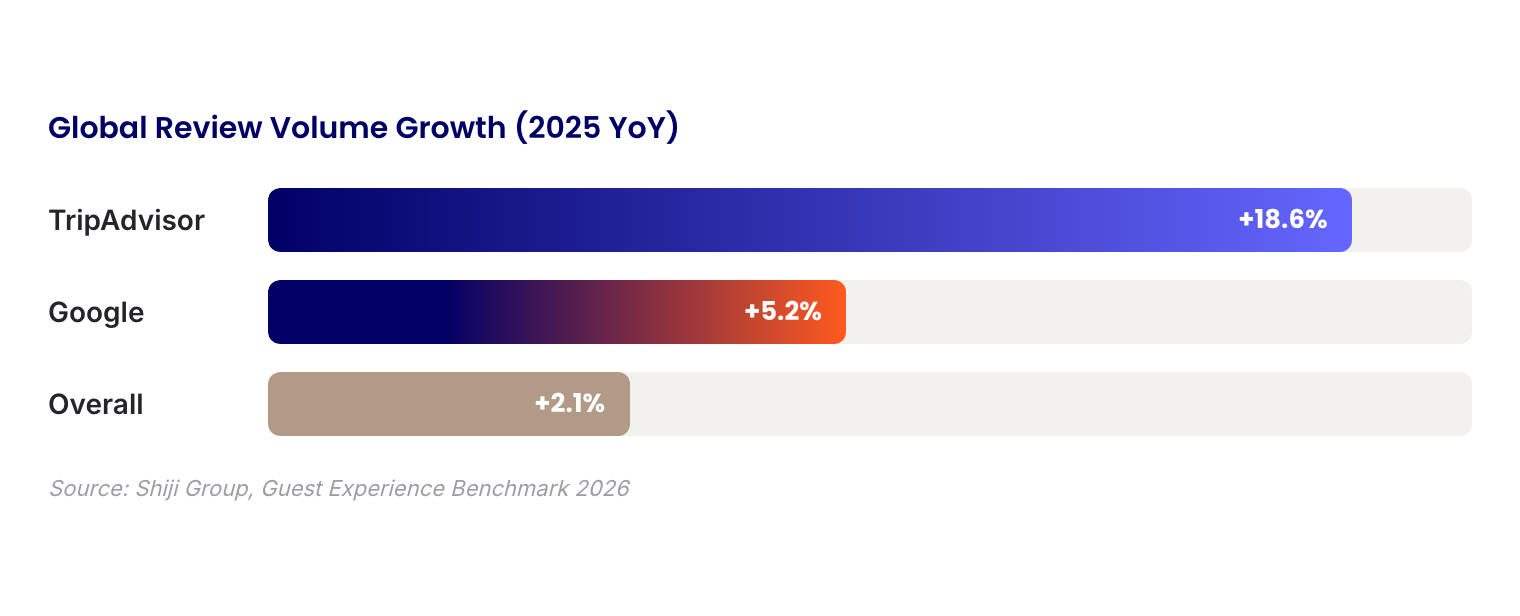
Reviews grew 2.1% globally in 2025, with TripAdvisor (+18.6%) and Google (+5.2%) leading the surge. The volume of customer feedback is growing. The question is whether brands are listening.

04 stat row 63 67 91

The response gap

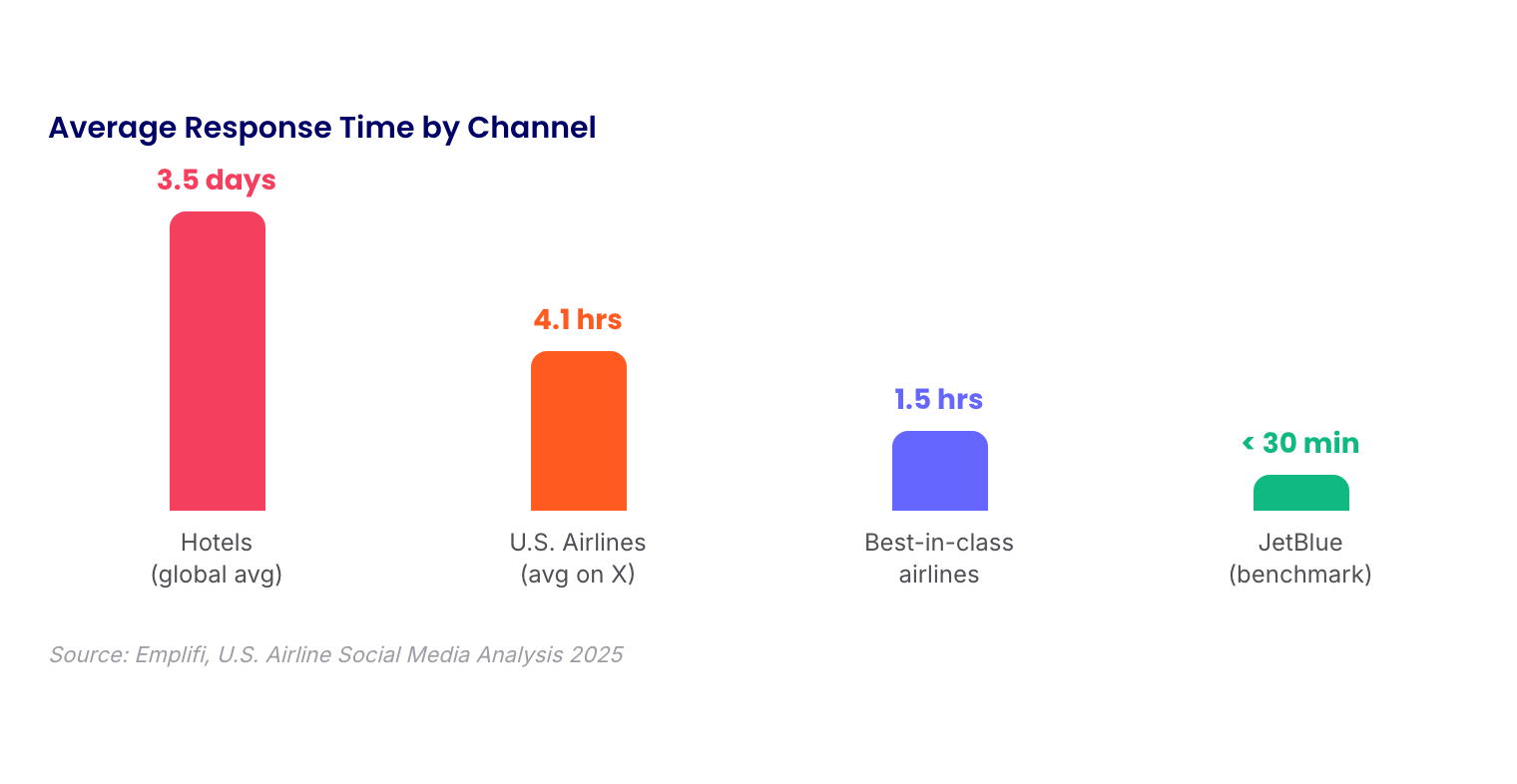
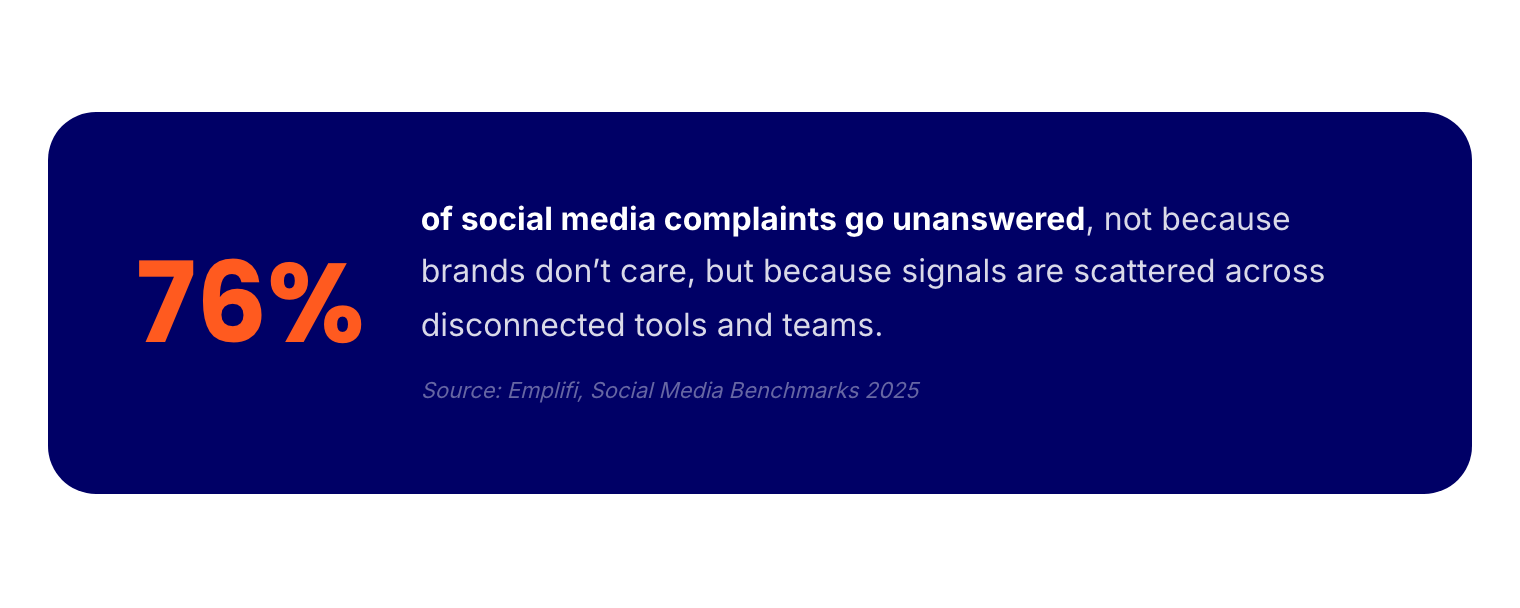
The response gap is staggering: 76% of social complaints go unanswered, and average hotel response times sit at 3.5 days, while consumers expect under one hour. U.S. airlines respond in 4.1 hours on average on X, though some carriers like JetBlue respond in under 30 minutes.

05 gauge chart response time

For brands with physical locations, the stakes compound: Deloitte found that 75% of hotel guests cite their digital experience as a factor in rebooking decisions. Every slow response is a potential lost booking.

06 growth chart review volume


The fragmentation problem

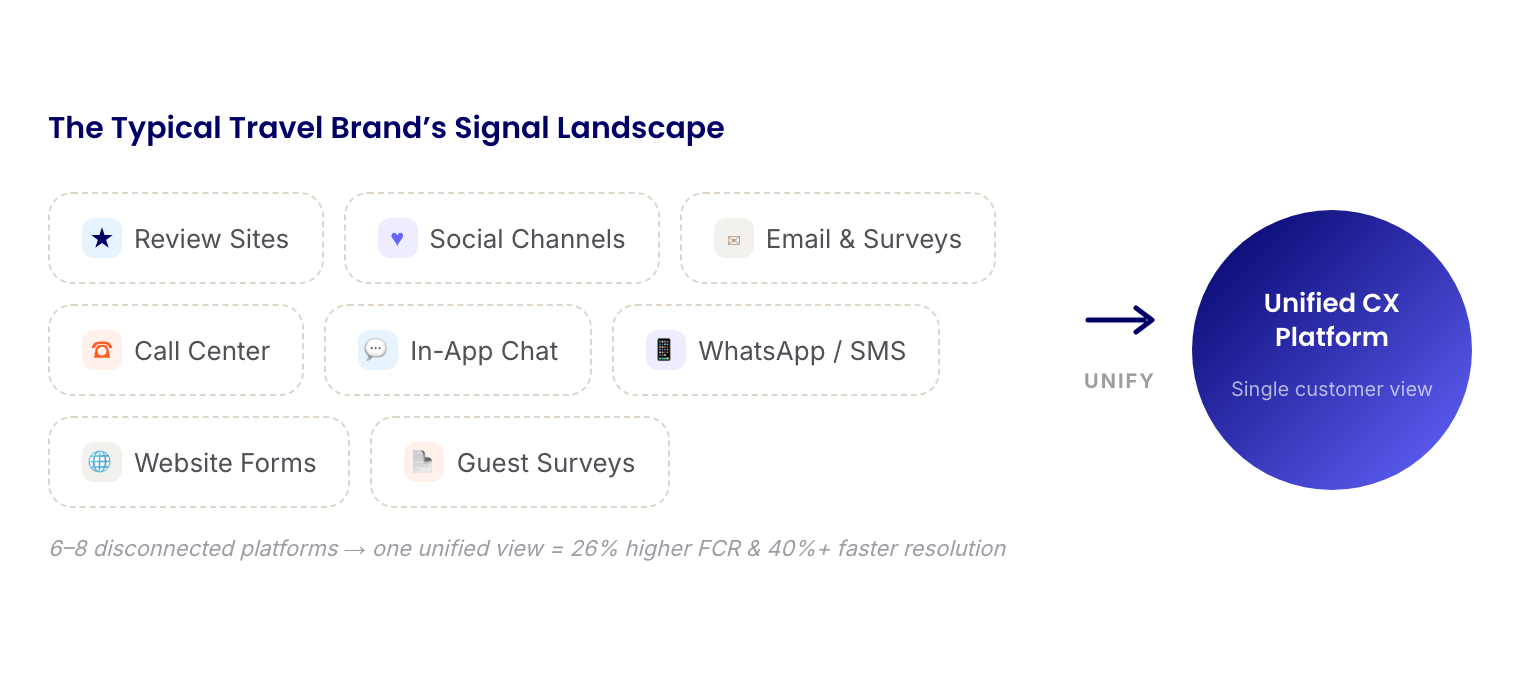
The average travel brand manages customer signals across 6–8 disconnected platforms: review sites, social channels, email, surveys, call centers, and in-app feedback. Each tool captures a fragment. None captures the full picture.

This fragmentation has measurable costs. Brands using unified CX platforms report 26% higher first-contact resolution rates and 40%+ faster resolution speeds. A Metrigy study found that organizations consolidating CX tools see measurable ROI within one year.

73% of travelers use multiple devices during a single trip, yet most brands manage each channel through separate teams with separate tools.

The result: inconsistent experiences, duplicated effort, and blind spots that erode customer trust.

07 frag diagram signal landscape

08 case cards set1

09 pull quote 76pct


Ready to close the CX gap?

See how Emplifi helps travel & hospitality brands turn customer signals into competitive advantage, all from a single platform.


The playbook: Five principles for 2026

The brands winning in travel CX aren’t just investing in new tools, they’re rethinking how customer signals flow through the organization.

1. Treat feedback as a strategic asset

Global review volumes grew 2.1% YoY in 2025. This data is not noise, it’s the most honest signal about your product. Treat every review, comment, and DM as intelligence that informs product, operations, and marketing.

2. Close the response gap

Hotel response times average 3.5 days globally. Social media expectation is under 1 hour. AI-assisted triage can handle volume and routing while ensuring high-priority messages reach human agents in minutes, not days.

3. Unify channels into a single view

73% of travelers use multiple devices during a single trip. Yet brands manage each channel through separate teams with separate tools. A unified CX platform eliminates blind spots and gives every team member the full customer context.

4. Use UGC as a revenue engine

User-generated content drives 10.38x higher conversion rates, increases conversions by 5.29x, and lifts average order values by 4.3x. Yet 77% of resort ads still rely solely on professional content, and 71% have no UGC galleries on their website. The opportunity gap is massive.

11 gap comparison UGC

5. Invest in AI That Augments, Not Replaces, Human Care

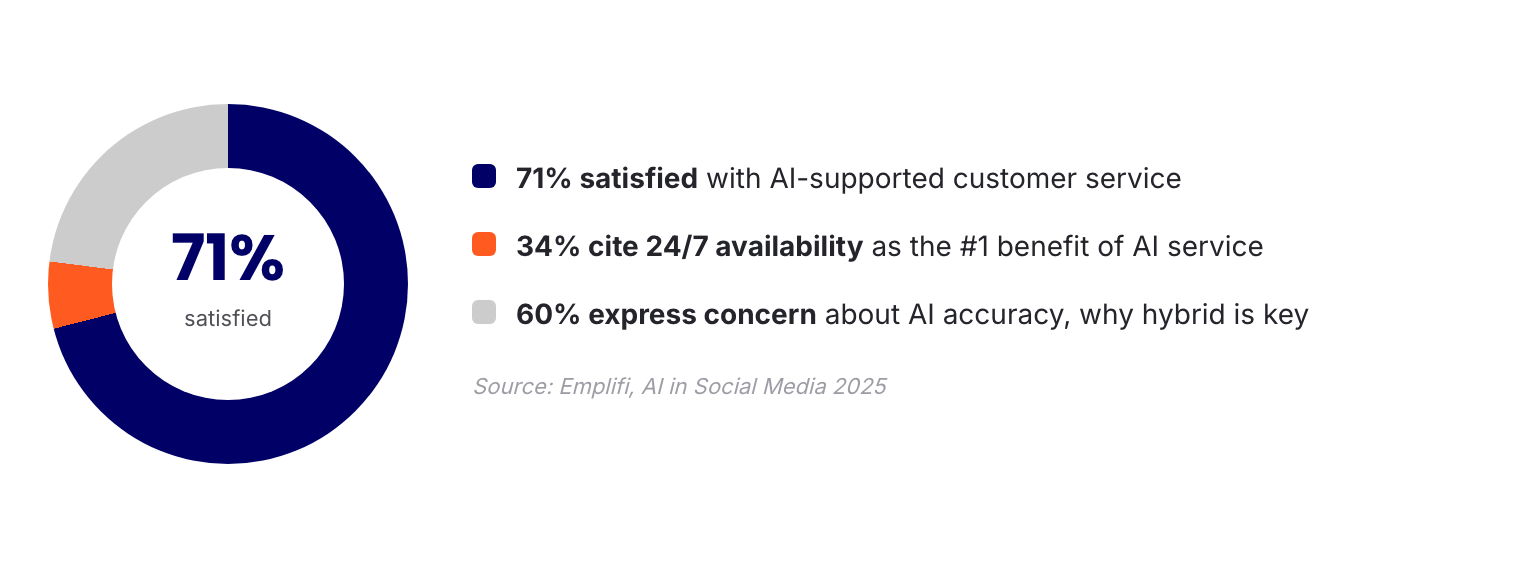
A recent Emplifi study found that 71% of consumers are satisfied with AI-supported service, and 34% cite 24/7 availability as the top benefit. But 60% express concern about accuracy.

The winning approach is hybrid: AI handles triage, routing, and first-response; humans handle complex, high-empathy interactions.

12 donut chart AI sentiment


The numbers that matter

13 stat row 23pp 1038x 76

14 stat row 86 57x 2M


Why Emplifi

The five principles above share a common thread: they all require a platform that can unify social, care, and commerce into a single view of the customer. That’s exactly what Emplifi was built to do.

Emplifi’s AI-powered social media marketing platform brings together social media management, real-time care, UGC curation, and AI-powered analytics so travel and hospitality brands can listen, respond, and act on customer signals across every channel, without the blind spots that come from stitching together six or eight disconnected tools.

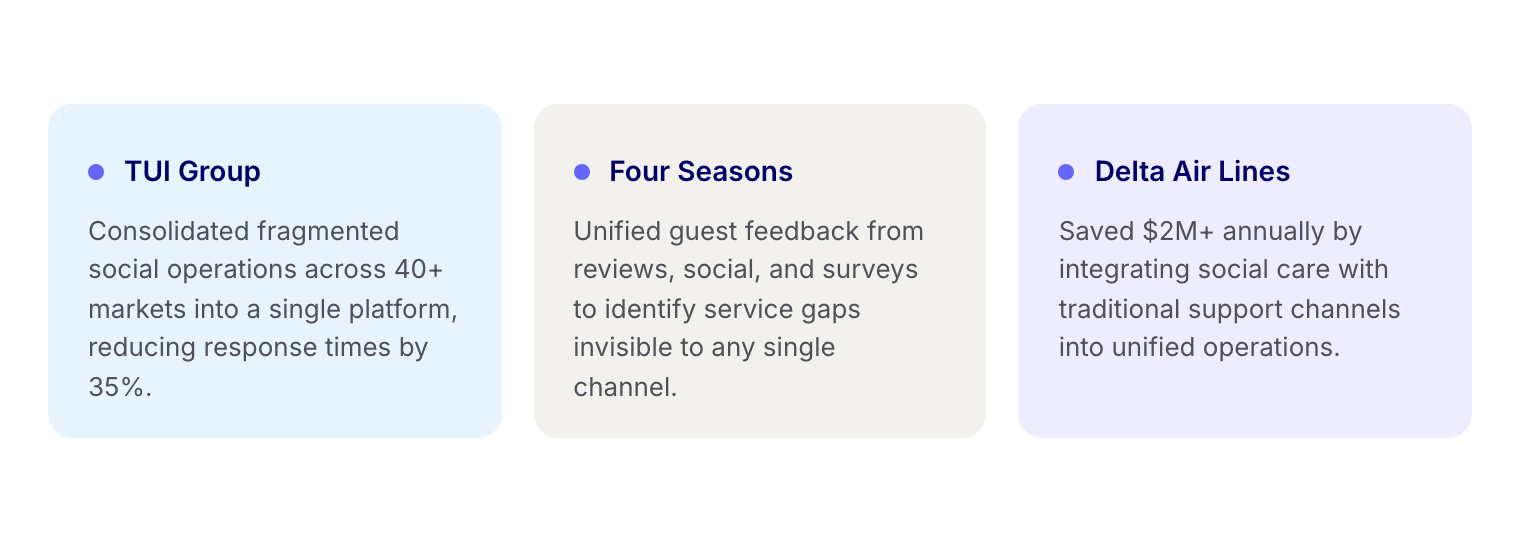
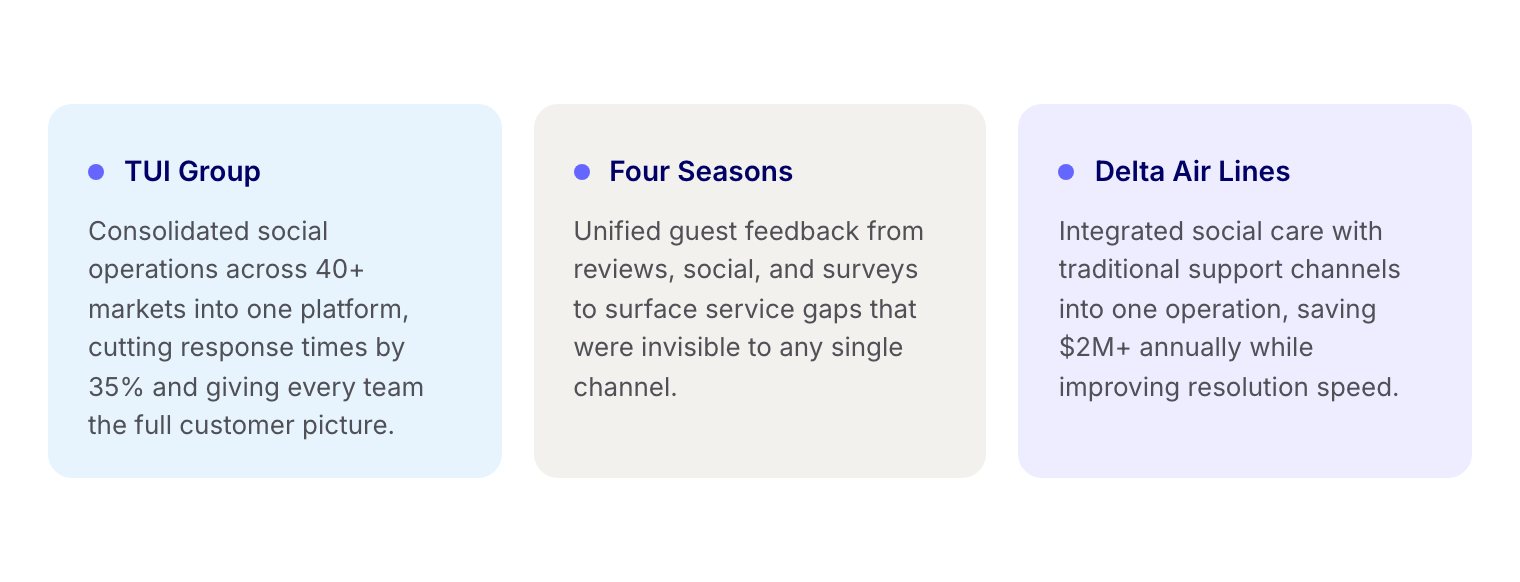
Leading brands already rely on Emplifi to close the gaps outlined in this report:

15 case cards set2

Whether your priority is closing the response gap, turning UGC into a revenue engine, or deploying AI that augments human care, Emplifi gives you the tools and the data to do it, all in one place. Explore more customer stories or request a demo to see the platform in action.

The mandate is clear: unify your customer signals, close the response gap, and turn authentic guest content into your most powerful growth engine, or lose to the brands that do.


SOURCES


Frequently Asked Questions


The biggest challenge is the response gap, with 76% of social complaints going unanswered. Brands struggle to keep up with rising customer expectations for real-time engagement. This directly impacts loyalty, bookings, and revenue.


Social media has become a key touchpoint for both discovery and customer service. Travelers use it to research, ask questions, and share feedback in real time. Brands that actively engage can influence decisions and strengthen trust.


Customer experience directly affects loyalty, repeat bookings, and overall brand perception. Even a few negative interactions can push customers to competitors. Strong CX, on the other hand, drives long-term growth and differentiation.


Emplifi provides a unified platform that connects social media analytics, customer care tools, and UGC content platforms. This allows brands to manage conversations, respond faster, and turn customer feedback into action. The result is more consistent and efficient customer experiences.


Managing multiple disconnected tools creates silos and inconsistent experiences. A unified CX platform brings all customer interactions into one place. This helps teams collaborate better, respond faster, and deliver a seamless journey across channels.