For NGOs, charities, and mission-driven organizations, your social media channels can be a vital window into your impact.
It’s where donors decide whether to give, volunteers decide whether to show up, and advocates decide whether to share your cause.
That’s why your social media strategy must do more than generate likes. It needs to prove impact and drive measurable outcomes, all without overwhelming your team.
In this guide, we look at how to build a social media strategy that works for your non-profit organization through ethical storytelling, community campaigns, and efficient metric tracking.
Today’s donors don’t just read annual reports to see where their money goes – they look to social media.
55% of people who engage with nonprofits on social media end up taking some sort of action. Because of this, your social media channels need to show credibility and build trust with your audience.
For non-profits, that means your social channels should focus on:
Unfortunately, most non-profits are working with limited resources. Many communications directors manage publishing, community management, reporting, and campaign planning with just one or two people.
Meanwhile:
That’s where unified social media management tools like Emplifi matter. Instead of juggling spreadsheets, inboxes, and multiple platforms, non-profits benefit from a single hub that combines publishing, community management, listening, and analytics.
Mercy Ships is an international charity operating hospital ships across more than 55 countries. Their team turned to Emplifi to unify their social media operations across 16 country offices.
By centralising content planning, publishing, and approvals onto a single platform, the organization saw a 236% increase in content impressions, a 328% increase in engagement rate, and 107% growth in community size, all while streamlining cross-team collaboration and establishing a consistent global brand voice.
To build a solid foundation for your NGO social media strategy, focus on goals that will have the most impact. Likes and reach are useful, but they’re not always an indicator of success.
Instead, focus on mission-driven KPIs like:
Rather than measuring engagement in isolation, connect it to real-world outcomes.
For example:
Not all supporters behave the same, so your content across different platforms needs to cater for different audiences.
For instance, you could segment your audience in this way:
Major donors
Monthly supporters
Youth activists
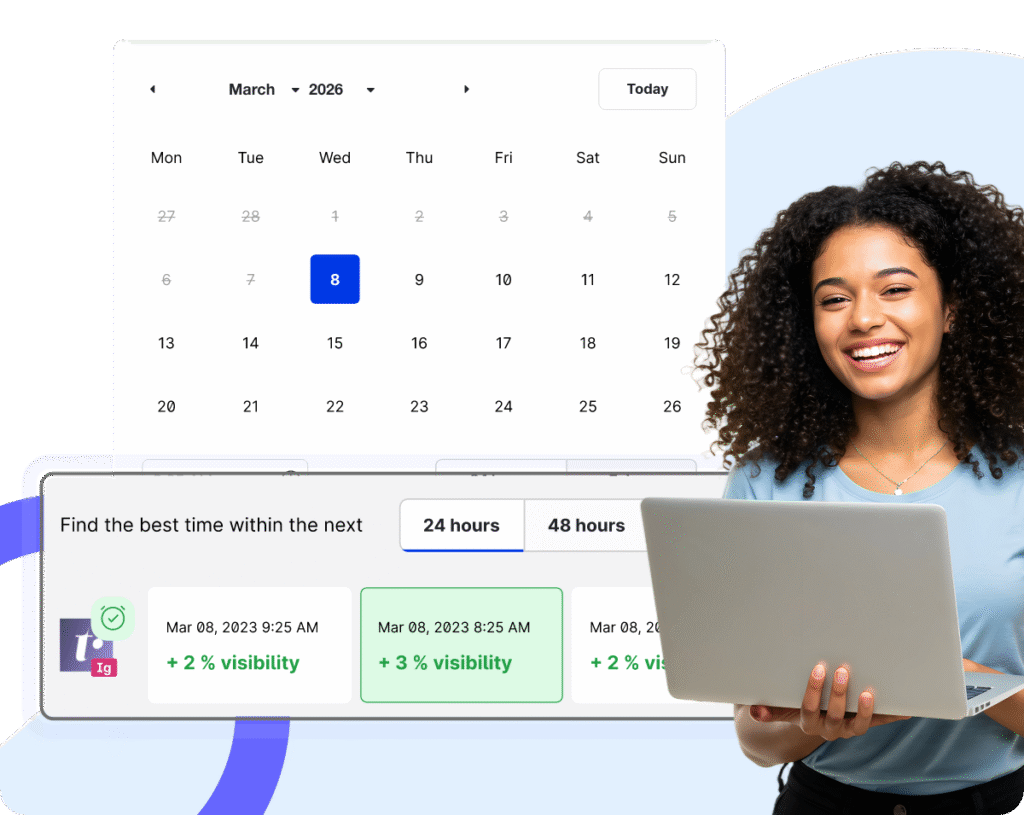
A unified publishing platform like Emplifi allows you to tailor messaging without duplicating work, scheduling platform-specific content in minutes while maintaining brand consistency.
Click the image to explore an interactive tour of Emplifi’s AI-powered publisher tool.
The most powerful NGO content on social media puts the people impacted front and center, rather than your own organization.
Instead of:
“We provided 5,000 meals.”
Try:
“Meet Amina. Because of your support, she can now attend school without worrying about hunger.”
This “hero’s journey” approach creates emotional connection while reinforcing donor agency.
@sharethemeal 💫School meals are supporting these children’s dreams! In Rwanda, The @WorldFoodProgramme’s school feeding program provides daily meals to 81,250 children in 104 schools. The nutritious meals help children to focus on their learning and also helps support the school garden, as well as safe water and sanitation! #sharethemeal #zerohunger #rwanda ♬ original sound - ShareTheMeal
In the non-profit sector, dignity is non-negotiable. You should avoid exploitative imagery or sensationalized suffering, and instead:
Video marketing can be an extremely powerful way of getting your message across. Short-form video is now the top focus for marketers, making it even more essential to communicate your message quickly in the spaces where audiences already spend their time.
Short-form formats can show:
And data can become shareable storytelling.
For example:
“This is what $50 provides.”
Turning annual report statistics into digestible social visuals increases transparency, engagement, and shareability.
For NGOs, social media is more than marketing. It’s public advocacy, donor communication, and often a reflection of sensitive work happening in real communities.
That’s why having a clear approval process for content can be a game-changer.
Instead of relying on last-minute Slack messages or “can someone quickly check this post?”, NGOs can benefit from structured workflows like:
This keeps messaging consistent and avoids mistakes that could damage trust with donors, partners, or communities.
Donors like to feel they’re making a real difference, and that they’re valued by a non-profit. 58% of social media users say brand responses on social media are important, so it’s worth taking the time to craft a thoughtful reply.
For example, when someone comments “Just donated!” on one of your social posts, a quick, “Thank you, Sarah! Your support helps fund 3 literacy sessions this month” could transform a one-time donor into a lifelong advocate.
Social can also be the first stop for potential volunteers asking:
To recruit volunteers effectively, you need to respond while interest is still high, answering questions quickly, and keeping that initial excitement moving toward action.
Emplifi’s unified inbox and routing capabilities can help you:
Never miss a message with Emplifi Customer Care
Your most passionate supporters are your best storytellers. They’re the ones who know your organization inside and out, and who have likely seen the impact of your work first-hand.
Consider giving your social media a boost with User-Generated Content (UGC) such as:
65% of consumers say UGC influences them to take action, so with the right approach, you could increase your donations, advocacy, and reach, by looping in brand ambassadors to create content for you.
@simplyyykatie building an orphanage in Kenya..👷🏽♀️📚 what a happy day this was🫶🏻 #volunteering #africa #kenya ♬ original sound - Simply Katie
Your fundraising appeals will always carry a sense of urgency, but campaigns like “Giving Tuesday” can be a good opportunity to mobilize your full community at once.
Use engaging strategies like:
Once you’ve created your assets, you should also check your customer journey to make sure it’s as easy as possible to donate.
For instance, focus on:
The fewer steps between scroll and support, the better.
Use our template to map your customer journey end-to-end
One quick win for fundraising opportunities lies with your own supporters, who can fundraise on your behalf.
Encourage them to launch:
Provide shareable templates and messaging guidelines so your advocates can amplify your mission consistently, making it easier for them to share their motivation for fundraising.
Non-profits must justify every dollar they spend, not only to their finance department, but often to their supporters too.
If you decide to invest in an automated social media marketing tool, for example, you should track efficiency metrics that prove its effectiveness.
For example:
Emplifi customers report time savings of up to 50% when using AI to help with content creation – a dramatic reduction in manual effort for small teams.
Not every social post will equal immediate revenue, but it could be a huge boost to your brand awareness.
Here’s what to look for:
Building this trust with your community is crucial for turning your audience into dedicated donors and volunteers.
When a crisis hits, you need to be able to respond as quickly as possible to minimize reputational damage and the impact on donor trust.
Crises for non-profits can include:
Being able to monitor your channels to intercept an emerging crisis is key. AI-powered social listening gives teams early visibility into brewing issues by detecting:
With unified listening and community management tools like Emplifi, teams can move fast, escalating internally, correcting inaccuracies publicly, and shifting sensitive conversations into private channels when appropriate.
Non-profits carry enormous responsibility, often with limited resources.
A strong social media strategy allows you to:
But you shouldn’t have to manage it all manually.
By unifying publishing, community management, listening, and analytics in one platform, Emplifi acts as a force multiplier, giving small teams the infrastructure to create a big impact.
Get a demo to see how we can help your organization increase engagement within your community and build lasting relationships to further your mission.
Consistency matters more than volume. Most non-profits benefit from posting 3-5 times per week on core platforms, supplemented by Stories or short-form video for real-time updates. The key is maintaining a steady presence without overwhelming your team or your audience.
Facebook and Instagram remain strong for community engagement and recurring donors, while LinkedIn supports major donor and corporate partnerships. TikTok is increasingly effective for youth-driven advocacy and viral fundraising moments. The right mix depends on your audience segments and campaign goals.
Respond quickly, transparently, and consistently. Move sensitive conversations into private channels when appropriate, while publicly acknowledging concerns. Unified inbox and sentiment monitoring tools help teams stay ahead of escalation and maintain trust during high-stakes situations.
Track both direct and indirect impact. Direct metrics include donations, volunteer sign-ups, and petition signatures. Indirect metrics include sentiment shifts, recurring donor retention, and audience growth. Unified analytics platforms like Emplifi help connect engagement data to real-world outcomes, making impact measurable.
Discover how Emplifi boosts efficiency, increases revenue, and scales your social media management — whether you have a small team or a complex product. Let’s talk today.
We’re recognized as a market leader in innovation, customer support, and ease of use from these organizations.