Blog
6 min read
Dec 01, 2025

Social media governance: How to protect your brand, team & reputation

Jordan Lukes Director of Content and Corporate Marketing
Team looking at laptop, working on perfecting their social governance

Key points

  • Embedding clear policies, workflows, and approval processes into daily operations protects your brand, your team, and your customers while keeping your content engine running.
  • Vetting of content, creators, and AI outputs prevents off-brand posts, compliance violations, and costly errors before they occur.
  • Social media management platforms like Emplifi help teams manage content, monitor sentiment, and enforce role-based access, turning governance into a repeatable, operational system rather than a reactive process.

Social media is still one of the most effective growth engines for brands. It helps you reach new audiences, spark engagement, generate leads – all while building a community that genuinely cares about your product.

But while the upside is huge, social media also carries significant operational risks. A single misstep can undo months of careful planning or worse, leave your brand exposed to compliance violations or public backlash.

That’s where social media governance comes in. At its core, governance is a framework of rules, responsibilities, and systems designed to:

  • keep your accounts secure
  • ensure content is on-brand and compliant
  • protect customer data and internal information
  • enable teams to act quickly without introducing risk

In this guide, we’ll explore the top risks associated with poor governance, and look at the best ways to protect your business, people and customers when it comes to social media.

What social media governance actually means

Social teams have a big responsibility on their hands. A hacked account or off-brand post can damage your reputation, and in some cases, lead to costly fines or legal action.

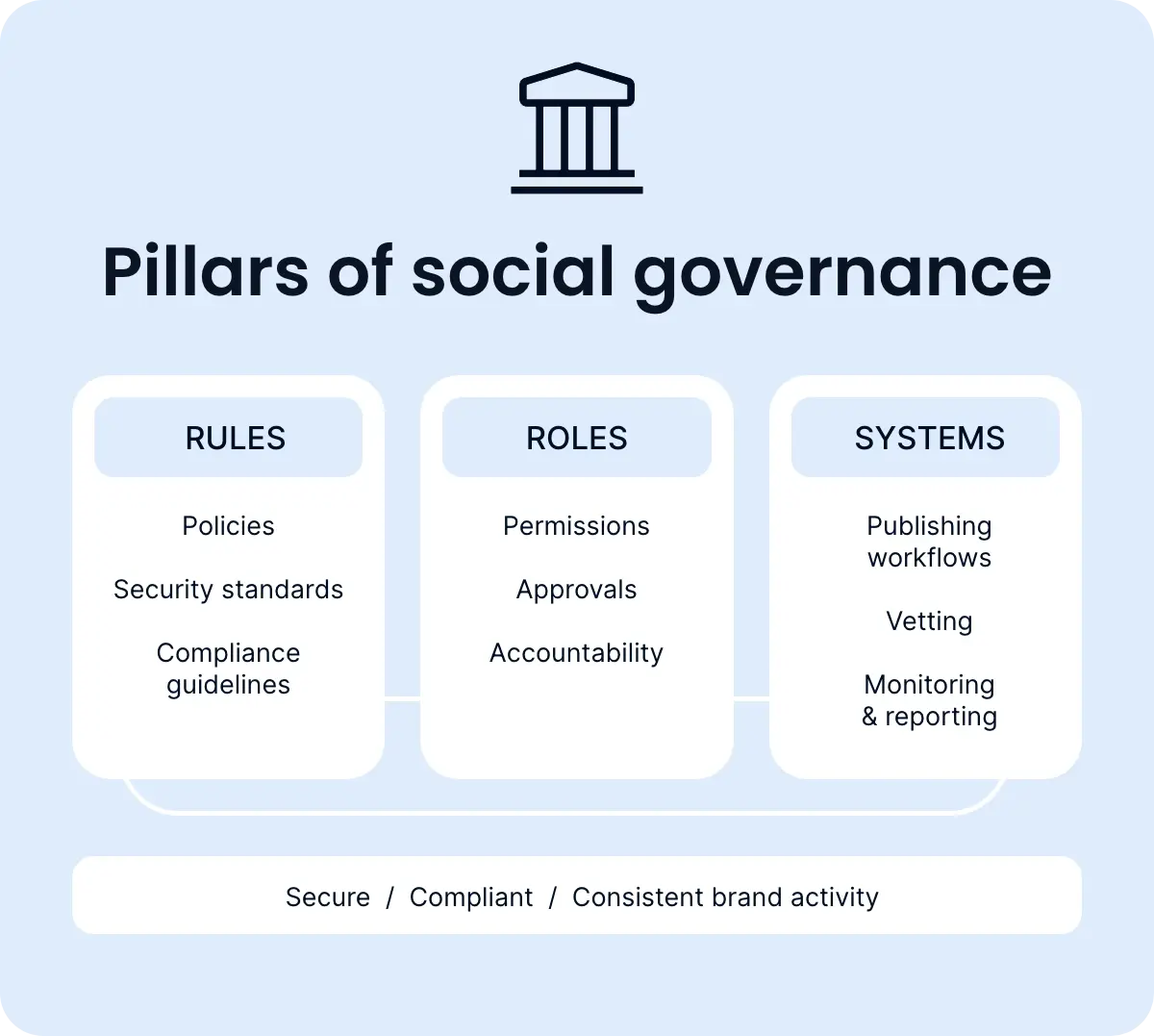
At its core, social media governance is a framework of:

  • Rules
  • Roles and responsibilities
  • Systems and processes

It ensures your organization uses social media safely and compliantly. While you might feel that it slows your team down, it’s actually there to protect you and give you the confidence to do your job effectively.

Pillars of social media governance

Why is it important to have social governance in place right now?

Several trends make governance absolutely essential today:

  • High turnover and business growth: Every employee or agency change adds risk to account access.
  • AI-generated content: Marketers say the main challenge they face with AI integration in 2026 is data privacy.
  • Cyber threats: According to IBM, the cost of a data breach in the US in 2025 was an eyewatering $10.22M – a record high.
  • Insider risk: The cost of malicious insider threats currently stands at $4.92M, and risks businesses losing customer trust as well as hefty payouts.
  • Human error: Proofpoint says 67% of employees admit to risky security behaviors, like reusing passwords or clicking suspicious links.

If governance isn’t already a priority for your team – and let’s face it, day-to-day demands make it easy to push aside – the trends above show it’s time to put clear policies in place.

The top 9 risks of poor governance

Without a structured governance strategy, organizations are exposed across multiple fronts. Here are the top risks you should know about:

  1. Brand and reputation risk: Hacked social media accounts can erode trust overnight. Account takeovers surged 250% in 2024, with 1,027 major organizations targeted in coordinated attacks, putting trust and brand reputation at risk.
  2. Compliance and regulatory risk: Social activity must comply with FTC rules, GDPR/CCPA, and industry-specific mandates. Violations can lead to penalties or legal scrutiny.
  3. Legal risk: Unclear ownership of accounts or post origin can result in lawsuits or liability claims.
  4. Human risk: Accidental posts, skipped approvals, or outdated content are easily preventable but can damage customer trust if they occur.
  5. Employee risk: Employees may unintentionally share confidential information or air grievances publicly.
  6. Security risk: Weak or shared passwords, lack of two-factor authentication (2FA), and decentralized access increase vulnerability.
  7. Third-party app risk: Unvetted scheduling, analytics, or automation tools can introduce backdoors. 2024 saw third-party breaches double, putting sensitive data at risk of public exposure.
  8. Influencer Risk: Creators may post controversial content, misrepresent your brand, or fail to disclose sponsored content. The FTC requires disclosures to be clear and not hidden away in hashtags.
  9. AI Risk: Generative AI can produce inaccurate, biased, or offensive content. Uploading AI content without double checking it first can lead to your brand reputation taking a hit.

While you might think it’s down to the security team to mitigate any risks, it’s actually the whole team’s responsibility to prevent any financial or reputational damage to your business.

Smarter permissions. Safer publishing.

Eliminate accidental errors on your social channels with built-in governance controls.

How to implement a social media governance strategy

A strong social media governance framework gives teams clarity on the processes they need to follow, reducing the risk of something going wrong. While it may seem like there are a lot of rules to follow, it’s not about restricting your creative freedom – it’s about creating a repeatable, operational system that protects your brand and your team.

Step 1: Build a governance Center of Excellence (CoE)

The CoE serves as the central backbone of your governance strategy, typically including colleagues from Legal, PR, IT/Security, HR, and Social Media teams. Their responsibilities include:

  • Defining risk thresholds and approval requirements
  • Owning the social media policy and keeping it up to date
  • Managing approval workflows and enforcing compliance
  • Monitoring emerging risks, including AI-generated content and third-party apps

Bringing all of these teams together regularly keeps governance consistent and enforceable across all social media accounts.

Step 2: Standardize brand safety and content approval

Content standards and structured workflows reduce the risk of off-brand posts or regulatory issues.

With Emplifi’s social media marketing tool, these guardrails become easy to put into practice. Centralized asset libraries and multi-step approvals make sure every post meets brand and legal expectations, without slowing teams down.

The result is a smoother content operation that gives your team the freedom to create while publishing compliant posts.

Emplifi platform with post awaiting approval

Step 3: Introduce structured influencer and partner vetting

Partner and creator risks are common sources of governance issues. Introducing a third party to your Slack workspace, for instance, or trusting an influencer to stay on-brand can be difficult to navigate.

Having a structured vetting process in place can minimize the chances of something going wrong. It should include:

  • Reviewing content history and public sentiment: Before partnering with any creator, take a close look at their past content and how audiences respond to it. Patterns in tone, topics, or engagement can reveal potential risks long before they surface in a campaign.
  • Checking alignment with brand values and compliance requirements: Ensure the creator’s voice, messaging style, and typical content themes match your brand’s core values and regulatory expectations. This helps prevent off-brand posts and keeps your campaigns compliant from day one.
  • Verifying disclosures and contractual obligations: Confirm that influencers consistently follow required disclosure guidelines (such as marking sponsored content) and that they understand what’s expected within the partnership. Clear agreements reduce legal exposure and maintain transparency.
  • Establishing ongoing monitoring for long-term compliance: Governance doesn’t stop once a campaign launches. Regular monitoring of creator content and audience sentiment keeps content aligned with your brand and identifies issues quickly.

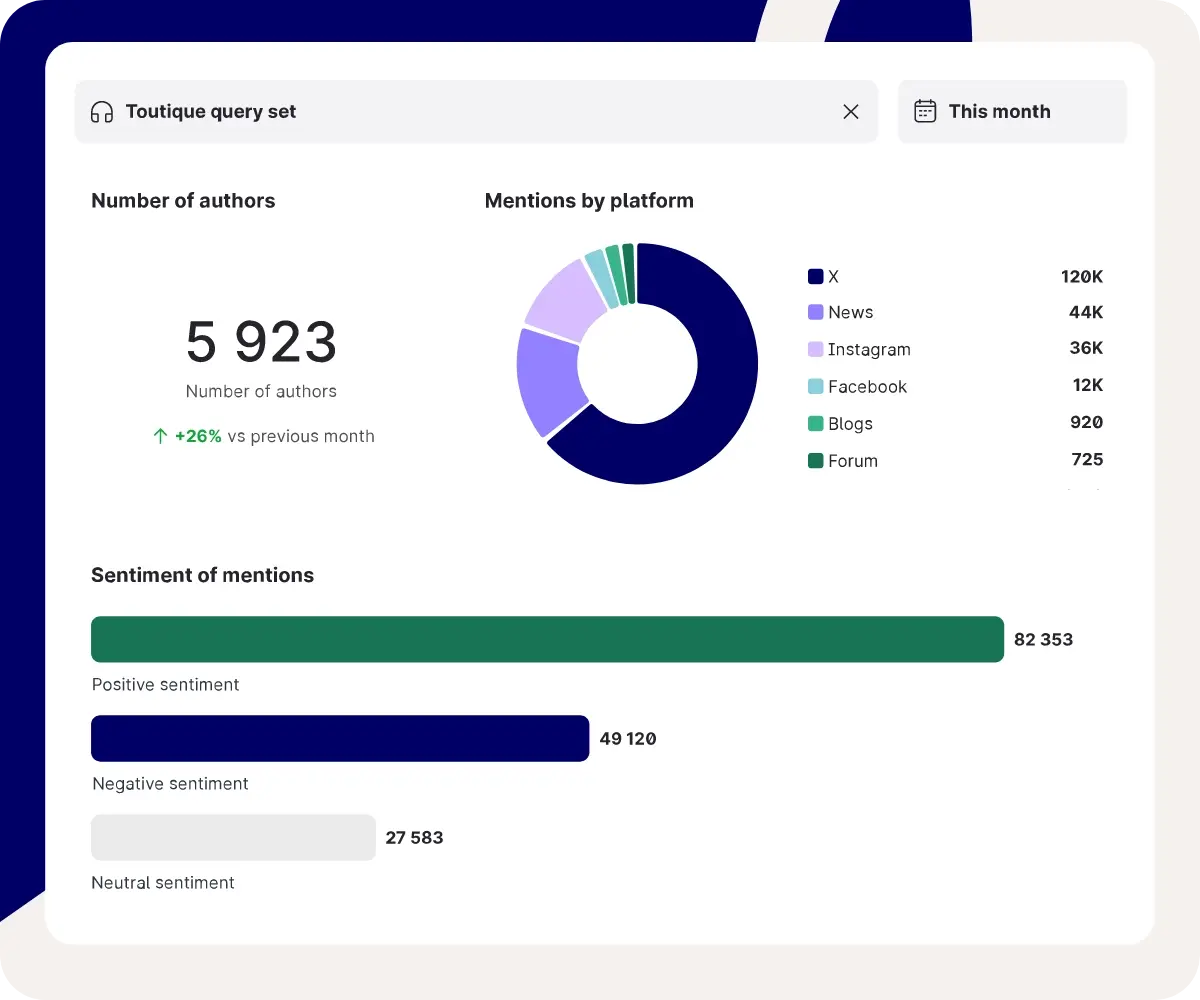
A social listening platform and analytics tool like Emplifi’s give teams a clearer view of the creators they’re considering. You can quickly assess a partner’s content history, understand how audiences are responding to their posts, and spot any sentiment shifts that may signal a potential risk.

This level of visibility helps you make more informed decisions before moving forward with a partnership, so that each collaboration supports your brand standards and long-term safety goals.

Emplifi social listening tool

Step 4: Make governance operational, not optional

Governance only works when it becomes part of everyday operations – not an afterthought, and definitely not something teams revisit only during a crisis.

By establishing a central CoE, standardizing content review workflows, and implementing a clear, repeatable process for vetting partners and creators, governance becomes a part of your team’s day-to-day. This more proactive approach means you’re always one step ahead and prepared for any issues that come up.

Protecting people and platforms

Governance protects the brand, but it also safeguards customers, employees, and their data.

Here are two key elements to build into your strategy:

Audience Data Protection

Your customers expect (and rightly deserve) to have their data protected. Regulations like GDPR and CCPA require you to handle sensitive data securely; you could be facing costly penalties or legal battles if you don’t.

Define procedures for handling, storing, and deleting Personally Identifiable Information (PII) such as names, addresses, and contact details.

A platform like Emplifi includes CX and social media care features that can help keep your social data safe with:

  • Secure forms: Keep sensitive information in a controlled environment, rather than scattered across inboxes or unmanaged channels.
  • Automated message filtering: Reduces the risk of exposing PII in public-facing conversations.
  • Structured care workflows: Guide teams through compliance requirements when they’re engaging with customers.

These core features help to build a clear audit trail, reduce manual processes, and keep customer data secure throughout its lifecycle.

Employee Enablement

Training teams on policy and setting up proper access controls are key to minimizing human error. In fact, 95% of cybersecurity incidents occur due to humans making mistakes. That’s why it’s so crucial to limit the amount of data your employees have access to, while still enabling them to do their job effectively.

With Emplifi’s permissions features, you can:

  • Use role-based access controls to ensure each care agent only sees the data and channels necessary for their job – nothing more.
  • Reduce the risk of accidental exposure with built-in guardrails that prevent unauthorized actions or data access.
  • Adjust or revoke access instantly as teams shift, agencies rotate, or contractors complete their work, keeping your environment secure without slowing operations.

Governance as a competitive advantage

Good governance is a clear strategic differentiator, helping you maintain your brilliant brand reputation.

A social media platform like Emplifi brings a unified approach that combines social publishing, analytics, and customer care to provide:

  • Consistent brand messaging across all channels
  • Faster, safer publishing without slowing teams down
  • Audit trails for Legal and IT
  • Scalable systems that grow with your organization

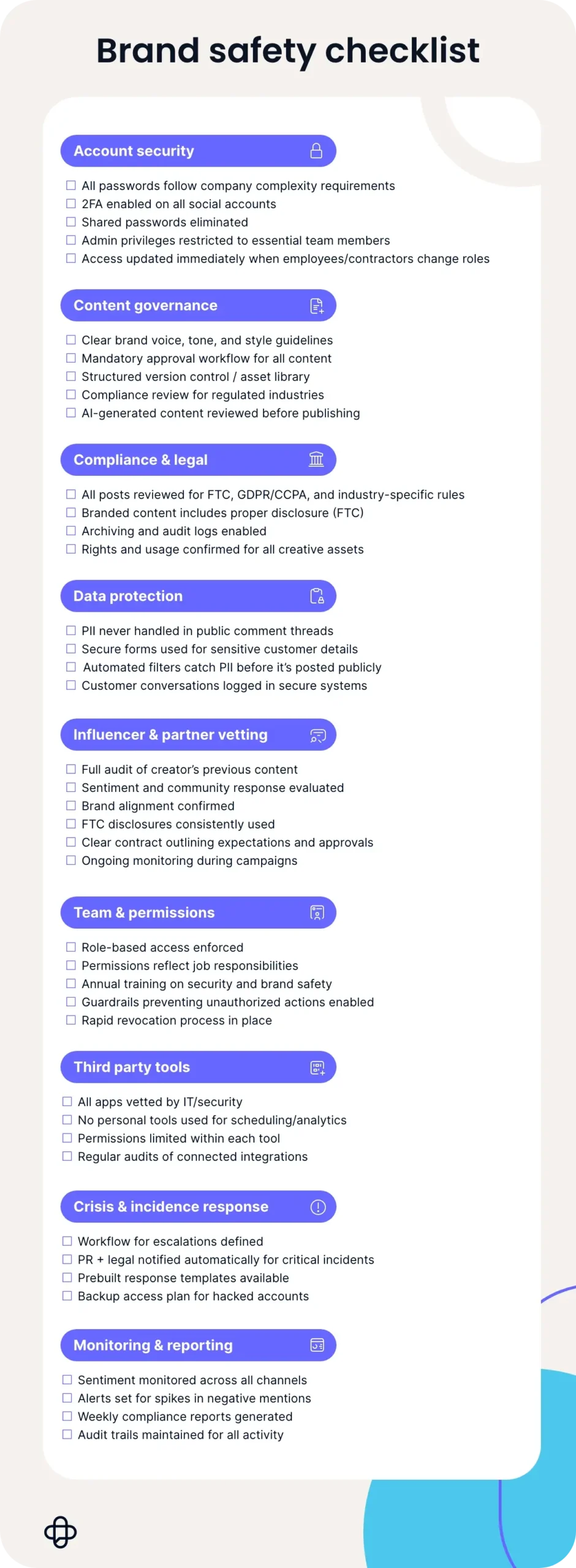
Brand safety checklist

Conclusion

By making governance an everyday practice rather than a reactive checklist, you protect the people behind your brand, the customers who trust you, and the reputation you’ve worked hard to build.

At a time of record-breaking data breach costs, a strong governance framework gives you something invaluable: peace of mind. It reduces uncertainty, and helps your organization stay resilient, no matter what changes lie ahead.

With Emplifi, governance becomes a foundation for trust, operational efficiency, and strategic growth. Get a demo of the platform to see how it can help your team stay aligned on your governance goals.


Frequently Asked Questions

Governance helps protect your brand, employees, and sensitive data from operational, legal, and reputational risks. Without it, a single mistake can escalate into a crisis. Proper governance also ensures compliance with regulations and maintains trust with your audience.

Start with a structured vetting process that reviews past content, audience sentiment, and alignment with your brand values. Verify disclosures, contractual obligations, and regulatory compliance. Ongoing monitoring ensures campaigns remain on-brand and risk is minimized over time.


Centralized platforms help streamline workflows, enforce approvals, and monitor content performance. Features like secure data collection, social listening, and role-based permissions reduce human error and strengthen compliance. Using these tools consistently turns governance from a manual task into an operational system.

Training and clear procedures are essential to minimize mistakes and maintain accountability. Role-based access ensures team members only have the permissions they need. Regular audits, workflow reviews, and ongoing monitoring reinforce best practices across the organization.

Insights from Emplifi

Explore our latest blogs and comprehensive guides designed to help you master customer experience strategies and drive growth.

Ready to fuel your CX and social media marketing?

Discover how Emplifi boosts efficiency, increases revenue, and scales your social media management — whether you have a small team or a complex product. Let’s talk today.

What can you expect?

  • A partner who cares about your strategy and objectives
  • Live demo showing how we differentiate from the pack
  • No pressure, just advice
Get a demo

Outpace your competition with easy-to-use, innovative solutions

We’re recognized as a market leader in innovation, customer support, and ease of use from these organizations.