2026 Gartner® Magic Quadrant™

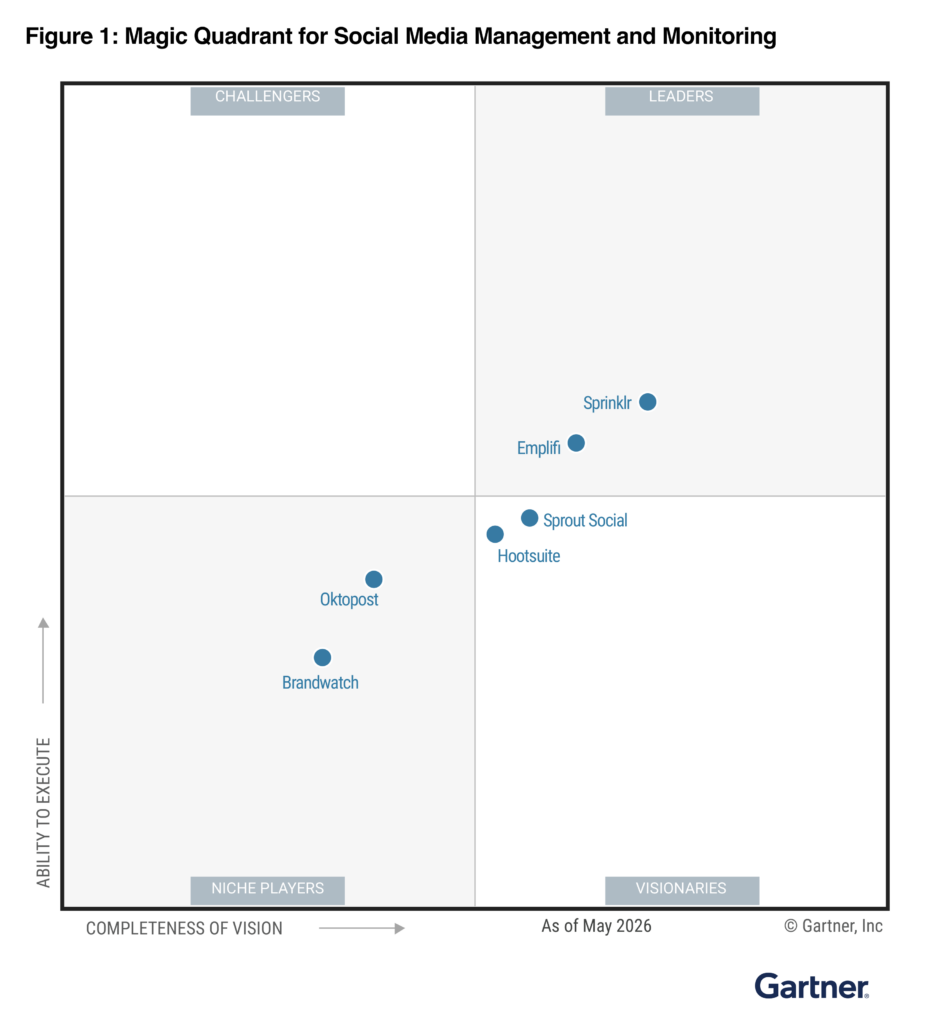
Emplifi named a Leader in the 2026 Gartner® Magic Quadrant™ for Social Media Management and Listening

Get the Report

Emplifi named a Leader in the 2026 Gartner® Magic Quadrant™ for Social Media Management and Listening Get the Report

Blog
6 min read
Jul 09, 2026

How Agentic AI is transforming the eCommerce customer journey

The eCommerce funnel has always had gaps. Product questions go unanswered, carts get abandoned, post-purchase complaints escalate into returns or bad reviews. Agentic AI is the first technology that can act on every one of those moments autonomously, closing the loop in real time.

Gabriel Tay Director of Business Consulting at Emplifi

Key points:

  • Every unanswered DM, abandoned cart, and unresolved post-purchase complaint is a revenue loss that Agentic AI can prevent by acting on the signal before it goes cold
  • The five highest-value moments in the eCommerce journey, from a product question in a comment to a post-purchase resolution, can all now be handled inside a single governed workflow
  • A resolved complaint is the highest-intent moment in the customer lifecycle; Agentic AI can turn it into a repeat purchase before the goodwill fades
  • Agentic AI assists and recommends; the human purchase decision is still human, but every step leading up to it can now run on its own

According to the Baymard Institute, seven out of ten shoppers abandon their cart before buying.

Traditional social listening tools and CRM platforms could see this; what they couldn’t do was act on it fast enough to matter.

Agentic AI changes that. Whether it’s reading a product question and replying with a purchase link, or spotting an abandoned cart and triggering a recovery, it acts in the time it takes a human team to triage their morning queue.

In this guide, you’ll learn:

  • Where the eCommerce funnel leaks most, and how agentic AI plugs each gap
  • What the five highest-value moments in the customer journey look like with an agent in the workflow
  • Which metrics move when agentic AI is working across the full journey
  • What your tech stack needs to make this work
  • What agentic AI can and can’t do in a commerce context

Where does the eCommerce funnel actually leak?

The leaks happen in the comment that goes unanswered, the abandoned cart that triggers an email a day too late, and the complaint that becomes a review before anyone’s picked it up.

For a commerce leader, none of this is a surprise; you can see exactly where it’s happening. What’s been missing is the ability to act on it in time.

Take User-Generated Content (UGC): consumers who interact with it are 2.4x more likely to purchase and spend 11% more per transaction. The question is whether your technology can surface it at the right moment, or whether it’s sitting in a dashboard that someone will check on Monday.

Fortunately, Agentic AI acts without delay, within boundaries you set.

The five moments where agentic AI changes eCommerce outcomes

Here’s where Agentic AI creates a significant lift, across five specific points in the customer journey.

Moment 1: Discovery to intent

A customer comments “does this come in size 12?” under an Instagram post. They’re obviously looking to make a purchase.

In a traditional workflow, that comment goes into a queue. Someone reads it, checks inventory, responds, and links to the product. By the time that happens, the customer has either found the answer elsewhere or lost interest.

But an agentic workflow reads the intent, cross-references the product catalog, surfaces the correct SKU and size, and replies with a direct path to checkout, in minutes, not hours, without a human having to touch it.

This is where the funnel starts. Getting it right at this stage is what determines whether social engagement converts at all.

Moment 2: Cart abandonment recovery

Traditional abandonment recovery sends an email the next day, which reaches a customer in a completely different context from when they left.

Agentic AI, however, detects the abandonment signal, checks what the customer was looking at, cross-references their social engagement history, and triggers a personalized recovery message through the channel they’re already active on, within minutes of them leaving.

The difference isn’t just speed, it’s about relevance too. A message that arrives in the same channel the customer used to discover the product, referencing the specific item they looked at, feels like a continuation of the conversation. It’s much more timely than a generic follow-up email.

Social commerce

The Social Commerce Playbook

See how leading brands are turning social engagement into tracked revenue, with the UGC strategies, commerce benchmarks, and conversion data behind it.

Download now

Moment 3: Live shopping and real-time commerce assistance

During a live shopping event, the volume of product questions can be impossible for any human team to handle at speed. Questions pile up and the most commercially valuable moments in the event slip by.

An agentic workflow handles the volume. It routes purchase intent directly to checkout, flags out-of-stock queries for escalation, answers sizing and availability questions in real time, and maintains consistent brand voice across hundreds of simultaneous conversations.

Ribble Cycles customers spent 36% more on average during live shopping sessions powered by Emplifi’s live commerce solution. The support provided by the agent was enough to encourage consumers to purchase.

Moment 4: Post-purchase resolution

A customer posting “this arrived damaged” on social is two things at once: a care case and a commerce risk.

Left unresolved, it becomes a return, a negative review, or both. Resolved fast, it’s a recoverable moment, maybe even a loyalty-building one.

An agentic workflow detects the complaint, initiates a returns or replacement workflow, and resolves the case before the customer has had time to leave a one-star review. 

Nearly half of customers (46%) will leave a brand after just two bad experiences. The speed of the resolution is what determines which side of that number you end up on.

Trending insight: The State of Social Media Marketing 2026 report

82% of marketers say AI has improved productivity. See what's separating the ones getting real results from everyone else.

Download now

Moment 5: the loyalty loop

Post-resolution is the highest-intent moment in the entire customer lifecycle. 46% of customers say they won’t have a reason to leave after a bad experience if the issue is resolved well, which means a customer whose problem was fixed quickly is more likely to buy again than almost anyone else in your CRM.

Traditional workflows don’t capture that. The case closes, the record updates, and nothing happens next.

Agentic AI identifies successfully resolved cases, scores customer lifetime value, and triggers a personalized loyalty incentive at exactly the moment goodwill is highest. A resolved complaint becomes a re-engagement, and a one-time buyer becomes a returning customer.

That’s the loop that traditional commerce tools have never been able to close automatically. Until now.

What do these moments look like in the metrics?

Every one of the five moments above maps to a number a commerce leader already tracks.

  • Conversion rate: Agentic responses to product questions in comments and DMs convert discovery intent into purchase intent at speed. 
  • Average order value: Surfacing the right product recommendation at the right moment consistently lifts basket size. Radio Flyer saw a 7x increase in conversion and a 12% lift in average order value after scaling UGC collection and shoppable galleries with Emplifi
  • Containment rate: Post-purchase complaints resolved autonomously before they escalate into returns or reviews. The faster the resolution, the lower the cost per complaint and the lower the churn risk
  • Repeat purchase rate: The loyalty loop converts resolved cases into a re-engagement trigger at the highest-intent moment in the customer lifecycle

Carhartt put all of this together. Its UGC galleries drove more than 85,000 real customer interactions, with a 27% conversion rate from gallery engagement and $150K in revenue attributed directly to customer-submitted content.

Carhartt customers like seeing real people wearing our gear, which encourages them to buy with confidence. And I love how we can just provide all of it with the help of Emplifi.
Kaleena Ocasio
D2C Digital Content Specialist at Carhartt Inc

What does your tech stack need to make this work?

Agentic AI in eCommerce doesn’t work without the right foundations underneath it.

Four things have to be in place:

  • Unified product catalog sync: The agent needs to know what’s in stock, in which sizes and variants, in real time. Without this, it can’t answer a product question accurately, let alone route to checkout.
  • Social channel integration: The agent has to be present in the channels where the conversation is happening, Instagram comments, DMs, live shopping, not just in the CRM or the website chat.
  • CRM connectivity: Post-purchase resolution requires the agent to see the order, the customer history, and the account status. Without CRM access, it can summarize the complaint but can’t do anything about it.
  • A clear governance model: Which actions can the agent take autonomously? Which require human sign-off? Issuing a replacement for a damaged item under a set threshold is an autonomous action. Processing a large refund or escalating a legal-risk complaint is not. The line between those two has to be defined in advance, in code, before anything goes live.

This is what Emplifi is built for: connecting the social channel, the commerce platform, and the care workflow into a single agentic layer, so the agent can act across all three without manual handoffs between systems.

What consumers actually expect from AI

83% want disclosure when AI is involved. 71% say they’re satisfied with AI support. See the full picture of how consumer expectations around AI are shifting.

What can agentic AI actually do in a commerce context? And what can’t it?

Here’s what it can do, and where the line sits:

What it can do:

  • Answer product questions in comments and DMs, with accurate inventory data, in real time
  • Trigger personalized cart abandonment recovery through the right channel at the right moment
  • Handle live shopping volume at speed
  • Initiate returns and replacement workflows for post-purchase complaints
  • Surface loyalty incentives to recently resolved customers

What it can’t do:

  • Make the purchase decision for the customer
  • Replace the human judgment needed for high-value, high-risk, or legally sensitive cases
  • Work across a fragmented tech stack where social, commerce, and care don’t connect

The agent assists and recommends. The customer still decides. The commerce team still sets the rules. What changes is how much of the work in between those two points now runs on its own.

Final thoughts: Five moments, one connected workflow

The data has always been there. You’ve always known which comments went unanswered, which carts were abandoned, which post-purchase complaints escalated too slowly.

What’s changed is the ability to act on all of it at speed, inside governance you control, across the channels your customers are already using.

Radio Flyer didn’t get a 7x conversion lift by publishing more content. Ribble didn’t get customers spending 36% more by running more promotions. They closed the gaps that had always been there, at a speed their teams couldn’t have managed alone.

Ready to see what that looks like in your funnel? Request an Emplifi commerce consultation and we’ll show you exactly where Agentic AI creates measurable lift in your customer journey.

Frequently asked questions

A chatbot answers a question and waits. An Agentic AI workflow is given a goal and the authority to reach it: it reads the comment, checks inventory, surfaces the right product, and provides a path to purchase, all without a human directing each step. The commercial difference is that Agentic AI can act across the full journey, from discovery to post-purchase resolution, in a single governed workflow, where a chatbot can only handle the question it’s directly asked.

By closing the gap between intent and purchase. When a customer asks a product question in a comment, Agentic AI responds with accurate inventory data and a direct purchase link in minutes, not hours. When a cart is abandoned, it triggers a personalized recovery message through the customer’s active channel immediately, not the next day. Both reduce the friction between expressed interest and completed purchase, which is where most eCommerce conversion is lost.

At minimum: a unified product catalog that the agent can query in real time, social channel integration so it can operate in the channels where conversations are happening, CRM connectivity so it can see the customer record and order history, and a governance model that defines what the agent can do autonomously versus what requires human sign-off. Without all four, the agent can surface insights but can’t take action.


Yes, within defined limits. An agentic workflow can detect a post-purchase complaint, initiate a returns or replacement workflow up to a configured threshold, and resolve the case before it escalates into a negative review. Actions above that threshold, large refunds, legal risk cases, or anything that requires judgment beyond the policy, pause for human review. The governance model determines where that line sits.