Social CRM integration is the process of connecting social media interactions, such as comments, direct messages, and mentions, with your central customer relationship management (CRM) system.
Instead of treating social media as a separate channel, integration ensures that every interaction contributes to a single, unified customer profile.
Having all customer information in one location is crucial for delivering top-tier customer support.
Without integration, your agents may sound misinformed when interacting with customers. But when they can see a customer’s entire history in one location, care feels much more seamless.
According to Salesforce, 85% of customers expect consistent interactions across departments, reinforcing how critical it is to connect interactions across every channel.
Let’s say a customer complains via X on Tuesday.
On Wednesday, they call your support team. They explain the issue again, repeat their order number, and rehash their frustration.
Your agent has no context.
This is what’s known as digital amnesia, and it’s one of the fastest ways to erode trust.
Digital amnesia is the act of businesses ‘forgetting’ a customer’s previous concerns, due to disconnected internal systems.
Customers don’t think in channels. They expect your brand to remember previous interactions, and respond accordingly, regardless of where the conversation started.
When systems aren’t connected, customers have to deal with the consequences:
According to Emplifi research, 25% of consumers will leave after one bad experience and nearly half (46%) will leave after two bad experiences, highlighting how important it is to deliver a superior customer experience at every opportunity.
This is where integrating your social media with your CRM can become invaluable for customer satisfaction.
Integrating social media with your CRM helps you:
You may think that you’ve integrated social when you log a comment as a support ticket.
In reality, that approach simply moves the problem into another system without adding meaningful context.
True Social CRM integration creates a unified customer profile in which every interaction, across social, support, and sales, contributes to a single source of truth. 
This includes:
Having all of this information in front of them makes it much easier for agents to tailor customer care.
Explore data-backed insights and strategic recommendations to stay ahead of the competition.
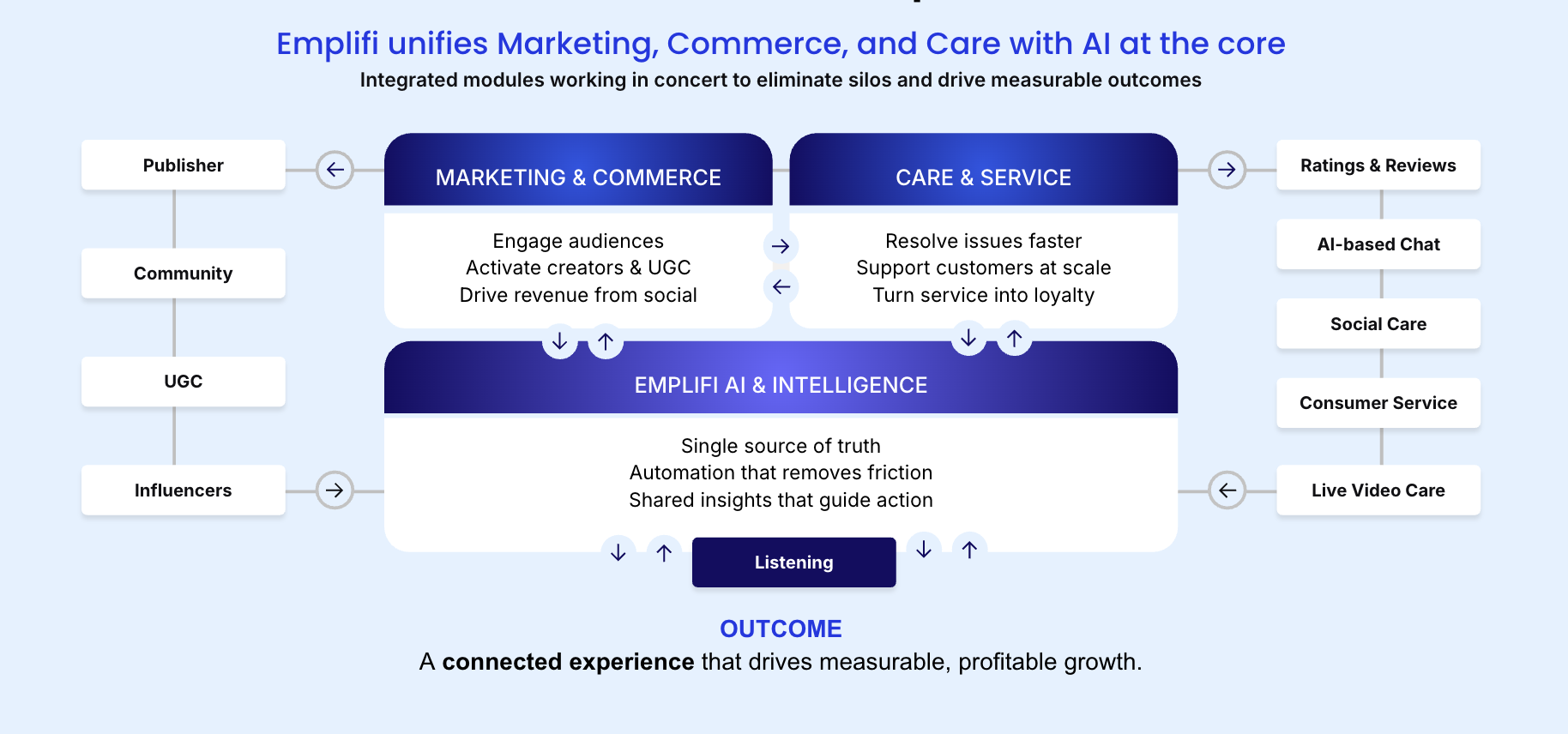
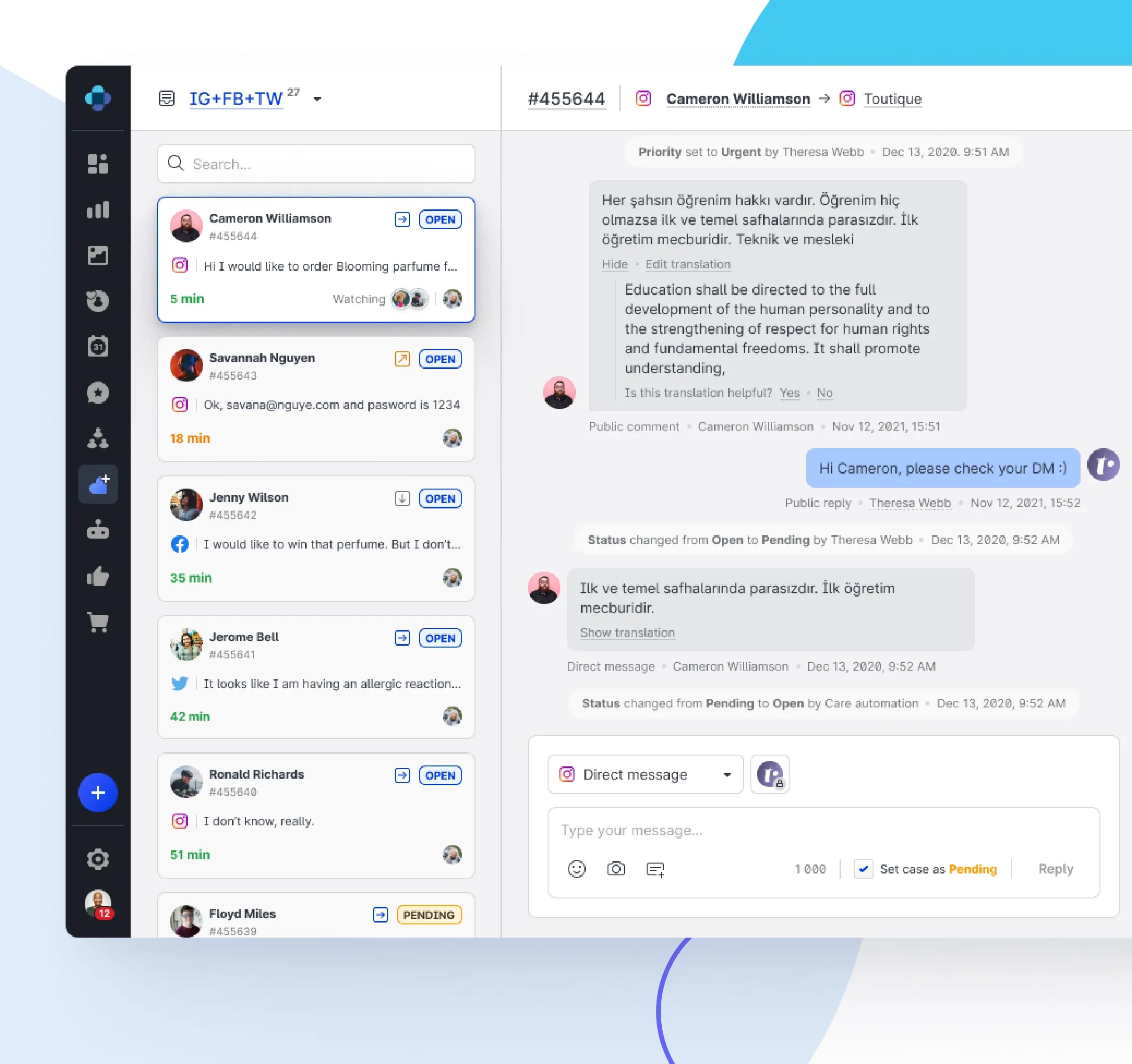
A unified CX platform like Emplifi serves as the connective layer across multiple data points, integrating social data with platforms such as Salesforce, Zendesk, and Microsoft Dynamics. Emplifi links social identities directly to CRM profiles, ensuring that every interaction enriches the customer record in real time.
It ensures that Emplifi clients can quickly understand:
This 360° view enables faster decisions and more efficient operations across teams.
| Before Social CRM Integration | After Social CRM Integration |
|---|---|
| Fragmented data | Unified customer view |
| Slow responses | Faster, contextual replies |
| Customers repeat themselves | Seamless, connected experience |
| Siloed teams | Aligned teams across CX, marketing, and sales |
| Lost or unused insight | Actionable, real-time data |
| Higher churn risk | Improved retention and loyalty |
One of the most immediate benefits of social CRM integration is the ability to resolve issues faster and more effectively.
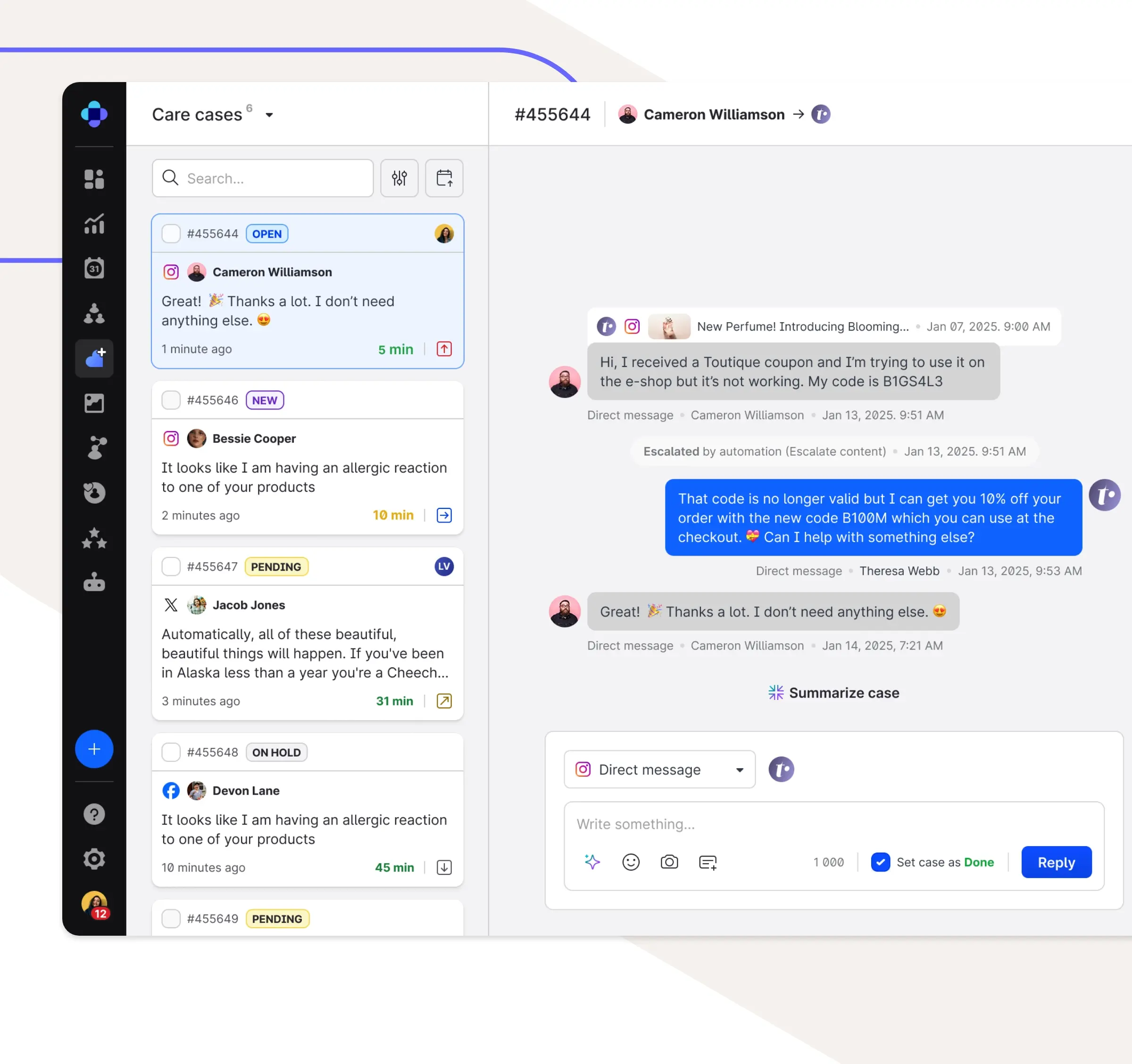
Imagine a customer commenting on an Instagram ad:
“Still waiting on my order. No communication. Tried to contact multiple times.”
This situation can quickly cause internal friction if the social team tries to handle it manually and the customer is passed between teams. They might be required to repeat key details multiple times, further adding to their frustration.
However, once integration takes place, the process becomes streamlined. With 35% of consumers expecting a brand response within an hour when engaging on social media, an integrated system is essential for delivering fast, contextual, and consistent customer care at scale.
Firstly, the interaction is automatically captured and enriched with context around the customer’s previous engagement.
From here, it’s routed into the CRM as a case. Agents can immediately access order history, previous conversations, and customer value without needing additional input.
Moving the customer’s concerns from public view to private, your team can resolve issues quickly without others weighing in. This approach can directly impact retention, with customers more likely to remain loyal when they feel heard and supported, even after a negative experience. In fact, 46% of customers won’t have a reason to leave after a bad experience if the issue is resolved well.
Social media isn’t just a place for negative feedback. There are plenty of advocates out there, posting recommendations and positive feedback about their favorite brands and products.
Emplifi research shows that consumers trust peer recommendations over celebrity endorsements and brand messaging.
That makes social one of your strongest signals for advocacy, loyalty, and purchase influence.
But to make the most of these interactions, you need to identify them effectively, whether through your comments section or UGC.
A social listening tool makes it easier to spot highly engaged users and flag them as a ‘Brand Advocate.’
For example, Emplifi can identify high-value behaviors such as UGC and positive sentiment from an individual.
These signals can then be pushed into the CRM, allowing teams to:
This enables social engagement to become an active driver of Customer Lifetime Value, rather than passive activity.

While customer surveys are always helpful for gaining qualitative feedback about your product, social listening can also offer another layer of feedback.
For example, customers may be sharing opinions on your latest product launch on Facebook, Instagram, TikTok, or Reddit, highlighting issues or requesting new features.
A social listening tool can monitor this feedback and integrate it with your CRM, enabling your product, marketing, and sales teams to access highly valuable data.
This matters more than ever. Around half of consumers agree that the more brands know about them, the better service they can deliver. At the same time, nearly two-thirds say they’re frustrated with brands that collect data but fail to act on it.

That’s where a closed-loop feedback system becomes critical.
A closed-loop feedback system means:
This allows:
Vessi used Emplifi’s social listening and workflow automation to turn customer conversations into measurable results.
By connecting listening with workflows, Vessi achieved 50% faster response times, with real-time feedback automatically captured, routed, and actioned, creating a true closed-loop system.
Instead of reacting after the fact, Vessi turned social insight into faster resolutions and ultimately, a better customer experience.
If you’re thinking of integrating social data into your CRM system, it’s worth keeping compliance top of mind.
Data privacy regulations, such as GDPR and CCPA place restrictions on data usage, so you’ll need to make sure you’re using data responsibly.
This means focusing on:
Platforms like Emplifi help manage this complexity by ensuring data subject rights are respected, and providing compliant ways to analyze and act on social data without compromising customer trust.
Track the metrics that connect customer experience to business outcomes, such as:
Social media is one of the most valuable sources of customer insight available today. But when it remains disconnected from your CRM, that insight is fragmented and underutilized.
By unifying social, CRM, and customer care, brands can move from reactive support to proactive, data-driven customer experience.
The result is:
With Emplifi, every social interaction becomes actionable insight, helping you turn conversations into outcomes.
Unify your customer care, marketing, and sales data with Emplifi’s CRM integrations, and deliver seamless, connected customer experiences at scale. Book a demo today.
Social CRM integration is the process of connecting social media interactions, such as comments, direct messages, and mentions, with your CRM system. Instead of treating social as a separate channel, every interaction contributes to a single, unified customer profile. This gives teams full visibility into customer behaviour, sentiment, and history across marketing, sales, and customer care.
Without integration, customer data sits in silos, leading to fragmented experiences, slower response times, and repeated conversations. Integrating social media with your CRM creates a single source of truth, allowing teams to access the same information, respond more efficiently, and deliver consistent experiences across every touchpoint.
Social CRM integration improves customer experience by providing agents with full context. Instead of asking customers to repeat themselves, teams can see previous interactions, purchase history, and sentiment in one place. This enables faster resolutions, more personalized responses, and a seamless experience across channels, which helps build trust and long-term loyalty.
Yes. Social media is often where customers first express frustration or raise issues. Social listening tools can detect negative sentiment, repeated complaints, or emerging problems in real time. When this data is integrated into your CRM, teams can proactively address issues before they escalate, reducing churn and improving retention.
Emplifi connects social media interactions directly to leading CRM platforms such as Salesforce, Zendesk, and Microsoft Dynamics. It combines social listening, customer care, and analytics in one unified platform, enabling teams to capture, route, and act on customer interactions in real time, improving efficiency, customer experience, and long-term value.
Discover how Emplifi boosts efficiency, increases revenue, and scales your social media marketing — whether you have a small team or a complex product. Let’s talk today.
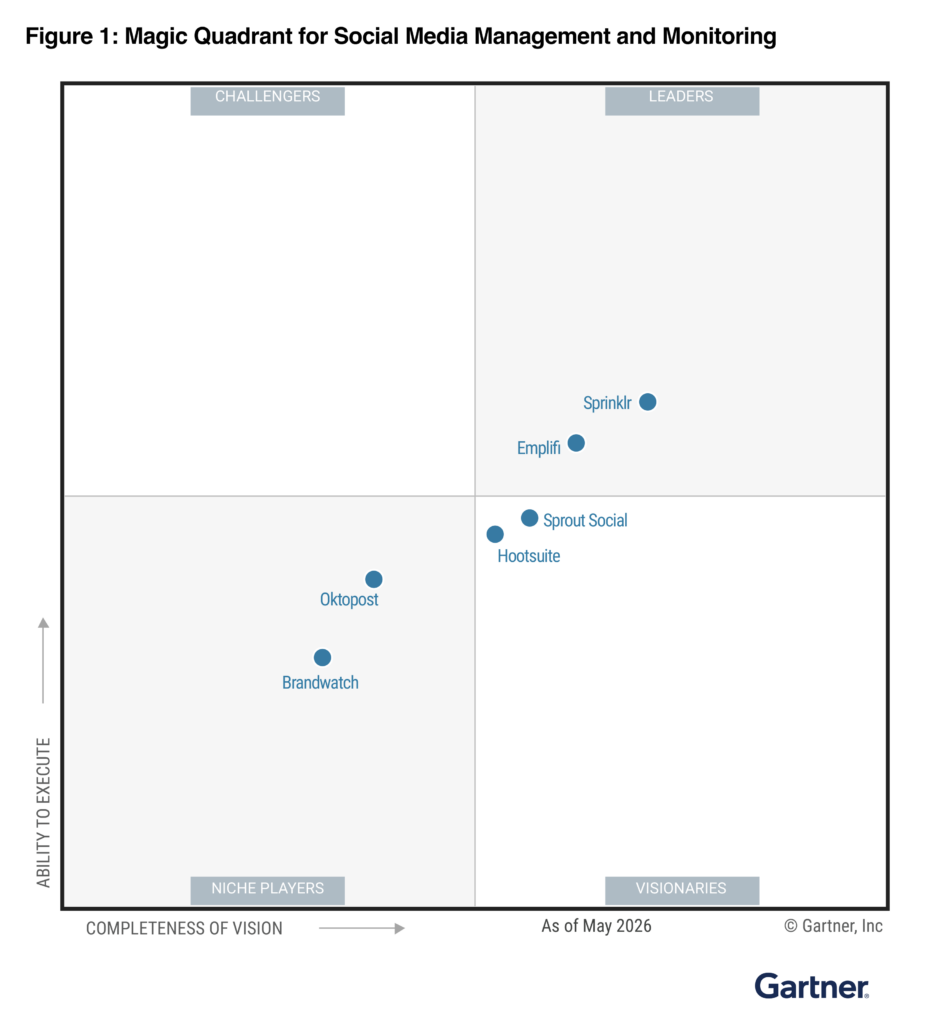
We’re recognized as a market leader in innovation, customer support, and ease of use from these organizations.