Unlike traditional chatbots that rely on scripted workflows, AI agents can access backend systems, trigger workflows, and resolve operational issues in real time, helping brands improve response times and reduce operational friction.
Customer service has a frustration problem. Chances are you’ve experienced it firsthand.
You open a chat window hoping for a quick answer. Instead, you’re met with a rigid workflow asking you to choose from a list of predefined options.
You select the closest fit. It still doesn’t solve the problem. You rephrase the question. The bot loops. Eventually, you escalate to a human agent and start the entire conversation again from the beginning.
The issue isn’t automation itself. It’s that most legacy chatbot systems were designed to handle simple, repetitive tasks rather than manage the full complexity of modern customer journeys.
Traditional automation helped reduce ticket volume, but it wasn’t built to understand customer context or coordinate actions across multiple systems in real time.
That’s now changing.
Brands are moving beyond siloed workflows toward fully connected, AI-powered care operations.
And customers are ready for it. According to Emplifi research, 71% of consumers report being satisfied with their AI support experiences.
The challenge now is knowing how to balance AI efficiency with human empathy in the moments that matter most.
Unlike traditional automation, Autonomous CX doesn’t rely on rigid scripts or static decision trees to provide customers with answers.
Instead, it combines AI reasoning, contextual memory, and connected systems to help you resolve issues faster and at a greater volume.
And adoption is accelerating. According to Statista, the number of active AI agents worldwide is projected to surpass 2.2 billion by 2030, up from 28.6 million in 2025.
That means AI agents go far beyond standard chatbots. In fact, the most innovative agents can:
Unlike traditional chatbots that reset context every time a customer changes channels or asks a more complex question, AI agents maintain continuity across conversations and systems. That allows support experiences to feel significantly more seamless.
Here’s how autonomous AI agents differ from traditional chatbots:
Whereas traditional chatbots were designed to simply reduce ticket volume, autonomous CX was designed to directly improve customer experience.
Traditional customer service chatbots were designed around structured “if/then” logic. They could answer predefined questions but struggled when conversations became unpredictable or emotional.
AI agents operate differently. Powered by Large Language Models (LLMs), they can adapt dynamically to unexpected inputs and determine the steps required to reach a resolution.
Take a message like: “My order arrived damaged! I already contacted support last week, and I need a replacement before Friday because it’s for my daughter’s birthday.”
A traditional chatbot might see isolated keywords like “damaged” or “shipping” and assume this is the only problem that needs to be addressed.
However, an AI agent understands the broader context, including the urgency of the situation, and previous conversations the customer has had with your team.
And in a world where customers increasingly expect that level of responsiveness and one-third of consumers expect a reply within one hour, AI agents can be an integral part of your care program.
Here’s how consumer demand is rising in line with AI integration:
Source: Emplifi’s AI in social media in 2025 report
If you’re an enterprise brand managing high conversation volumes across multiple channels, AI agents help your team meet customer expectations more efficiently without increasing operational strain.
Learn more and see more stats in our latest report
AI agents rely on three core capabilities that allow them to understand context, make decisions, and take action autonomously.
Together, these pillars form the foundation of Autonomous CX – a model where AI can proactively manage and resolve customer interactions across systems with minimal human intervention.
Let’s look at each one in more detail.
Customer service interactions can be layered situations that combine urgency, emotion, business policies, and operational dependencies.
For example, a customer might say: “I got charged twice for an order that never arrived, and now the tracking link doesn’t work.”
A traditional bot might struggle with this request because it contains multiple issues at once.
But AI agents can:
One of the biggest frustrations in customer service is repetition. Customers explain an issue in a social DM, repeat it over email, repeat it in a live chat, then repeat it again after being transferred to a live agent.
Over a third of customers say they‘d prefer to work with an AI agent rather than a human if it meant they wouldn’t have to repeat themselves.
AI agents help eliminate friction by maintaining context across channels, sessions, purchase history, and previous support interactions.

It doesn’t matter whether a customer switches platforms while their concern is being addressed; an AI agent will maintain a seamless experience for the user.
So instead of: “Can you provide your order number again?”, the interaction becomes: “I can see your previous conversation about the delayed shipment. I’ve already checked the tracking update and initiated the replacement.”
That continuity shortens resolution times while creating a customer experience that feels significantly more personalized.
This is the capability that changes the operational model entirely. AI agents can actually take action and execute tasks across multiple platforms.
Interacting securely with backend systems, they can trigger workflows without human oversight, saving your team valuable time.
Tasks an AI agent carries out include:
Instead of saying, “I’ll flag this for review”, the AI agent can actually resolve the issue while the customer is still in the conversation.
For example, a customer messages an airline after a canceled flight. They’re disgruntled and want to get to their destination as soon as possible. A traditional chatbot might surface a refund policy article or escalate the conversation to a live agent.
But an AI agent can independently:
This is the defining shift behind Autonomous CX: AI agents are no longer limited to answering questions. They can reason through operational problems and execute the work required to resolve them.
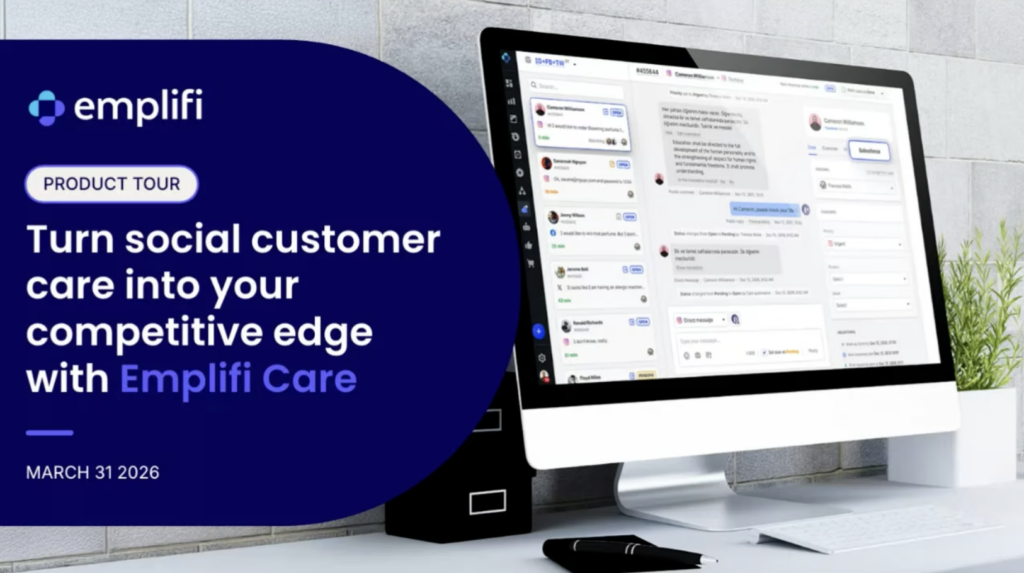
Click the image above to see how using AI-powered customer care platforms like Emplifi can help you scale your customer support
For retail and e-commerce brands in particular, AI agents will be invaluable in providing delivery-related support.
When delivery disruptions happen, resolution usually depends on how quickly teams can access logistics systems to investigate what’s happened.
AI agents flip that model on its head.
Instead of waiting for customers to escalate issues, autonomous systems can identify shipment delays automatically, query logistics platforms in real time, determine refund or replacement eligibility, and initiate resolution immediately.
They can even identify:
…before customers reach out, so that your brand is jumping on an issue before it escalates.
This means human agents aren’t tied up chasing delivery updates, while customers get faster, more seamless resolutions. And that kind of responsiveness has a significant impact on loyalty.
According to Emplifi research, 46% of customers say they would continue buying from a brand after a bad experience if the issue was resolved well, reinforcing how proactive support can directly influence retention and long-term customer trust.
Salomon used Emplifi to centralize social engagement and customer support workflows across more than 80 global social media accounts, helping teams manage conversations more efficiently and deliver faster, more connected customer care.
By bringing social messaging, case routing, and reporting into one platform, Salomon improved operational visibility, streamlined collaboration between social and customer service teams, and created a more seamless support experience across digital channels.
The organization reported significant operational improvements, including:
As brands move toward more proactive and AI-powered customer experience strategies, connected customer operations become increasingly important.
Unified workflows, centralized customer context, and intelligent routing help teams respond faster, reduce operational friction, and create the foundation needed for scalable Autonomous CX.
Autonomous CX doesn’t remove humans from customer service, but it does change where human expertise delivers the most value.
Routine enquiries like order tracking, shipping updates, password resets, and return requests can be handled by AI agents effectively.
In fact, Gartner predicts that by 2028, at least 70% of customers will begin their customer service journey through conversational AI interfaces, accelerating the need for more scalable and automated support operations.
AI agents help shift support teams away from repetitive, manual execution and toward higher-value work centered on AI orchestration and strategic decision-making.
For example:
New operational roles are already emerging, including:
According to Emplifi data, 56% of consumers still prefer human interaction for personalized experiences, reinforcing that the future of customer experience won’t be fully autonomous.
Instead, the most effective approach is a balanced partnership between AI and people: AI streamlines repetitive, lower-value tasks, while human teams dedicate their expertise to the complex, nuanced, and relationship-driven moments that matter most.
AI agents help brands meet rising customer expectations more effectively by reducing operational friction across the customer journey.
By connecting systems, understanding customer intent, and taking action in real time, AI agents help teams resolve issues faster, deliver more consistent experiences across channels, and scale support operations more efficiently.
That’s where AI agents deliver immediate value. They enable brands to scale connected customer experiences more efficiently; driving faster response times, deeper personalization, and greater consistency across every interaction, without sacrificing quality or customer expectations.
Ready to upgrade your customer experience? Book a demo of the Emplifi platform to see how AI agents can power your customer care program.
Traditional chatbots rely on scripted workflows and predefined decision trees. AI agents use reasoning, contextual memory, and connected systems to understand customer intent, adapt to unexpected inputs, and execute operational tasks in real time. Instead of simply deflecting tickets, AI agents help resolve customer issues more efficiently across channels.
AI agents help reduce operational friction by automating repetitive workflows like order tracking, account updates, refunds, and routing. By connecting systems and maintaining customer context across channels, they help brands improve response times, scale support more efficiently, and deliver more consistent customer experiences.
No. Autonomous CX changes how support teams work rather than removing human involvement entirely. AI agents are best suited to handling repetitive, high-volume workflows, while human agents focus on emotionally sensitive conversations, complex disputes, escalation management, and customer relationship-building. The most effective support models combine AI efficiency with human empathy and judgment.
Discover how Emplifi boosts efficiency, increases revenue, and scales your social media marketing — whether you have a small team or a complex product. Let’s talk today.
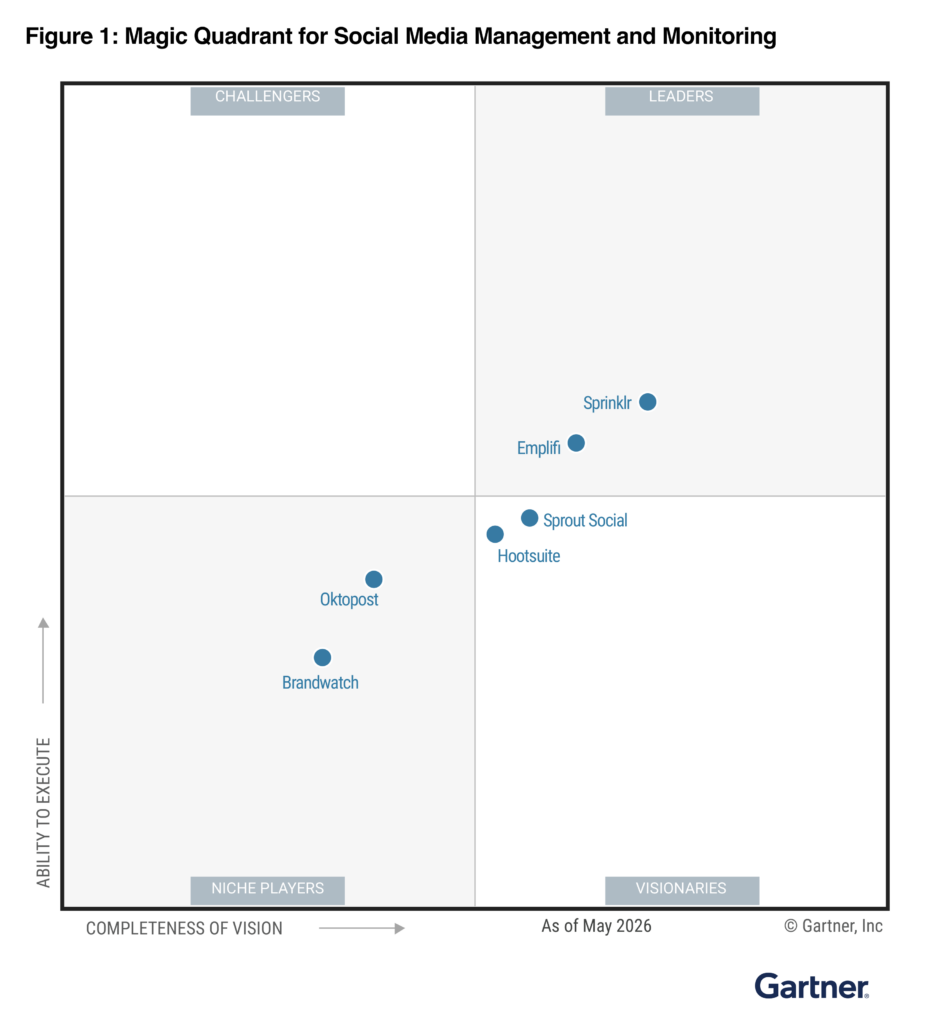
We’re recognized as a market leader in innovation, customer support, and ease of use from these organizations.