Choosing the right social media analytics tool requires asking the right questions about data quality, reporting capabilities, integrations, and scalability to ensure it aligns with your business goals.
In the vast sea of available social media analytics tools, how can one discern the differences between them? Not to mention, social media analytics encompasses various domains, with each tool boasting its unique set of strengths.
You’ve already worked hard to narrow your list to the top social media analytics tools you feel can help meet your needs. So, what should you look for to help you narrow your list further and find the one that’s right for you, and will help elevate your social media efforts to the level consumers expect from their favorite brands today?
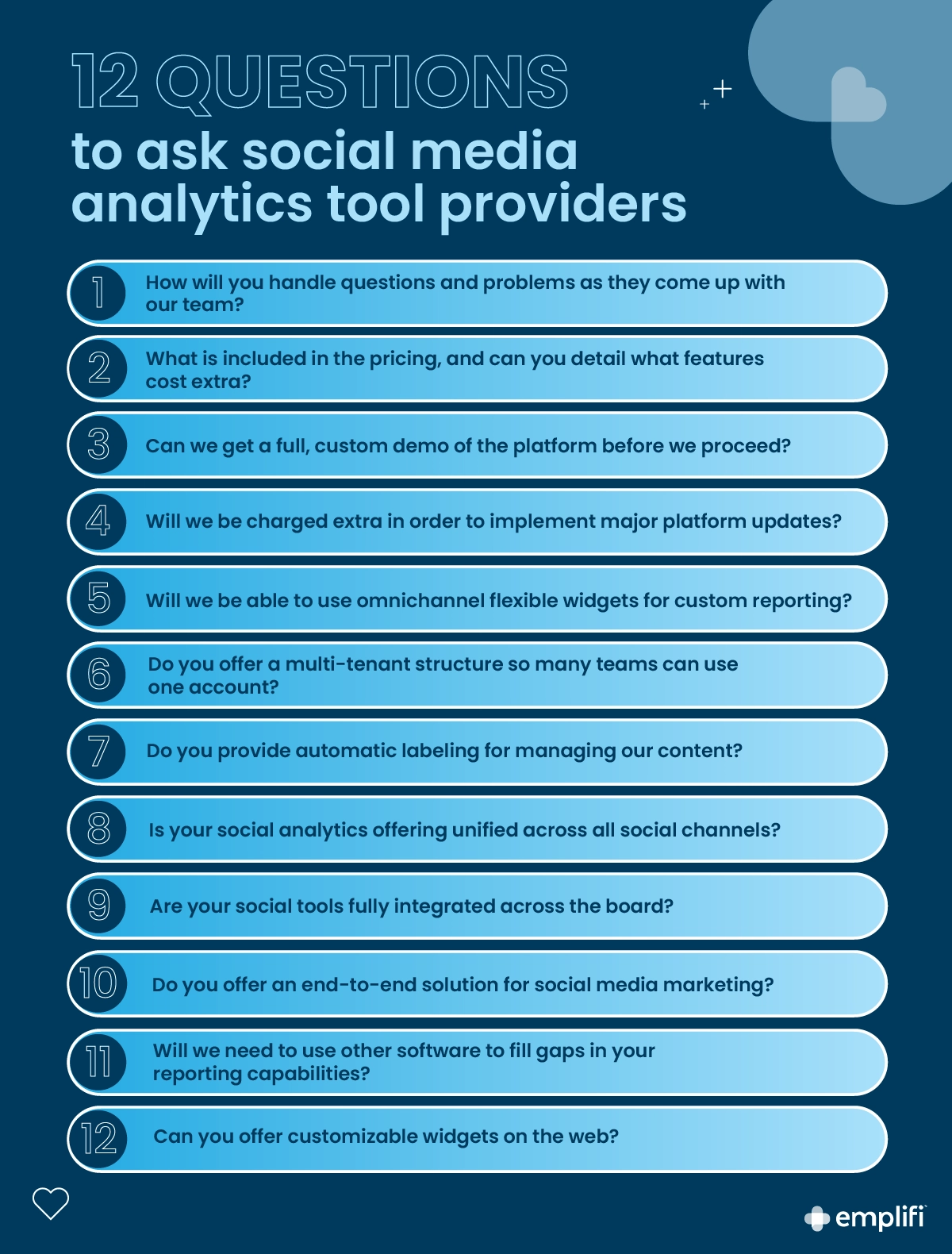
We’ve prepared a checklist of questions on key items to help you further fine-tune your search:

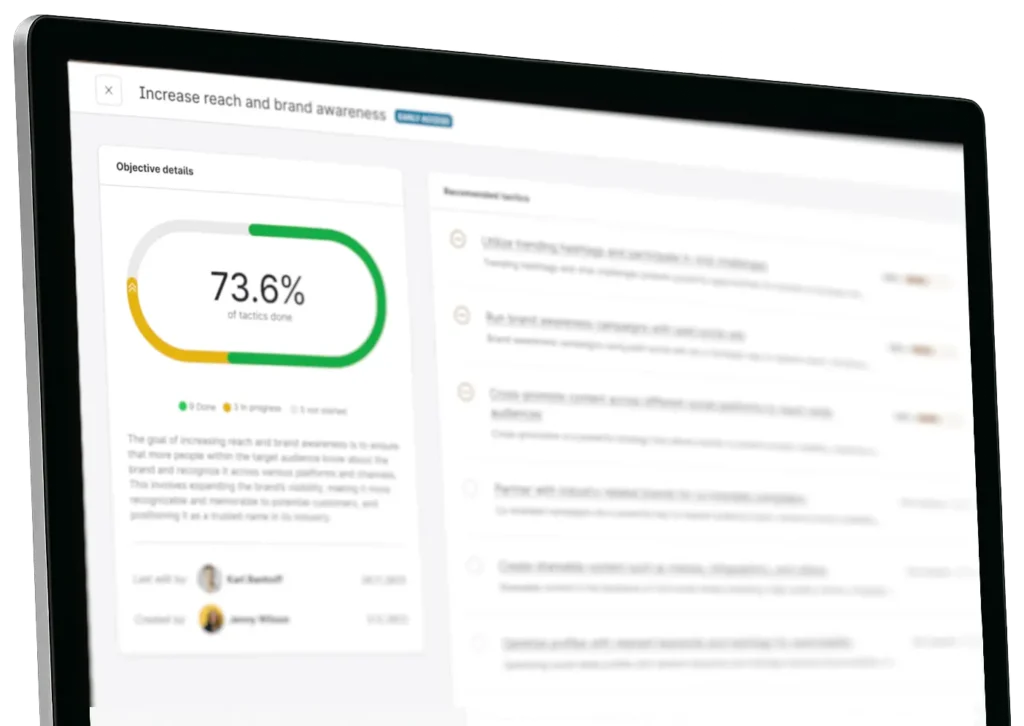
The right social media analytics tool is crucial to get the most out of your social media campaigns. If you’d like to see how Emplifi’s unified social media analytcs and reporting solution can help your team, let’s set up some time to talk.
Social media analytics tools vary widely in terms of data quality, features, and usability, so choosing the wrong one can lead to inaccurate insights, inefficient workflows, and missed opportunities. A thorough evaluation ensures the tool you select aligns with your goals, supports your team’s needs, and delivers reliable data you can act on.
Key questions should focus on how data is collected and validated, what metrics are available, how customizable reporting is, what integrations are supported, and how the platform scales with your business. It’s also important to understand the level of support and onboarding provided to ensure successful adoption.
You should look for transparency in how data is sourced, processed, and updated, as well as consistency across platforms. Reliable tools provide clear methodologies, minimize data discrepancies, and offer real-time or near real-time reporting so you can trust the insights you’re using to make decisions.
Integrations allow your analytics platform to connect with other tools in your tech stack, such as social media platforms, CRM systems, and marketing tools. Strong integrations reduce manual work, improve data consistency, and enable a more unified view of performance across channels.
Look for flexible, customizable reporting that allows you to tailor dashboards and metrics to your specific goals. The ability to automate reports, visualize data clearly, and share insights easily across teams is critical for making analytics actionable and accessible.
Ease of use is essential for adoption across teams, especially for organizations with varying levels of technical expertise. A user-friendly interface, intuitive navigation, and clear data visualization help ensure teams can quickly access insights and make informed decisions without extensive training.
The right tool should be able to grow with your organization, supporting additional users, markets, channels, and more complex reporting needs over time. Scalability ensures you won’t outgrow the platform as your strategy evolves.
Common challenges include comparing tools with overlapping features, understanding differences in data quality, and predicting long-term fit. Without a structured evaluation process, teams may choose tools based on surface-level features rather than deeper capabilities that impact performance.
Discover what Emplifi can do for you. We turn small teams into large ones, and large teams into well oiled machines, but either way, we offer the rocket ship, you just need to jump on.
We’re recognized as a market leader in innovation, customer support, and ease of use from these organizations.