2026 Gartner® Magic Quadrant™

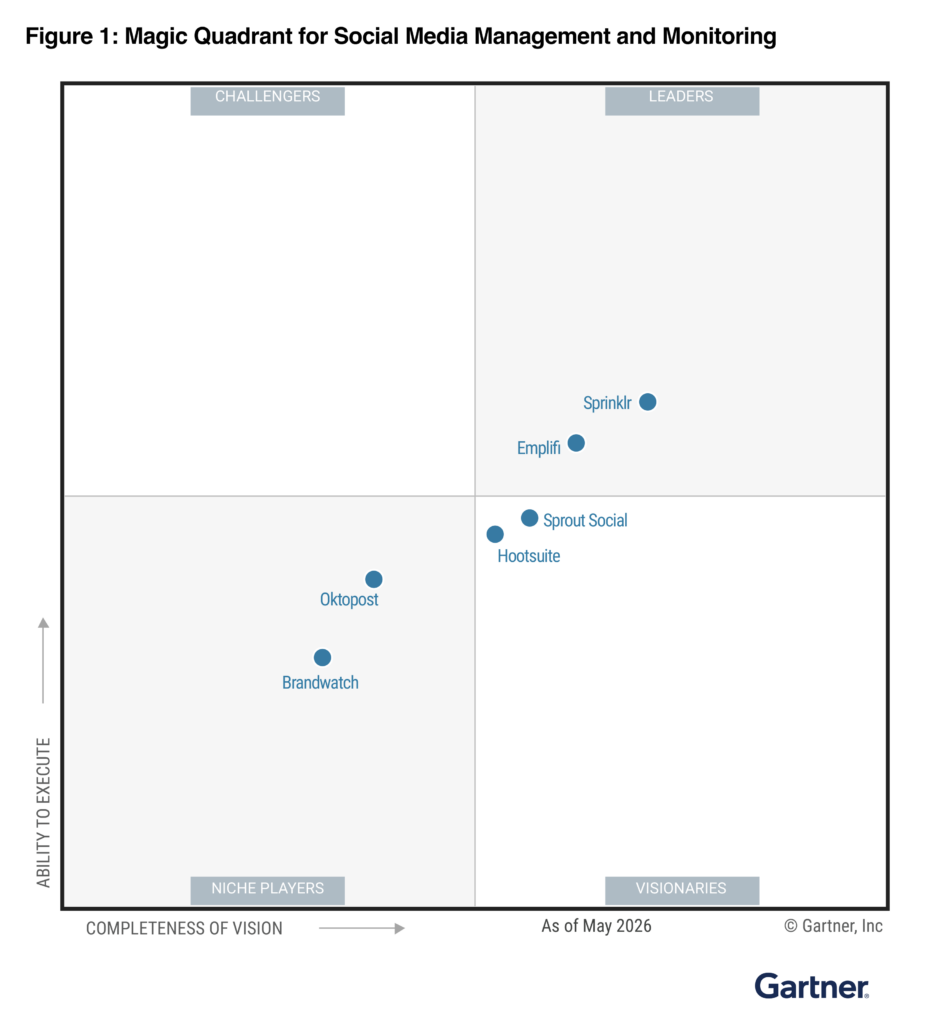
Emplifi named a Leader in the 2026 Gartner® Magic Quadrant™ for Social Media Management and Listening

Get the Report

Emplifi named a Leader in the 2026 Gartner® Magic Quadrant™ for Social Media Management and Listening Get the Report

Blog
5 min read
Jul 08, 2026

How to build the ROI business case for Agentic AI in customer experience

Build the business case for Agentic AI on three financial pillars: deflection and cost-to-serve, care-to-commerce revenue, and retention plus risk mitigation. Put a hard dollar figure on each one, and hand your CFO a single ROI model instead of three separate pitches.

Gabriel Tay Director of Business Consulting at Emplifi
Office focusing on the business case around agentic AI

Key points:

  • Finance won’t fund another tool that just moves cost around, they’ll fund one that actually removes it
  • The case rests on three pillars: what you save on deflection, what you earn from care-to-commerce, and what you keep through retention
  • Gartner puts assisted-channel resolution at roughly seven times the cost of self-service, and that gap is where the savings live
  • A resolved case can drive a sale too, when care, commerce, and social marketing run on the same data model

Your finance team isn’t focused on engagement or reach. They’re focused on one number: cost per resolution. The kind of figure they can sit next to last quarter and ask exactly what changed.

Agentic AI moves that number, because it does the one thing chatbots and copilots don’t: it finishes the job. It checks who you’re talking to, processes the return, confirms it’s sorted and updates the record.

There’s no need for a human to be involved unless something breaks the rules you set.

That’s the business case you should be making to your leadership team. Not a tool that helps your team, but a workflow that closes itself.

In this guide, you’ll learn:

  • Why finance keeps saying no to AI pitches that just shuffle cost around
  • The actual math behind deflection savings
  • How a support conversation turns into a sale
  • Why speed is a retention metric, not just a nice-to-have
  • How to put one number in front of your CFO instead of three

What are the three pillars finance actually cares about?

To make that argument land with finance and procurement, package it as one model with three pillars, rather than pitching three individual ideas. They are:

  • Deflection and cost-to-serve: how much you save on every contact AI closes without a human
  • Care-to-commerce revenue: how much new revenue care generates, instead of just spending budget
  • Retention and risk mitigation: how much revenue you keep, and how much risk you avoid

Each one maps straight to a number finance already tracks:

ROI pillar The metric it moves The question it answers
Pillar 1: deflection and cost-to-serve Cost per resolution (CPR) How much do we save on every contact AI closes without a human?
Pillar 2: care-to-commerce revenue Customer lifetime value, attributed revenue How much new revenue does care generate, instead of just spending budget?
Pillar 3: retention and risk mitigation Churn rate, brand equity How much revenue do we keep, and how much risk do we avoid?

Put all three together and you’ve answered the only question that actually secures budget: what’s the hard-dollar return, and when does it land?

How does deflection reduce cost-to-serve?

Pillar 1 is all about cost per resolution.

Here’s the trap most bots fall into: they “deflect” a ticket, the customer gets frustrated, gives up on the bot, and lands back in a human queue anyway. You end up paying for the bot, plus an agent’s salary, and you’re still left with a frustrated customer.

Agentic AI actually closes the loop. It checks who you are, processes the return, and confirms it’s done, all in the channel you started in.

Customer queries tend to fall into two buckets:

  • Tier 1 is the routine stuff, order status, returns, password resets, the volume that eats your team’s day without needing much judgment
  • Tier 2 is a step up, slightly more complex, but still pattern-based enough for an agent to handle inside clear rules

Here’s the formula finance actually wants to see:

Annual deflection savings = (human cost per resolution − agentic cost per resolution) × your annual Tier-1/Tier-2 volume

The gap between those two costs is bigger than you’d think. Gartner puts human-assisted resolution at $13.50 versus $1.84 for self-service, and an agent that’s genuinely resolving the case (not just routing it) lands a lot closer to that $1.84 end.

Plug in real numbers and it gets concrete fast. Say you’re handling 10,000 Tier-1/Tier-2 contacts a month, 120,000 a year:

Annual deflection savings = ($13.50 − $1.84) × 120,000 = $1,399,200

That’s the kind of number that gets a CFO’s attention, and it’s before you’ve even touched Pillar 2 or Pillar 3.

Here’s the comparison side by side:

Cost-to-serve input Human-handled Agentic resolution
Cost per contact ~$13.50 ~$1.84
What happens Routes, queues, escalates Verifies, acts, confirms
Peak season More headcount Same headcount
Who owns the outcome The agent The platform, on rules you set

Freshpet and Salomon used Emplifi to get there:

  • Freshpet put FAQ bots in front of the routine questions, freeing live agents for the harder conversations, and cut call volume 40%, sped up live-agent response by 29%, and hit a 97% bot match rate, no extra hires
  • Salomon connected the handoff between social agents and product experts so context travels with the case, and now runs 80+ accounts worldwide through one system, with 99.8% of cases handled clean

And that’s before a single resolution runs end to end on its own. Either way, peak season stops being a hiring panic.

How does autonomous CX turn care into commerce?

Pillar 1 shrinks costs. Pillar 2 grows revenue, which is the bit that actually gets CX out of the “cost center” box.

Here’s how it plays out:

  1. Someone complains on Instagram
  2. The agent fixes the issue
  3. In the same message, it drops a product recommendation tied to what they were already buying
  4. A sizing complaint turns into a replacement plus an add-on
  5. Both get credited back to the support conversation that started it

This only works because care, commerce, and marketing run on the same data, not three separate tools pretending to talk to each other. Here’s what that actually looked like for two Emplifi customers:

Customer What changed Result
Carhartt UGC-driven product recommendations surfaced inside care conversations 27% conversion from user-generated content; $150K in revenue from customer-submitted posts
GNC Real customer content put in front of shoppers 200% lift in repeat visits


Our customers don't just wear Carhartt, they live in it. And they want to see that reflected back at them. That's why UGC is so powerful: it's their world, their reality, their stories.
Kaleena Ocasio
D2C Digital Content Specialist, Carhartt

A resolved case used to be the end of the story. Now it’s the start of another sale.

Pitching this to your CFO? Here’s the frame: revenue per resolution.

Take your attach rate, multiply it by average order value, across everything you’re handling autonomously, and the care budget starts paying for itself.

How does this protect you from churn, and a PR disaster?

Pillar 3 is the one finance always underrates, because you don’t see the cost until the customer’s already gone.

A customer waiting 24 hours for a refund decision is already on a competitor’s site. A customer whose refund clears in 30 seconds at 2am? They’re buying from you again.

Nearly half of customers (46%) walk after just two bad experiences. Every slow resolution is a step toward losing someone for good.

Run the numbers the way finance already does: it costs way more to win a new customer than to keep one happy. The savings is the gap between “replace a lost customer” and “an agent fixes it on the spot for next to nothing.”

Then there’s the other half: reputation. AI listening catches a sentiment spike before it becomes a headline, and brand equity is brutally expensive to rebuild once it’s damaged. The same detection speed that helps a marketing team spot a trend early is what catches a brewing problem before it spreads.

Trending insight: The State of Social Media Marketing 2026 report

82% of marketers say AI has improved productivity. See what's separating the ones getting real results from everyone else.

Download now

How does this reduce turnover and burnout?

Agents who used to spend all day on password resets and return labels move up. They take the VIP cases and the messy emotional ones, the stuff that genuinely needs a human.

Happier agents, less burnout, and way less money spent constantly hiring and retraining.

When it comes to making your case for introducing Agentic AI to your team, these are the three numbers your finance team will actually care about:

  • Less turnover spend: fewer burned-out people quitting means less money on recruiting and onboarding replacements
  • Better use of payroll: the same headcount now handles harder, higher-value work
  • Faster ramp-up: people are doing judgment calls, not mind-numbing repetition, so they get good at the job faster
Workforce input Before agentic AI After agentic AI
Recruiting and onboarding spend High, driven by burnout-related turnover Lower, fewer replacement hires needed
Use of payroll Spent on repetitive Tier-1 work Spent on higher-value, judgment-based cases
Time to proficiency Slower, repetitive tasks delay skill-building Faster, agents ramp up on judgment calls sooner

What’s the combined ROI?

Add the three pillars together and you get one number, not three.

Using the example above: $1,399,200 in annual deflection savings, plus whatever your attach rate and average order value generate in care-to-commerce revenue, plus whatever you’d otherwise lose to churn and customer replacement cost.

Subtract what the platform costs you, and that’s the ROI you bring to your CFO.

ROI pillar What it captures Formula
Deflection and cost-to-serve Savings on every contact AI closes without a human (Human cost per resolution − agentic cost per resolution) × annual Tier-1/Tier-2 volume
Care-to-commerce revenue New revenue generated through care conversations Attach rate × average order value, across autonomously handled contacts
Retention and risk mitigation Revenue kept and replacement cost avoided Prevented churn × cost to replace a customer

Final thoughts: Emplifi helps you get the budget approved

A business case is only as good as the platform behind it. Three separate tools for deflection, revenue, and retention? That’s three integrations your CFO doesn’t trust and three negotiations procurement has to survive.

Emplifi runs autonomous listening, care, commerce, and marketing on one platform. One data model and one agentic layer, which means the savings, the revenue, and the retention numbers all come from the same place instead of getting duct-taped together after the fact.

Walking into that budget meeting, that’s your closing line: one platform, one ROI engine, and three numbers your CFO can actually check.

Stop guessing at the value. See exactly how much Agentic AI can save you. Request an Emplifi ROI assessment today.

Frequently asked questions

Run one calculation per pillar, then add them up. For deflection, take the human cost per resolution, subtract the agentic cost per resolution, and multiply by your annual Tier-1/Tier-2 volume. For revenue, multiply your attach rate by average order value across everything you’re handling autonomously. For retention, multiply prevented churn by what it costs to replace a customer. Add the three numbers together, subtract what the platform costs you, and that’s your ROI.

Cost per resolution, revenue attributed to care, churn rate, customer lifetime value. Throw in turnover cost and employee satisfaction too. Skip the vanity metrics like impressions, nobody’s funding “reach.”

When an agent fixes an issue on social, it can see what the customer’s bought before and suggest something relevant, right there in the chat. Because everything runs on one data model, that sale gets credited straight back to the support conversation. No manual tracking required.

Churn, plus reputation damage. Almost half your customers will leave after two bad experiences, and an ignored complaint can spiral into something far more expensive than the original problem. Speed fixes both.