Fully human-handled customer service interactions cost around $13.50 once staffing, training, QA, and operational overhead are factored in. Autonomous AI resolutions cost a fraction of that across high-volume digital channels, helping enterprise brands reduce cost-per-resolution, improve response times, and scale omnichannel customer care more efficiently.
If your team is still manually handling routine inquiries, you’re leaving money on the table.
Autonomous AI agents can now resolve customer queries end-to-end at a speed human teams simply can’t match, with first response times dropping from over 6 hours to less than 4 minutes.
And speed is exactly what customers are looking for right now.
According to Emplifi research, one-third of consumers expect a response to their DM within the hour, which means your brand must be available 24 hours a day, seven days a week, across every channel your customers use.
Scaling a human support team to meet that demand isn’t sustainable, especially when you factor in hiring, onboarding, training, and agent turnover.
Autonomous AI changes that equation by allowing brands to scale customer care more efficiently without scaling headcount at the same rate.
And with 71% of consumers reporting they’re satisfied with AI support experiences, the case for autonomous agents is clear.
The question is, can you afford to delay implementing them into your customer care program?
Before we get into how AI agents could be saving you money, let’s clarify what we mean by cost-per-resolution.
In customer service, cost-per-resolution is defined as the total operational cost required to fully resolve a single customer support interaction.
In omnichannel customer care environments, that includes:
As your customer base and inquiry volume grow, keeping cost-per-resolution low is what separates a scalable care program from one that breaks under its own weight.
Let costs run too high, and you’re faced with an uncomfortable choice: reduce service quality, increase headcount spend, or both.
That’s exactly the problem Autonomous AI is built to solve by resolving more interactions at a fraction of the cost, without adding headcount.
Watch our product tour to see how AI case routing could work for your business
To understand just how much value autonomous agents can provide, you should calculate your current cost-per-resolution.
For example, a human agent, operating at capacity, won’t just need to be paid a salary. You’ll also need to consider:
According to Gartner, this can amount to $13.50 per customer contact, depending on complexity and channel.
By comparison, autonomous AI resolutions cost a fraction of fully human-handled queries, averaging just $0.17 per interaction. And the difference is even more apparent when you’re dealing with customer conversations at scale.
Take a single high-volume use case: WISMO (“Where is my order?”) queries on WhatsApp. If you’re handling 10,000 of those requests per month, here’s the cost difference with autonomous AI:
For your most repetitive, high-volume enquiries, autonomous agents could be a much more cost-effective solution, lowering the cost-per-resolution for every query.
It’s also worth factoring in what autonomous agents can do for the humans on your team.
When AI handles the repetitive, high-volume queries, your agents spend less time copy-pasting order numbers and more time on the work that actually needs them.
That could make a huge difference to their workload and stress levels. According to Emplifi research, 76% of marketers experience burnout at least occasionally, and as your business scales, agents handle far higher volumes of interactions, making the pressure even greater.
Autonomous AI handles low-value, repetitive work so your team can focus on the interactions that truly require a human touch, such as complex complaints or high-value customers.
You might currently be using a chatbot to handle customer queries. It works well, providing you’ve given it links to relevant pages and scripted responses to follow.
Yet around 32% of chatbot queries are still escalated to a human agent. Rather than reducing your team’s workload, they can delay the inevitable, resulting in the customer arriving frustrated.
Autonomous AI agents work differently.
They resolve issues without human intervention. Because they integrate directly with your backend systems, such as Shopify, Salesforce, and your returns portal, they can provide near-instant answers and trigger refunds or exchanges on their own.
Here’s what that looks like in practice:
Because the system operates entirely on its own, cost-per-resolution drops to a fraction of what a human-handled interaction would cost.
Here’s how a legacy chatbot compares to an autonomous AI agent:
The same model also supports real-time social commerce workflows.
A customer asking about sizing in an Instagram DM can receive product guidance, initiate an exchange, and complete the resolution without ever leaving the conversation.
In this way, autonomous agents become part of your broader shopping experience, making it an ideal fit for your social channels where customers are asking for advice and support.
According to Emplifi research, 55% of frequent social media users turn to Facebook for customer service and 47% use Instagram for customer care interactions. Autonomous agents operating natively in those channels turn what could be a friction point into a seamless brand experience.
See more stats like this in our latest report
If autonomous AI isn’t high on your priority list, it’s time to rethink that.
Teams working with limited resources are under pressure, with 53% of customer service practitioners citing managing ticket volume without growing headcount as their top challenge.
And using your human team to resolve repetitive, low-value tickets is an expensive way to solve that problem. They’re better deployed on complex cases that actually need them.
Some organizations still look to offshore support teams as the answer to rising costs. But offshore teams can’t scale instantly to absorb a viral spike, maintain a consistent brand voice across complex social channels, or provide management infrastructure and shift coverage.
Autonomous AI, however, operates 24/7 with consistent brand compliance and unlimited scalability.
Meanwhile, your human team is free to build stronger customer relationships, handle high-value escalations, and focus on the work that actually drives loyalty.
It’s worth noting that not every AI platform is built to support autonomous customer care agents at scale.
Running every customer interaction through a Large Language Model (LLM), for example, can push your usage rates up without adding any real value.
The right platform will depend on the integrations it supports, the channels it operates across, and how intelligently it orchestrates the work between AI and humans.
That means:
Emplifi’s Autonomous CX platform is built around unified orchestration across social and digital channels, routing interactions intelligently so brands can handle routine support efficiently while deploying deeper AI reasoning where it drives the most value.

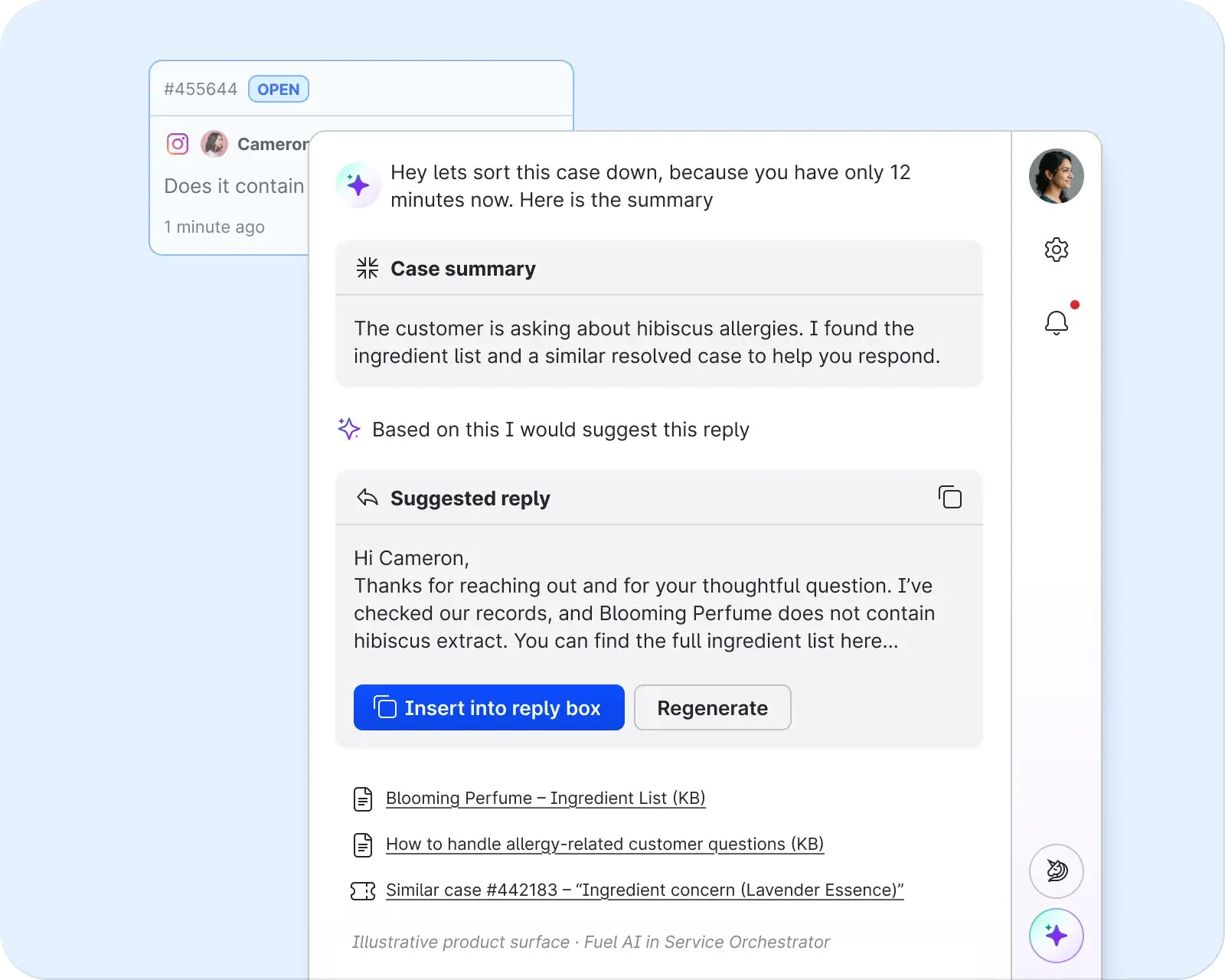
Emplifi Service Orchestration dashboard displaying AI-driven customer issue resolution and case management.
The financial case for autonomous AI in customer care is becoming increasingly difficult to ignore.
Human-handled tickets cost significantly more than autonomous resolutions across social and digital channels. At enterprise scale, that quickly becomes very expensive.
And the longer organizations wait, the more they’re overspending on customer support.
Autonomous AI reduces customer service cost-per-resolution by automating high-volume digital interactions while maintaining fast, in-channel customer support across social and messaging platforms.
Here’s where to start:
Understanding where you are right now can help you lay the foundations for your own autonomous AI implementation strategy.
Ready to see the numbers for your own operation? Book a demo of Emplifi’s Autonomous CX capabilities to explore how autonomous AI can reduce operational costs across your customer care channels.
Cost-per-resolution measures the total operational cost required to fully resolve a customer support interaction. That includes staffing, onboarding, tooling, management overhead, escalation handling, and the time required to move a customer issue from initial contact to final resolution. As conversation volumes continue growing across social and digital channels, reducing cost-per-resolution has become a major priority for enterprise customer care teams looking to scale more efficiently.
Autonomous AI agents help reduce customer service costs by resolving repetitive, high-volume enquiries without requiring manual intervention from human agents. Instead of escalating routine issues such as delivery updates, returns, or account changes, AI agents can access backend systems, execute workflows, and resolve customer requests directly in the conversation. Emplifi’s Autonomous CX platform helps brands automate customer care across social and digital channels while maintaining governance, orchestration, and human oversight.
Legacy chatbots were primarily designed to deflect tickets by redirecting customers to FAQs or escalating issues to human agents. Autonomous AI agents operate differently by resolving customer issues directly through connected systems, workflow execution, and contextual understanding. Instead of handing conversations off when requests become more complex, autonomous AI can maintain customer context, trigger actions, and deliver resolutions within the same interaction.
Yes. Modern autonomous AI agents can operate natively within platforms like Instagram, WhatsApp, Messenger, and X, allowing brands to resolve customer issues directly inside the channels customers already use. This helps reduce friction, improve response times, and create more seamless omnichannel customer experiences without forcing customers to switch platforms.
Discover what Emplifi can do for you. We turn small teams into large ones, and large teams into well oiled machines, but either way, we offer the rocket ship, you just need to jump on.
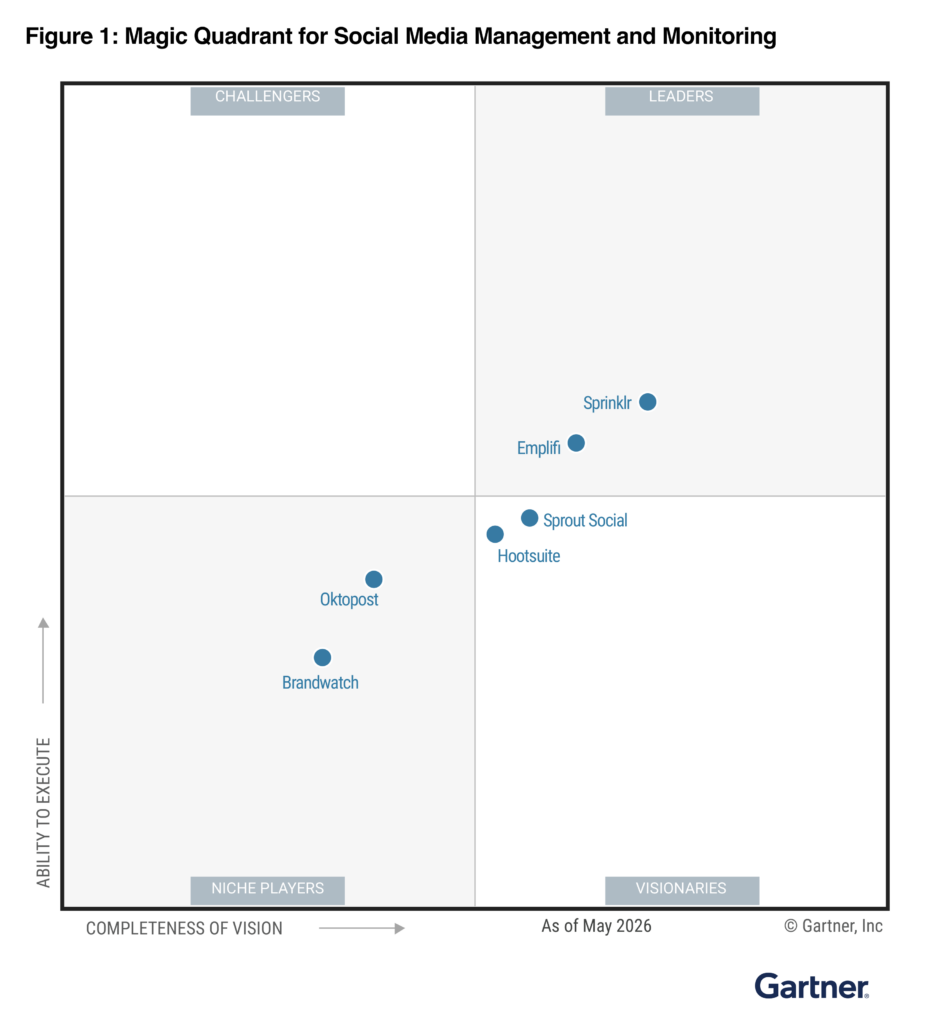
We’re recognized as a market leader in innovation, customer support, and ease of use from these organizations.