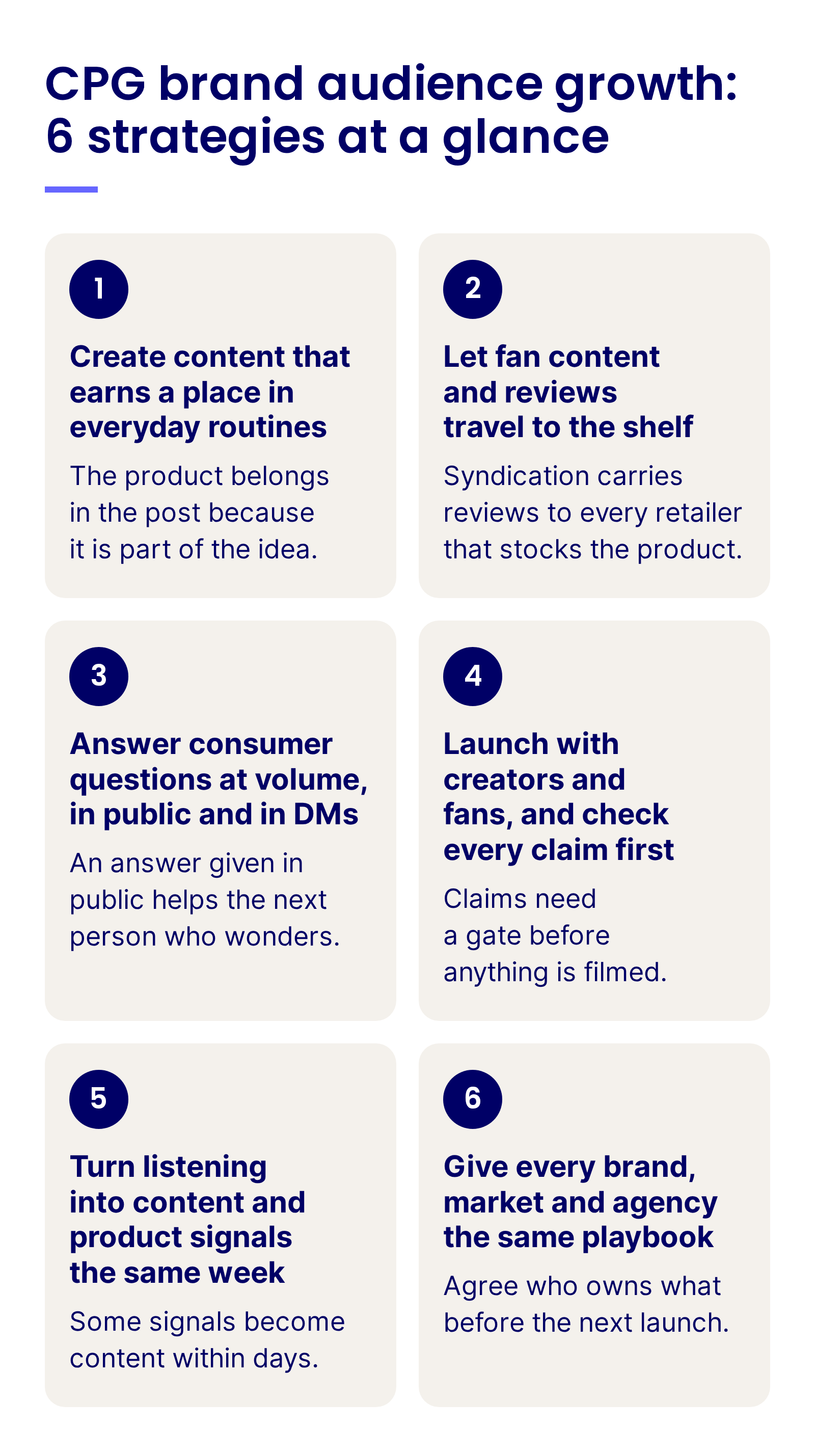
The fastest way to grow a CPG social media audience is to become part of people’s everyday routines and make sure the reviews and answers they look for reach every retailer page. Six strategies do it: everyday content people return to, reviews that travel to the shelf, consumer questions answered at volume, creator launches with claims checked first, listening acted on the same week, and a shared playbook for brands, markets and agencies.
A jar of pasta sauce, a box of crayons, a bag of dog food: consumer packaged goods get bought often and mostly on autopilot, in a store aisle or on a retailer’s app. The retailer rings up the sale and keeps the customer record.
Social is one place where the brand can own the relationship. A parent tags a crayon brand in a toddler’s latest mural, a pet owner asks whether a recipe suits an older dog, and someone posts the chili they made with your beans. That direct line is the heart of CPG social media, and for many brands it is one of very few they have.
People are open to it: in Emplifi’s Social Pulse survey of nearly 1,000 US social media users, 58% said they follow brand accounts for entertainment. That attention matters more to a CPG brand than to most, because the purchase happens somewhere else.
Growth looks different, too: a CPG brand rarely wins one big decision, and grows instead by staying in the routine, from the recipe someone saves to the review sitting next to the product on the retailer page.
This guide is written for social media, brand and digital marketing leaders at consumer packaged goods brands, and for the consumer affairs teams who answer the questions. It builds on our guide to social media strategy for CPG brands with six strategies, channels, AI, measurement and a 30/60/90-day plan, including a fast track for teams with a launch or seasonal moment coming up.
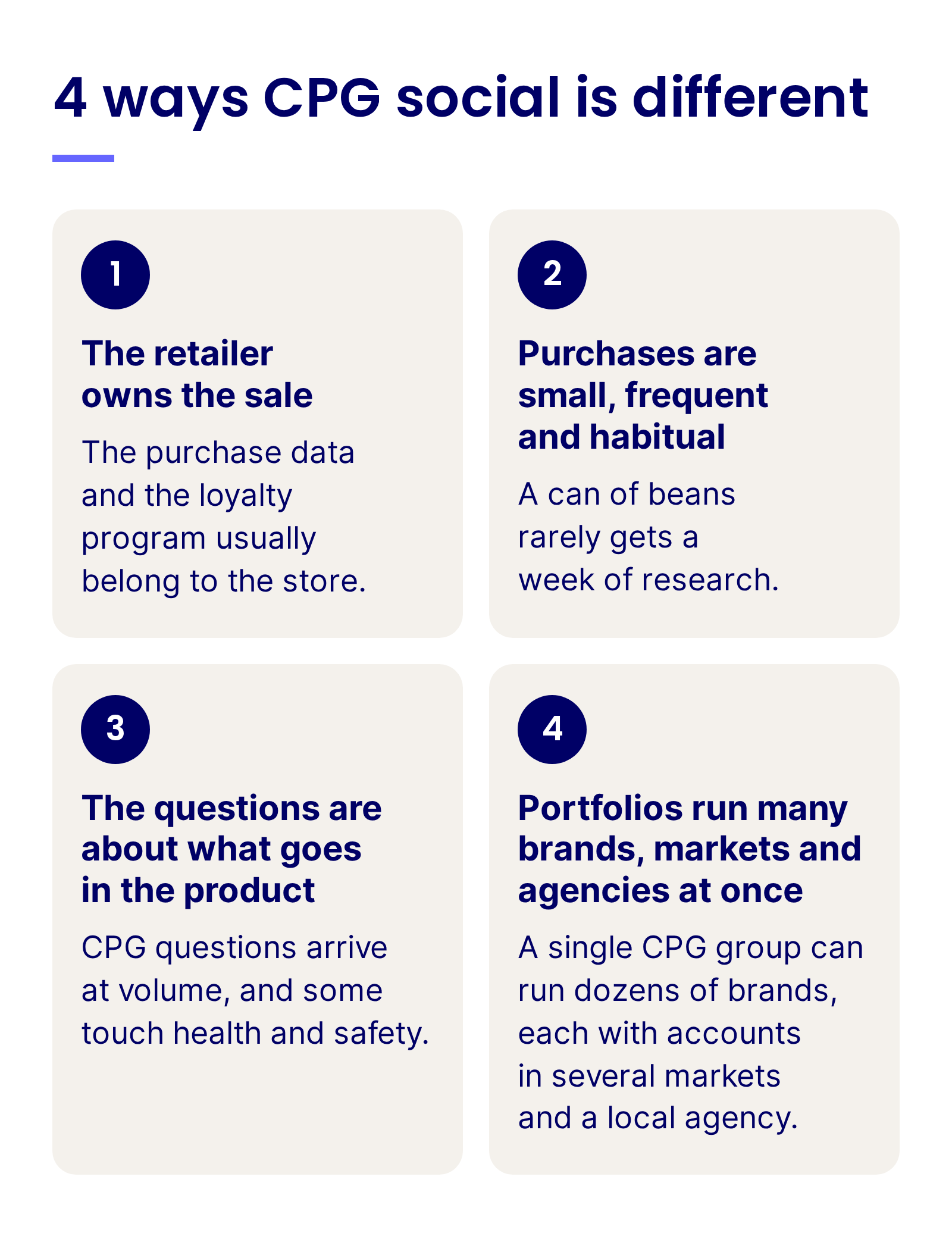
Four things set consumer packaged goods brands apart on social, and each one changes how a growth program works.

1. The retailer owns the sale. The purchase data and the loyalty program usually belong to the store. Emplifi’s Digital Authenticity research found that for purchases under $20 or £20, research most commonly starts on marketplaces and company websites, so a brand’s reviews and customer content need to be on those pages when people arrive.
2. Purchases are small, frequent and habitual. A can of beans rarely gets a week of research. People buy the same brands on repeat until something gives them a reason to switch, so growth comes from being part of the weeknight recipe or the rainy-afternoon craft.
3. The questions are about what goes in the product. Ingredients, allergens, where to find a flavor, what to do about a damaged pack: CPG questions arrive at volume, and some touch health and safety. The same Digital Authenticity research found 84% of consumers say quick response time is critical to authentic customer service, and an allergen question needs an answer that is both quick and right.
4. Portfolios run many brands, markets and agencies at once. A single CPG group can run dozens of brands, each with accounts in several markets and a local agency, often with a small team: in Emplifi’s State of Social Media Marketing report, 36% of social teams across industries have fewer than four people. In alcohol, food and health categories, each of those accounts also works within claims rules and, in some cases, age limits.
Bring one of your products and we’ll show you how its reviews, photos and consumer questions could work harder for it.
Most of the stuck points below come from how the work is organized between brand teams, consumer affairs and agencies, which makes them fixable.
The calendar runs from promotion to promotion. Coupons and retailer deals deserve their slot, and they work: Emplifi’s Social Pulse research found 60% of consumers have made a social purchase because of a discount or promotion. Between those moments, many feeds go quiet, and followers have little reason to stay.
Reviews stay on the brand’s own site. Many brands collect reviews on their website and stop there. The shopper reading a retailer’s product page never sees them, so a new flavor sits next to a rival with hundreds of reviews and a handful of its own.
Consumer affairs and social work in separate systems. A question about an allergen arrives in a TikTok comment, while the approved answer lives in the consumer affairs knowledge base. In Social Pulse, 55% of frequent social media users said they most often turn to Facebook for customer service issues and 47% to Instagram, so the questions land on social whether the workflow is ready or not.
Reporting stops at reach. Because the retailer holds the sales data, social reports often end at impressions and follower counts, which leaves commercial leaders asking what social did for the brand on the shelf.
Each strategy below works on its own, and together they cover the path from first follow to repeat purchase. Pick the one closest to your biggest gap and start there.
People keep following a brand they buy every week when the feed is useful or fun between purchases. For a food brand that means recipes and shortcuts, and for a craft brand something to make on a Saturday morning. The product belongs in the post because it is part of the idea, and visual, everyday categories start with an advantage on Instagram.
Emplifi research: Emplifi’s Social Media Benchmarks report found beverage (24.59), FMCG food (23.74) and alcohol (23.73) brands earned more median interactions per 1,000 impressions on Instagram than any other industry except airlines.
Seasonal and cultural moments give a habitual product a fresh reason to show up, from a cold-weather chili to recipes for Ramadan evenings. Plan them market by market, because a moment that fills feeds in one country barely registers in another.
Bush’s says it asked a witch to cast a good-weather spell on Chili Magic, so Halloween is “just chilly enough for chili,” and points followers to limited-edition cans.
Entertainment travels furthest. In Emplifi’s quarterly FMCG Food benchmarks, the top food brand on Instagram by interactions was Grillo’s Pickles, with almost 5 million interactions from 179 posts, and its most-engaged post of the quarter was a Reel. Humor works across categories: in Emplifi’s Social Pulse research, 28% of social media users said a post that used humor has driven them to buy.
Grillo’s Pickles tells “the tale of the pickle king” in a Reel with a one-line caption and no recipe in sight.
A few habits keep everyday content in the routine:
Try this: Write one “use it this week” idea for each of your five best-selling products and post them as a carousel series. Compare saves and shares with your last five promotional posts.
CPG proof does its best work on pages the brand doesn’t own. A shopper choosing between two salsas on a grocery app reads the reviews on that page, and reviews collected on a brand’s own website rarely reach it unless they are syndicated there.
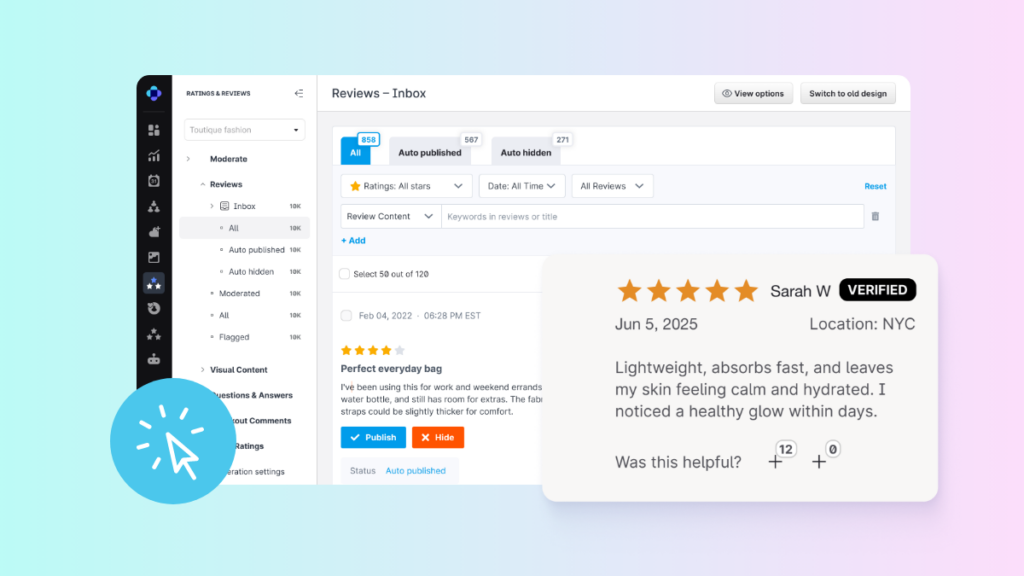
Syndication carries reviews to every retailer that stocks the product, so coverage follows it wherever it is sold. Because the retailer keeps the customer record, most CPG brands gather reviews through sampling programs, on-pack prompts and retailers’ own review programs, and add post-purchase email only where they sell direct. Start with new launches, which arrive with no reviews, and the best sellers at your largest retailers. Emplifi Ratings and Reviews syndicates reviews to hundreds of retail partners.
Retailers have their own reasons to want that content: GNC, the health and wellness retailer, shows reviews from vendor websites on its own product pages and has collected more than 145,000 syndicated reviews alongside more than 130,000 native ones. “We’ve onboarded quite a few vendors via syndication and it’s wonderful that I only have to make the connection with the vendor and the Emplifi team handle the rest,” says Alison Schmitz, Product Manager, Ecommerce at GNC.
Our guide to how retail brands grow their social media audience covers the retailer’s side of this exchange. For the brand, credible proof matters most on a shelf full of similar products.
Emplifi research: Emplifi’s Digital Authenticity research, a survey of 1,650 US and UK consumers, found 85% will pay more for brands they see as authentic.
Fan photos and videos belong in the same flow: once the fan has given permission, a tagged photo of a kid’s craft or a dog at dinner works on product pages, in retailer content and in paid social. In Emplifi’s quarterly FMCG Food benchmarks, brands using Emplifi UGC recorded an average 11.49x conversion rate uplift on UGC, a figure from the Worldwide Brands UGC benchmark, which covers every category.
Freshpet puts a five-star review from “Adam F, real pet parent” on a feed post, stars and quote included, above a photo of a dog at its bowl.
Reply to critical reviews on retailer pages as well as your own, because the next shopper reads the answer along with the complaint.
Measure this: Track review count and average rating by product at each of your top retailers, and the share of new launches with 10 or more reviews by the end of their first month on shelf.
Every CPG brand gets the same questions on repeat. Is it gluten-free, does it contain nuts, where can I find the new flavor? An answer given in public helps the next person who wonders, and some answers protect a consumer from harm.
Consistency matters because switching is easy when the alternative sits on the same shelf, and in Emplifi’s Social Pulse research, 46% of consumers said they leave a brand after two bad experiences.
At B&G Foods, the consumer affairs team uses Emplifi Agent to handle phone, email, social and mail for more than 50 brands, with UPCs, best-by dates and availability by location on screen for every agent. When an acquisition brought a 50% increase in contact volume, agents answered the new brand’s questions from the same system.
B&G Foods: More than 80,000 consumer contacts served a year, up 176% since rollout, with email response time cut from an average of two days to minutes.
Bush Brothers & Company, the family-owned maker of Bush’s Beans, handled about 30,000 calls, letters and emails a year on recipes, ingredients, product issues and where to find a product. Moving that work into Emplifi Agent took turnaround from three to four days to same-day responses, without adding staff.
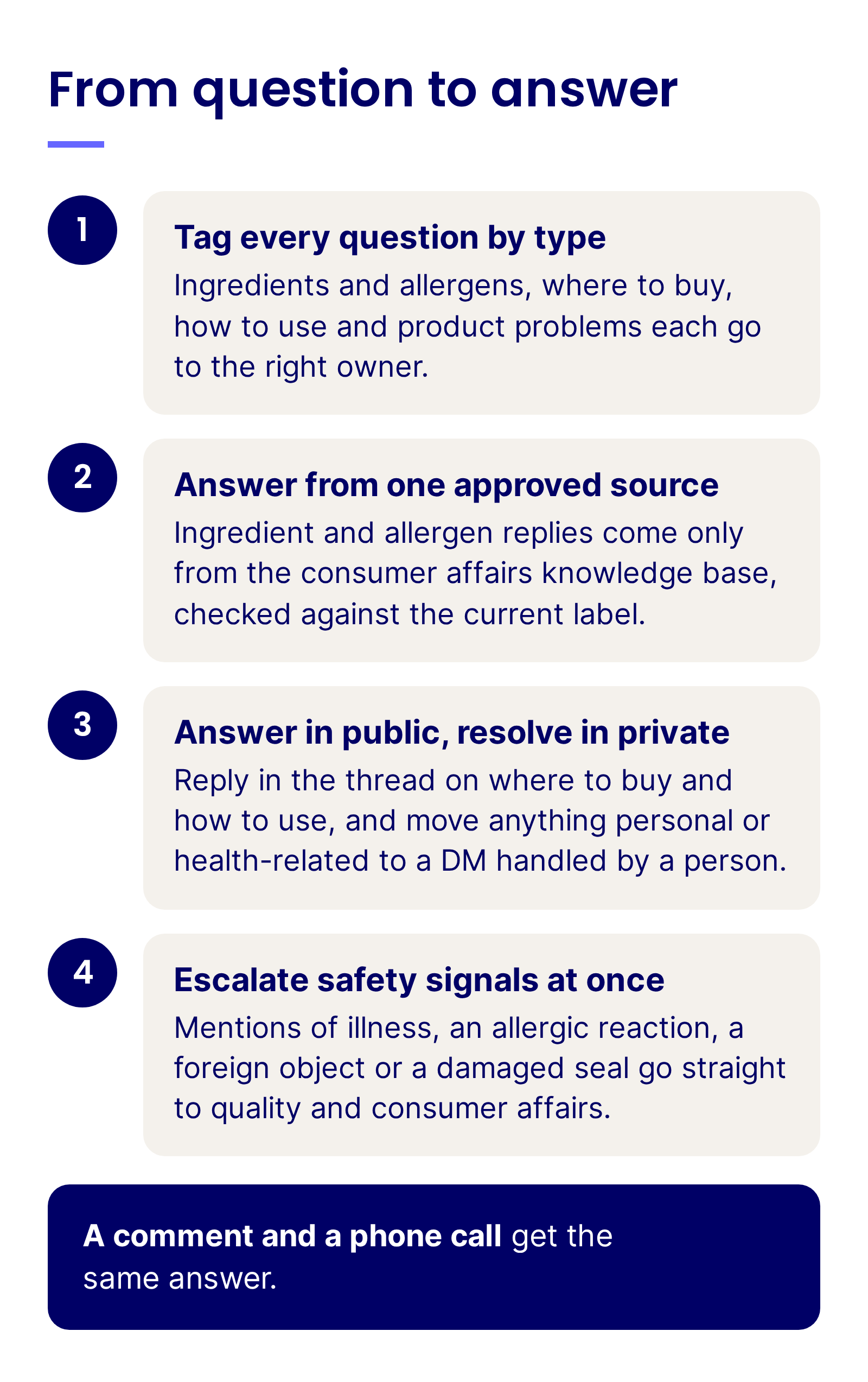
Four steps keep social and consumer affairs giving the same answers:

When a recall happens, pin one approved statement on every affected account, use the same wording on every channel and point replies back to it, with consumer affairs owning the statement and its updates. Pause scheduled posts for that brand until the statement is live.
Turn the questions consumer affairs answers most into short videos, so the answer to “how should I store this?” reaches people who never ask.
Freshpet teams up with veterinarian Dr. Terrell to work through common pet nutrition questions on camera, under the title “Fur-real or fiction?”
Launches are where CPG brands need reach most, whether it is a new flavor or a format nobody has tried yet. Creators who already cook or care for pets the way your buyers do can explain a new product to their audience in a voice it trusts.
Instagram Collabs make that reach direct: in Emplifi’s analysis of Instagram collab posts, more than 73% of brands published collaborative posts, and accepted collaborations, where the creator publishes and invites the brand as co-author, delivered the strongest engagement uplift. Brands with the most user-generated content tagging them also saw stronger collab results, so the fans already posting about you are a good place to look for creators.
Creator @thebeautybeau shows the Crayola Color Wonder Magic Light Brush in a Collab with @crayola, and her caption opens with #ad.
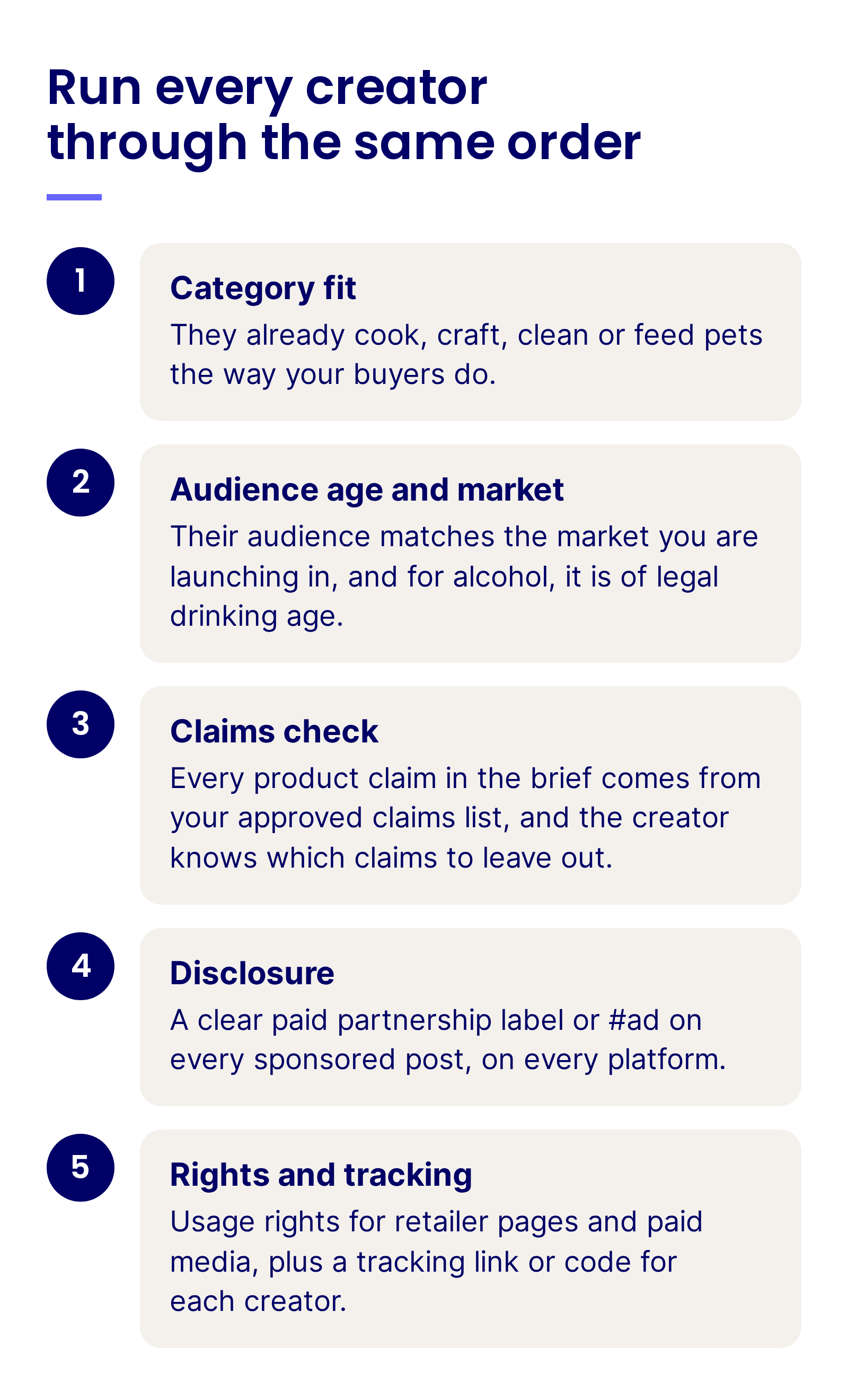
Claims need a gate before anything is filmed, because food, nutrition, health and sustainability claims are regulated in most markets, and a creator improvising “this is so healthy” on camera can turn an approved product into an unapproved claim. Alcohol brands carry extra checks on the age of creators and their audiences, and on the responsible drinking messages that travel with the content.
Disclosure has its own rules. In the US, creators and brands follow the FTC’s Endorsement Guides, and in the UK, the ASA and CAP guide for influencers sets out how to make clear that ads are ads.
Run every creator through the same order before anyone shoots anything:

Fans count as launch partners too, so send early product to people who already post about you, invite them to tag the brand and label any review that came from a free sample. Their first photos and reviews are what a launch needs on retailer pages in its first weeks.
Social listening tells a CPG brand what its sales data often can’t: the flavor people wish existed, the unexpected way they use a product, the ingredient worry spreading through a parenting group, the pack that leaks. Its value depends on how quickly someone acts on it, so agree in advance who receives each kind of signal.
Some signals become content within days: a pairing fans keep mentioning becomes next week’s recipe, and a hack that is spreading gets the brand’s own version. In the same Social Pulse research, 21% of social media users said content that felt topical and current has driven them to buy.
Other signals belong with the product team. Freshpet uses social listening to join wellness conversations on TikTok and Instagram even when the brand isn’t tagged, and shares recurring themes about recipes, ingredients, feeding guidance and quality with its marketing, digital product and quality teams. “Emplifi helps us move beyond narratives, so everyday parent conversations can inform smarter business decisions for us,” says Lisa Diehl, Senior Director of Consumer Care at Freshpet.
Launch posts are some of the richest sources a brand has, because the comments fill up with where-to-buy questions and votes for what should stay.
Bush’s announces Apple Pie, Dill Pickle and Rocket Pop beans as summer-only flavors, with “Now at Walmart” on the image, and the comments ask where to find a flavor and which one should stay.
Risk signals need the same speed: a run of posts about a strange taste or a broken seal is often the first sign of a quality issue, and it belongs with quality and consumer affairs that day, alongside a holding reply in the thread.
Try this: Keep one slot in each week’s calendar open for a post that comes from listening, and send a short weekly digest of the top three product requests and complaints to the product and quality teams.
In a CPG portfolio, each brand has its own voice and each market its own agency and calendar. Without shared tools and rules, the global team can’t see what’s working or compare one launch with another. The consumer affairs setup at B&G Foods in strategy 3 applies the same idea to questions, with one knowledge base behind every brand.
Jägermeister’s local markets once ran social through their own agencies and tools, which left the global team with no central access and no consistent data. Today its accounts across markets are managed in Emplifi, with shared scheduling, reporting and KPIs.
Jägermeister: More than 150 social accounts across markets managed in one place, more than 100 hours a month saved with automated reporting, and one KPI framework across regions.
“We’re able to maintain visibility from HQ while giving each market the autonomy to operate in the way that works best for them,” says Kat Geborys, Global Head of Digital Marketing at Jägermeister. Shared rules are what make that autonomy safe, from a common approval workflow to the same definitions in every report.
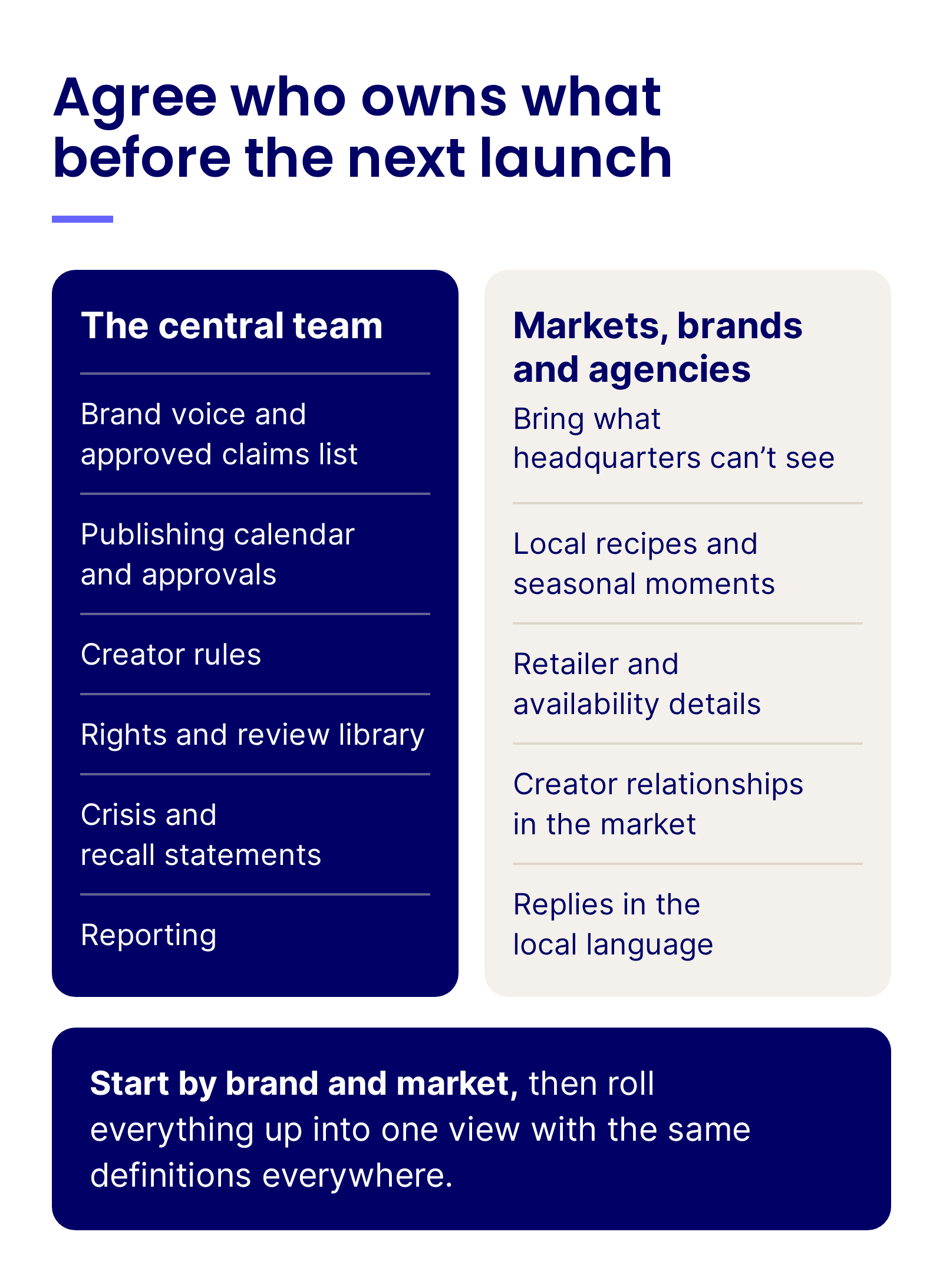
Agree who owns what before the next launch. The central team usually owns the brand voice and approved claims list, the publishing calendar and approvals, the creator rules, the rights and review library, crisis and recall statements, and reporting. Markets, brands and agencies bring what headquarters can’t see: local recipes and seasonal moments, retailer and availability details, creator relationships in the market, and replies in the local language.

Crayola UK, the brand’s market account, tells followers “You asked, we listened” as Globbles arrive in the UK.
For reporting, start by brand and market, then roll everything up into one view with the same definitions everywhere. Put each launch’s follower growth beside its retailer review score and its top consumer questions, so an allergen question that spikes after a reformulation shows up next to the campaign for that product.

Each platform plays a different role in consumer packaged goods social media. The table maps each channel to its main job, the formats that perform well and a common pitfall.
| Platform | Primary role | Best formats | Common pitfall |
|---|---|---|---|
| Everyday inspiration, fan content, creator collabs | Carousels, Reels, Collab posts | Posting pack shots with no use, recipe or person in the frame | |
| Community, consumer questions and paid reach | Links, Live video, feed ads | Leaving product questions unanswered in the comments | |
| TikTok | Discovery, trends and creator-led launches | Short video, creator content | Joining a trend days after it peaked |
| X | Real-time moments and conversation | Timely posts and replies | Broadcasting without replying |
| YouTube and Pinterest | Recipes and crafts people look up later | Recipe videos, idea boards | Leaving recipe videos up after a reformulation or pack change |
| Retailer sites and marketplaces | Proof at the moment of purchase | Syndicated reviews, Q&A, fan photos | Leaving new launches with no reviews |
| Private messaging | Product issues and personal questions | DMs, saved replies | Handling safety reports with no escalation path |
Instagram is where most CPG brands earn their engagement, and Facebook is where much of their audience still sits. Emplifi’s quarterly FMCG Food benchmarks show both sides: the median food brand’s Instagram post earned 33 interactions against nine on Facebook, with Carousels (41) and Reels (36) well ahead of single images (26). Yet the same brands have almost twice as many Facebook fans as Instagram followers.
That makes Facebook the home for community, consumer questions and paid reach. Reach there is affordable, too: in the same benchmarks, food brands’ cost per thousand impressions ended September at $1.03, under half the worldwide figure of $2.25 for all industries.
TikTok is where trends start and new audiences find a brand, so it rewards personality and speed over polish. Freshpet’s consumer care team made TikTok and Instagram central to its approach, because that is where pet health and food conversations happen in real time.
X suits brands with a quick, conversational voice, as long as someone is ready to reply while the moment is still live.
YouTube and Pinterest are where people look up a recipe or a craft weeks after they first see it, so check the most-viewed videos and pins whenever a recipe, formulation or pack changes.
Retailer sites and marketplaces are where a launch is most exposed, because a new product arrives there with no reviews while established rivals show hundreds. Syndicated reviews from sampling are how it catches up.
Private messaging is where product issues end up. Saved replies cover the routine questions, and a clear handoff to consumer affairs covers anything involving health or safety.
Even a habitual purchase moves through stages, and each one needs something different from social.
| Decision stage | What the consumer needs | Best content type | Primary channel |
|---|---|---|---|
| Discovering | A new idea or a reason to try something | Creator Reels, Collab posts, launch posts | TikTok, Instagram |
| At the shelf | Proof from people like them and quick reassurance | Reviews, fan photos, answered questions | Retailer sites, Instagram, Facebook |
| Using the product | Ideas and answers that make it work | Recipes, how-tos, saved replies | Instagram, YouTube, Pinterest, DMs |
| Buying again | A reason to stay and fast help when something goes wrong | Routine content, fan features, consumer care | Instagram, Facebook, DMs |
Discovery is a big reason people follow brands at all: in the Social Pulse survey, 57% said they follow brand accounts to learn about new products. At the shelf, social works best on people already in buying mode, and 35% of the same respondents said a post drove them to buy when they were already shopping for the product.
Buying again depends on how the brand behaves: Emplifi’s Digital Authenticity research found 52% would stop buying from a brand after an inauthentic experience, and in a habitual category that means every future shop.
Consumers rank industries differently when it comes to trusting AI.
Emplifi research: In Emplifi’s AI in Social Media: Consumer Expectations research, food and beverage ranked second of seven industries consumers would trust most with AI recommendations, behind only tech and gadgets.
That trust has limits: the same survey of nearly 900 US consumers found 40% stopped engaging with a brand after a negative AI interaction, and most want to know when they are dealing with AI. For a CPG team, that points AI toward volume and pattern-finding, with people handling health and safety.
Freshpet routes routine questions to Scout, its FAQ bot on freshpet.com, while live agents handle feeding guidance, product concerns and health questions. “Trust is everything for Freshpet, especially when conversations involve health or nutrition,” says Lisa Diehl.
Freshpet: A 40% reduction in call volume across its consumer care program, a 97% chatbot match rate and 29% faster live-agent responses on high-stakes pet parent questions.
Where AI works well in a CPG social program:
Some calls stay with a person, and a useful test is whether a wrong answer could harm someone or put the brand outside its approved claims:
Settle the disclosure line before AI-drafted replies start going out. A short line works: “We use AI to help us reply faster. A person on our consumer care team checks anything about allergies or product safety.” Label AI-generated food and product imagery just as plainly, so nobody mistakes a rendering for the real thing.
Fanta ends the caption of this Halloween Reel with “This content was generated using artificial intelligence.”
On Emplifi, Fuel AI, the agentic intelligence layer built into Emplifi Fuel, handles this work. It sorts and routes incoming questions, flags trend and risk spikes, summarizes reviews and drafts replies, while approval steps your team sets keep a person in charge of anything that touches health, safety or a product claim.
Commercial leaders want to see how social supports the brand where it is sold, so a fuller report starts with followers and connects them to proof at the shelf and to consumer care.
| Metric tier | What to measure | Benchmark to use |
|---|---|---|
| Audience growth | Net new followers by brand, market and platform, and the unpaid share of growth | FMCG Food, Alcohol or Beverages quarterly benchmarks, or a regional or category edition where one exists |
| Engagement quality | Interactions per post by format, shares and saves | The quarterly medians in the channels section above |
| Proof at the shelf | Review count and rating by product and retailer, share of launches with 10 or more reviews in their first month | Your own trend line by retailer |
| Consumer questions | First response time by topic, answer rate, repeat contacts on the same issue | Suggested target: same-day answers on social and messaging, faster for safety reports |
| Signals | Product requests and complaint themes passed to product and quality teams, time from spike to response | Your own baseline, reviewed monthly |
| Business outcome | Sales trend on retailer pages with strong review coverage, contacts served per agent, reporting hours saved | Your category team’s retailer data, by product |
Q3 2026 FMCG Food benchmarks are published for Worldwide, North America, Latin America, the Middle East, and Australia and New Zealand, alongside category editions for confectionery, dairy, baby food and FMCG corporate accounts. Alcohol and beverage brands can use the Worldwide editions for their categories.
Crayola’s results below show the speed side of this report.
The challenge. Crayola’s fans run from toddlers to trendsetters, across families, classrooms and creators, and they talk to the brand on TikTok, Instagram, Facebook and X at once. The team’s previous tool lacked TikTok support and relied on slow, manual processes, especially during campaign surges and viral moments. “Our old workflow meant it could take days to process what was going viral,” says Brittany Mehalick, Social Media Engagement and Trends Manager at Crayola.
What they did. The team moved engagement into Emplifi Community, which made TikTok a monitored, manageable part of the daily flow. Bulk labeling and automated routing cleaned up the workflow, and templates kept the tone consistent. When Crayola brought back eight retired crayon colors, each color answered fans in its own voice, playful in tone and tightly run behind the scenes.
Emplifi Listening also surfaced a pattern in conversations about air-dry clay: customers were pairing it with specific paints, and that insight moved upstream into product strategy.
Crayola’s Halloween Reel pairs its Air-Dry Clay with Acrylic Paint and spells out the combination in the caption.
“We’re listening with purpose using Emplifi. And that’s showing up in how we connect, how we plan, and how we build loyalty over time,” says Mehalick.
The result. Viral content is processed 80% faster, monitored TikTok engagement rose 100%, and the team detects and responds to emerging trends 90% faster. Global teams now receive region-specific sentiment snapshots, and reporting that used to drain time takes a few clicks.
If a launch or seasonal moment is close: start here
When a new product or a big seasonal window is weeks away, do these four things first.
First 30 days: map what you have
Start by finding the proof, the questions and the accounts you already have.
Days 31–60: build the engine
The second month builds out what the fast track started.
Days 61–90: show the results
The third month turns the work into a report a commercial leader will read.
For most CPG brands the shelf belongs to someone else, which makes the feed one of the few places the brand can talk directly to the people who buy it. The brands that grow there keep a small, regular place in people’s days, whether that is a recipe on a Tuesday or a careful answer about an allergen.
Much of that comes down to who owns what: route each question to the person with the approved answer, and let reviews follow the product to its retailers. Start with the launch fast track if a new flavor is weeks away, or with the first 30 days if it isn’t.
On Emplifi, these pieces connect. Emplifi Ratings and Reviews syndicates reviews to hundreds of retail partners and Emplifi UGC clears rights on fan photos, while Emplifi Community and Emplifi Care bring comments and DMs into one queue that hands health and safety cases to consumer affairs in Emplifi Agent. Emplifi Influencers vets creators and tracks the clicks and codes they drive, Emplifi Publisher routes posts through brand, regional and legal approvals, and Emplifi Listening flags trend and risk spikes.
Tonight someone will stand in an aisle with two jars in hand, and the recipe they saved from your feed last week can settle it.
Already an Emplifi customer? Talk to your Customer Success Manager.
They grow by becoming part of everyday routines with recipes and entertainment, then making sure reviews and answers follow the product to retailer pages. Creator launches with claims checked first, listening that feeds the product team, and a shared playbook across brands and markets sustain it.
The retailer usually owns the sale and the customer record, so social is one of the few direct lines a CPG brand has to the people who buy it. Purchases are small and habitual, questions are about ingredients and safety, and portfolios run many brands at once, all of which shape consumer brand community management in this category.
Instagram usually comes first in food and beverage social media, because those brands earn strong interactions there, with Carousels and Reels leading. TikTok suits trends and creator-led launches, Facebook carries community and consumer questions, and retailer pages count as a channel too, because that is where reviews do their work.
Through ratings and reviews syndication, which shares reviews collected by the brand with the retailers and marketplaces that stock the product. Collect reviews through sampling, on-pack prompts and retailer programs, plus post-purchase email where you sell direct, and start with new launches, which arrive with none. GNC shows how retailers display vendor reviews on their own pages.
Answer where-to-buy and how-to-use questions in public, and reply to ingredient and allergen questions only with the approved consumer affairs answer, checked against the current label. Move anything personal or health-related to a DM handled by a person, and send any mention of illness, an allergic reaction, a foreign object or tampering straight to quality and consumer affairs.
Yes, for triaging comments and DMs, spotting trends early, summarizing reviews and drafting replies from approved answers that a person checks before sending. Health, safety and claims questions stay with people, and AI-assisted replies and AI-generated imagery should be labeled, since most consumers want to know when AI is involved.
It should cover follower growth by brand and market, engagement against your category benchmark, review coverage and rating at your top retailers, response time and answer rate on consumer questions, and the product signals passed to other teams. Together, those show how social supports the brand on the shelf.
Discover what Emplifi can do for you. We turn small teams into large ones, and large teams into well oiled machines, but either way, we offer the rocket ship, you just need to jump on.