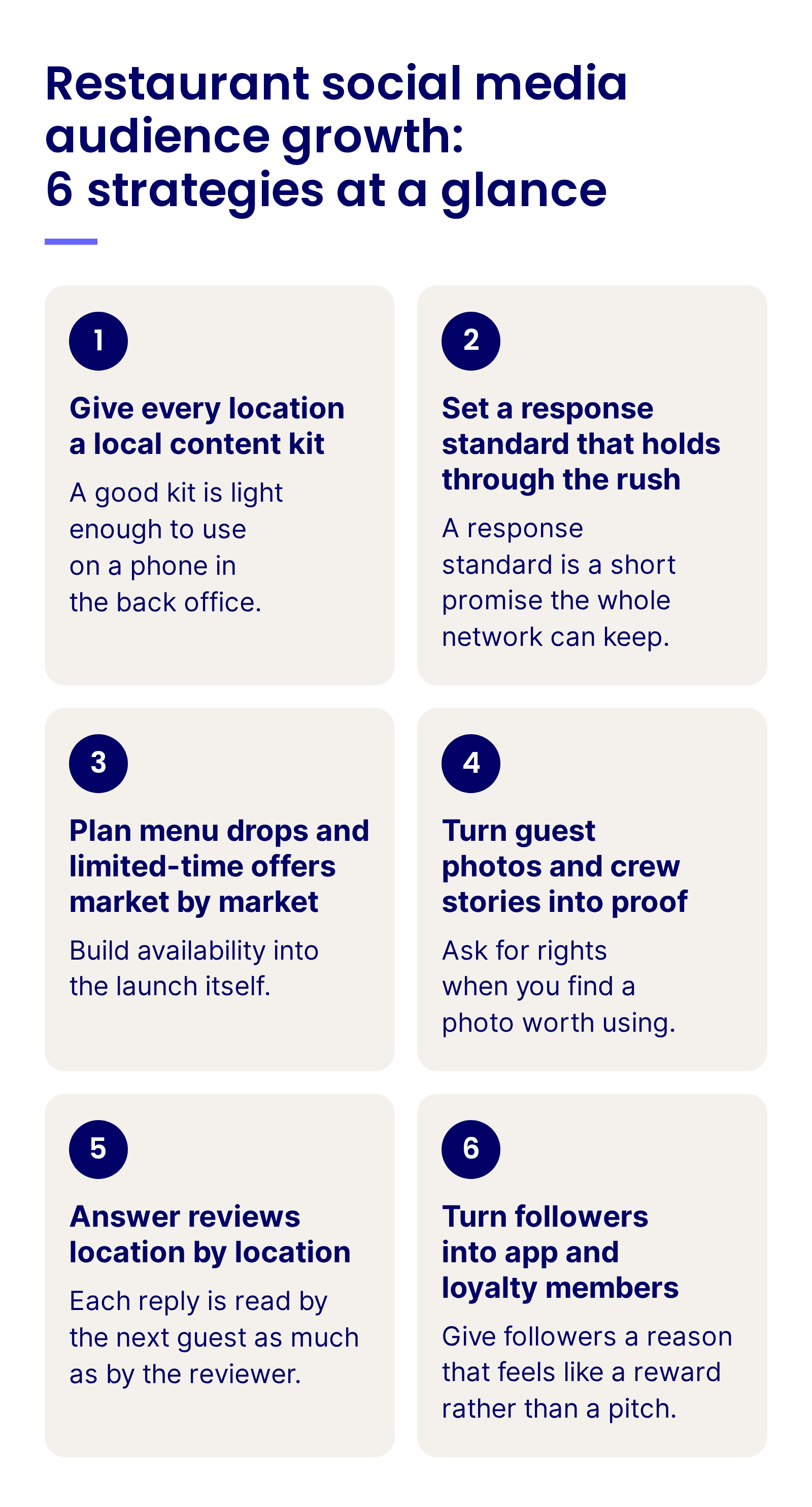
Restaurant social media audience growth usually comes from serving two audiences at once: the national following that knows the brand and the local guests deciding where to eat tonight. Six strategies help: a local content kit for every location, a response standard that holds through the rush, menu drops planned market by market, guest photos and crew stories, reviews answered location by location, and followers turned into app and loyalty members.
A guest posts a photo of a burger at lunchtime, someone asks whether the location near the station is open late, and a one-star review about a cold delivery order lands before the dinner rush. Each one is really about a single restaurant on a single street.
Most restaurant brands live this double life on social. The brand account builds appetite for the next menu drop, while location pages, many run by franchisees, answer the practical questions that decide whether someone drives over tonight.
Guests are in the mood to try somewhere new: in a Toast survey of US diners, 64% said they had tried a new restaurant in the past month. Social is one of the places where that curiosity turns into a first visit, and that visit is to one specific location.
A moment at a single restaurant can reach the national feed overnight, as Emplifi customer Hardee’s found, and steady growth comes from the everyday work: something worth posting at every location this week, and an answer for every guest while they are still deciding.
This guide is for social media, digital marketing and guest relations leaders at multi-location and franchised restaurant brands, and for the agencies that run their local pages.
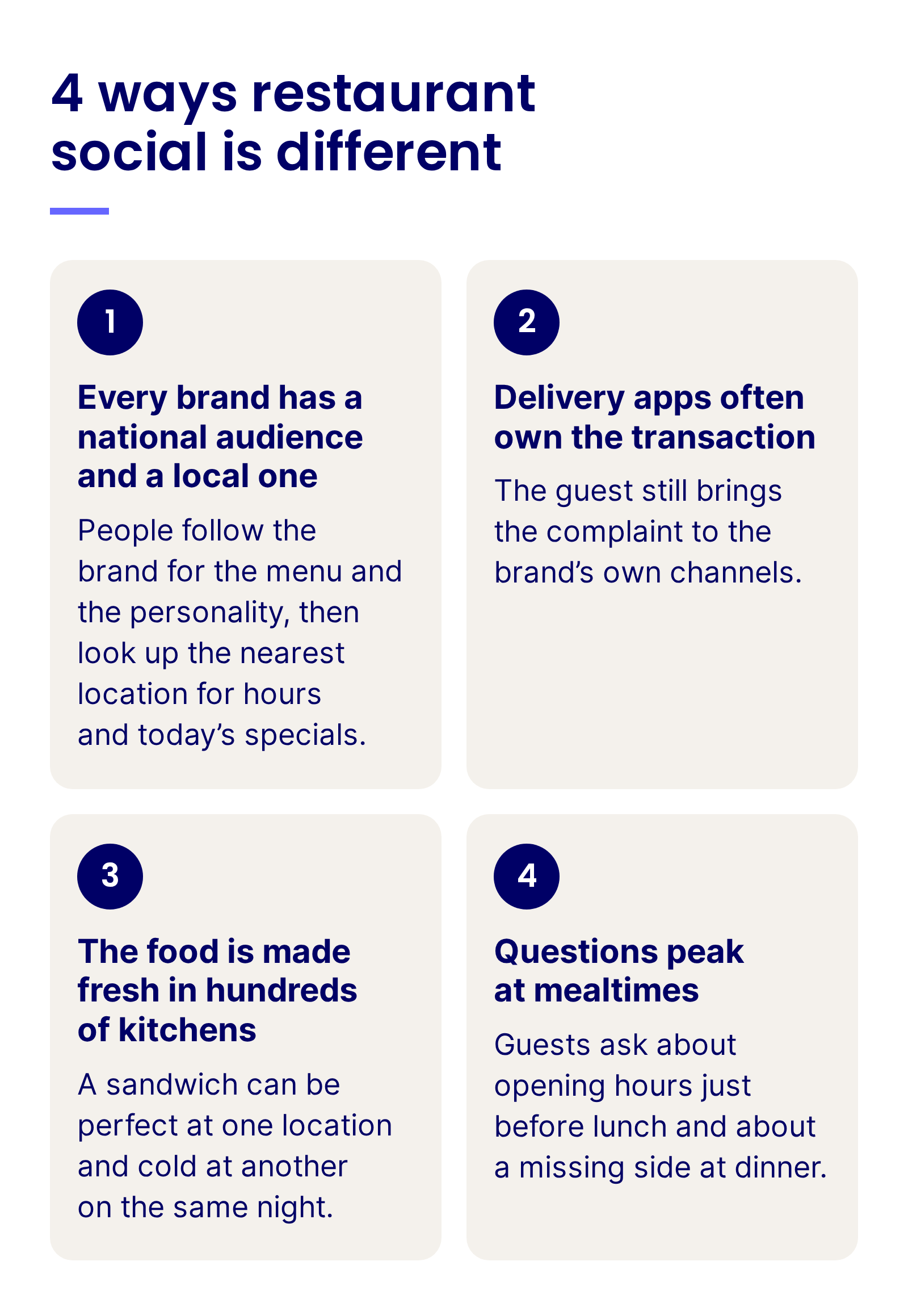
Four realities of the restaurant business shape what works on social.

1. Every brand has a national audience and a local one. People follow the brand for the menu and the personality, then look up the nearest location for hours and today’s specials. A recommendation from a friend often ends on that location’s page, so a stale page can cost the visit.
2. Delivery apps often own the transaction. When an order goes through a third-party app, much of the customer relationship sits with the app. The guest still brings the complaint to the brand’s own channels, so social becomes one of the few places to recover that guest and invite them into the brand’s own app.
3. The food is made fresh in hundreds of kitchens. A sandwich can be perfect at one location and cold at another on the same night, so reviews and complaints arrive location by location, and the fix often needs someone at that restaurant. Menus and prices vary by franchisee too.
4. Questions peak at mealtimes. Guests ask about opening hours just before lunch and about a missing side at dinner, when every restaurant team is at its busiest. Emplifi’s Social Pulse research found 32% of US social media users expect an answer to a direct message within an hour.
See how Emplifi helps every location post from the same kit and answer guests to the same standard.
The stuck points below usually come from how the work is split between the brand team, franchisees, agencies and guest relations, which makes them fixable.
Local pages go quiet between campaigns. Franchisees and general managers post when they have time, and that time disappears in a busy week, so some pages still show last season’s hours.
Menu drops reach the national feed and stall locally. The brand account announces a limited-time offer while location pages still promote last month’s deal. Whether the item is sold nearby is one of the first things guests ask, and the national post often leaves it out.
Reviews and social sit in separate tools. Map and review listings belong to operations or a reputation vendor, comments to the social team and DMs to guest relations. A guest who posts the same complaint in all three places can get three different answers, or none.
Reporting stops at national followers. One follower count hides which markets are growing and which locations never reply, and franchise owners want to see their own restaurants.
For a multi-location brand, the first two strategies usually carry the most weight, and the other four build on them.
Most franchisees and general managers will post if posting is quick and feels safe. A local content kit makes it both: a monthly set of brand-approved assets with room for what only the location knows, sent before the month starts, so a restaurant manager can post something on-brand in a few minutes between lunch and dinner.
A good kit is light enough to use on a phone in the back office:
Local moments are the part headquarters can’t plan, such as a new opening or a crowd that turns out for a local game. Give locations a short list of what they can post without approval, and an easy way to send a photo to the brand team when something deserves the national account.
Domino’s thanks Austin for turning out to its Pickup For Pickup game and names the next stop, Peter’s Field in NYC, so one city’s moment gets the national account.
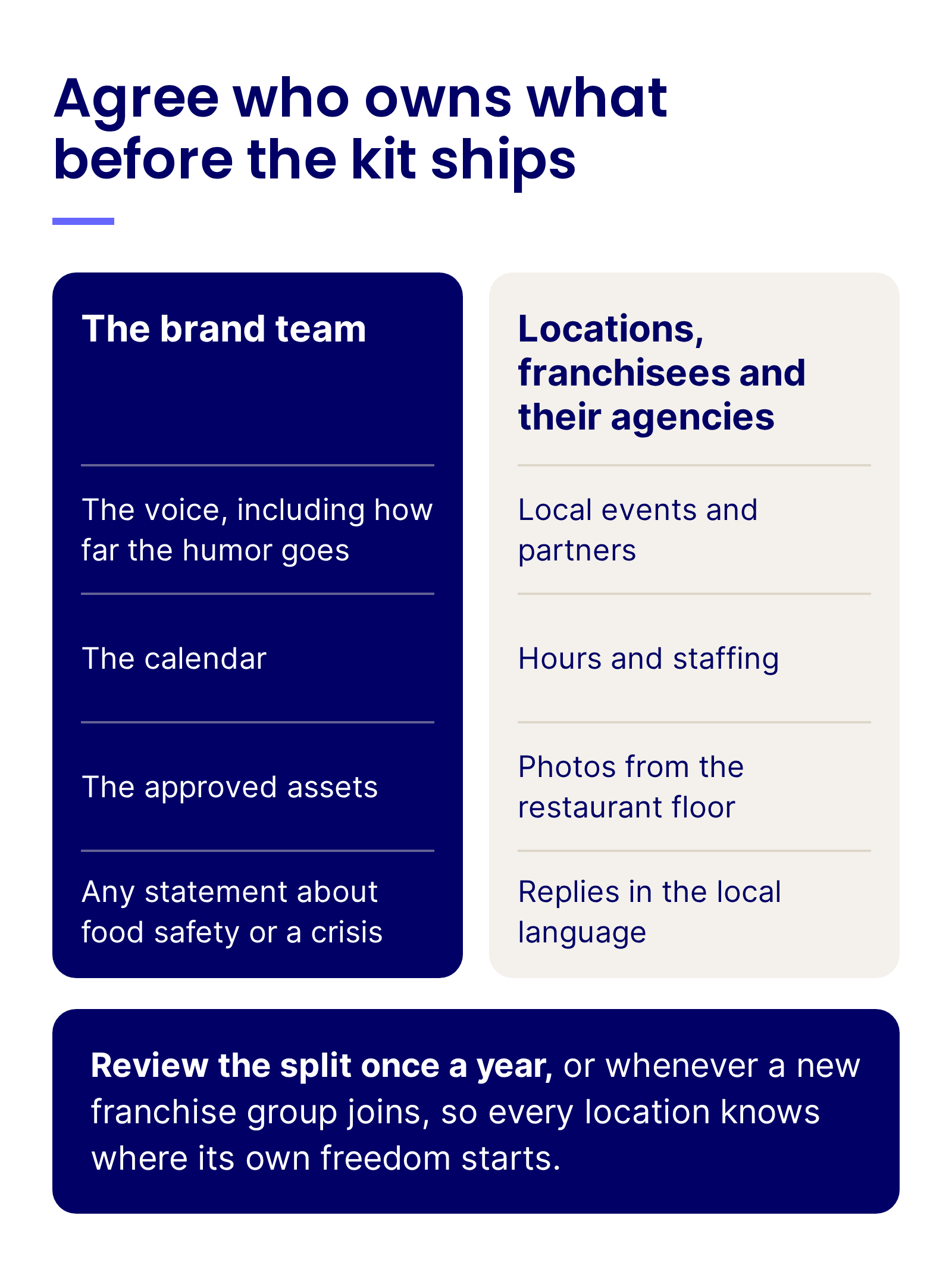
Agree who owns what before the kit ships. The brand team usually owns the voice, including how far the humor goes, the calendar, the approved assets and any statement about food safety or a crisis. Locations, franchisees and their agencies cover the rest: local events and partners, hours and staffing, photos from the restaurant floor and replies in the local language.

Review the split once a year, or whenever a new franchise group joins, so every location knows where its own freedom starts.
The voice in that split includes humor, and restaurant social runs on it. Emplifi’s Social Pulse research found entertainment is the second most common reason US social media users follow a brand, at 58%, just behind deals and promotions, and 28% said a post’s humor had driven them to buy.
Wendy’s is the brand most marketers picture. Asked how it kept its beef fresh without a freezer, the account replied, “Where do you store cold things that aren’t frozen? I’ll wait.” As Tasting Table recounts, the line worked because it carried a claim the brand could stand behind.
Wendy’s draws its mascot in emo makeup to announce its album Songs to Listen to in a Wendy’s Parking Lot, captioned “it was never a phase.”
Write down what the brand jokes about and what it never jokes about, then put caption options in that voice into the kit, so no franchisee has to be funny on demand:
Try this: Send next month’s kit to 10 locations, half franchised and half company-run, and compare how many posts each group publishes inside the posting window with the month before.
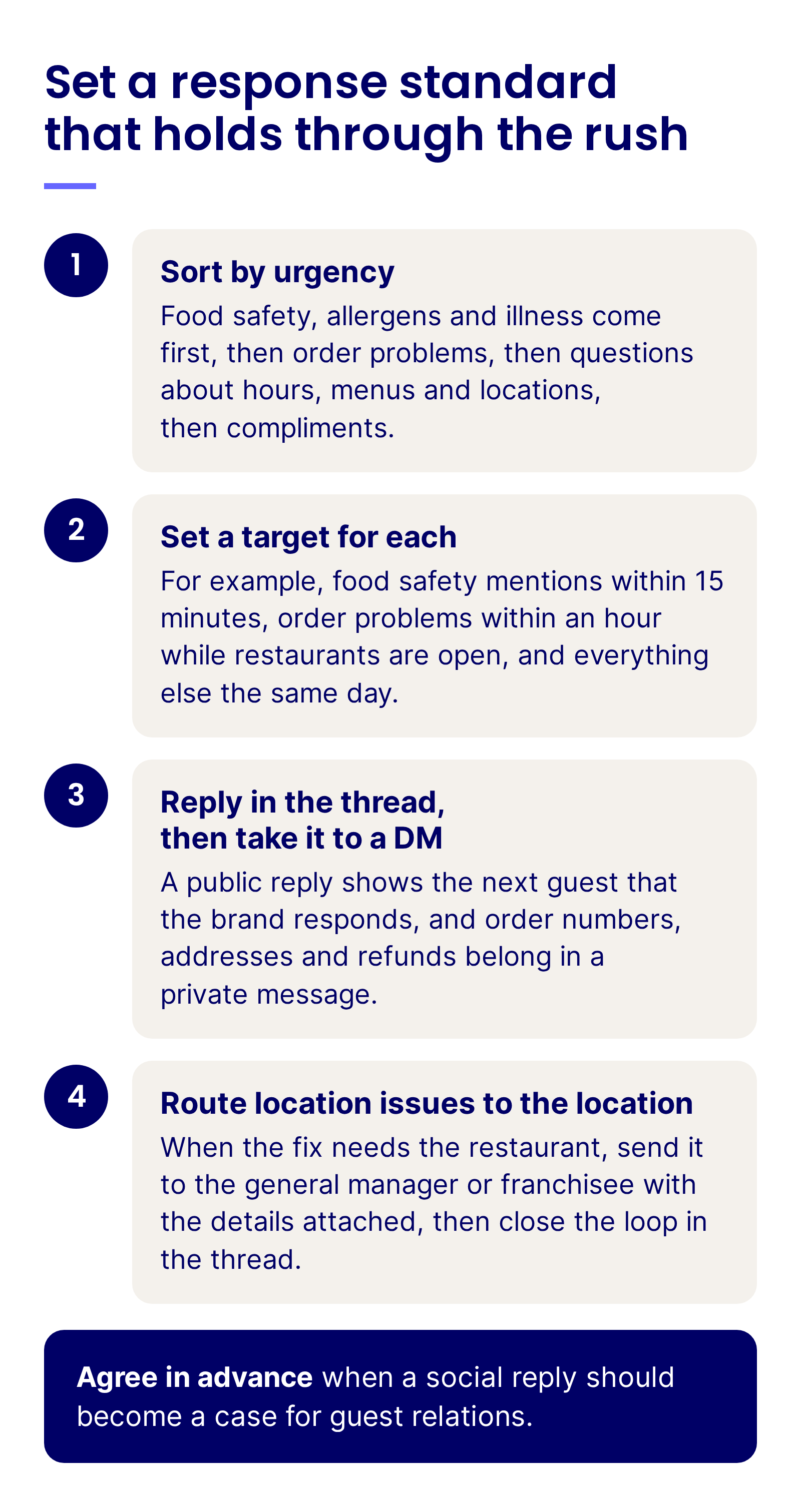
A response standard is a short promise the whole network can keep: how quickly each kind of message gets an answer, who answers it and what happens when it can’t be solved in the thread. Without one, the questions about missing fries and late drivers that arrive during the Friday dinner rush can wait until Monday.
Write the standard down by channel and topic, then staff it to the hours your guests actually eat:

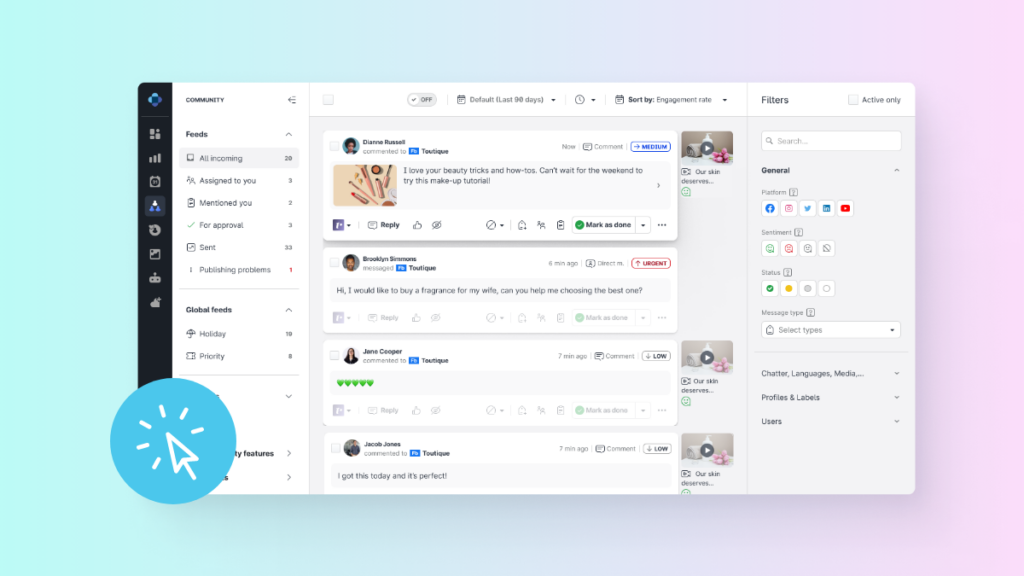
Emplifi Community brings comments, DMs and mentions into a shared inbox, so the standard is visible to everyone who answers.
Before a big promotion, add evening and weekend cover and prepare saved replies for the questions it will bring. Agree in advance when a social reply should become a case for guest relations.
Emplifi research: After a service problem was put right, 49% of consumers recommended the brand to someone else, in Emplifi’s Digital Authenticity research across 1,650 US and UK consumers.
The Cheesecake Factory shows what the last step looks like across more than 200 restaurants. Its Guest Services team works in Emplifi Agent, Emplifi’s case management engine, with menu, location and guest information beside each case, and talks to restaurant management to close the loop. Contact handle time fell by 20% and the average days to close an issue were cut in half.
The Cheesecake Factory asks followers “what hill would you die on? Linda’s or Tower cake,” a question that fills the comments.
If an agency runs your local pages, write the standard into its brief and ask for the same weekly report, by location.
Measure this: Track first response time by topic and by hour, and look at Friday and Saturday evenings on their own, because a weekly average can hide them.
Menu drops give restaurant brands some of their best reasons to post, and they are where national and local audiences most often hear different things. A limited-time offer sold only in some markets brings a wave of “is this at my location?” comments, and each one left unanswered is a guest who might not make the trip.
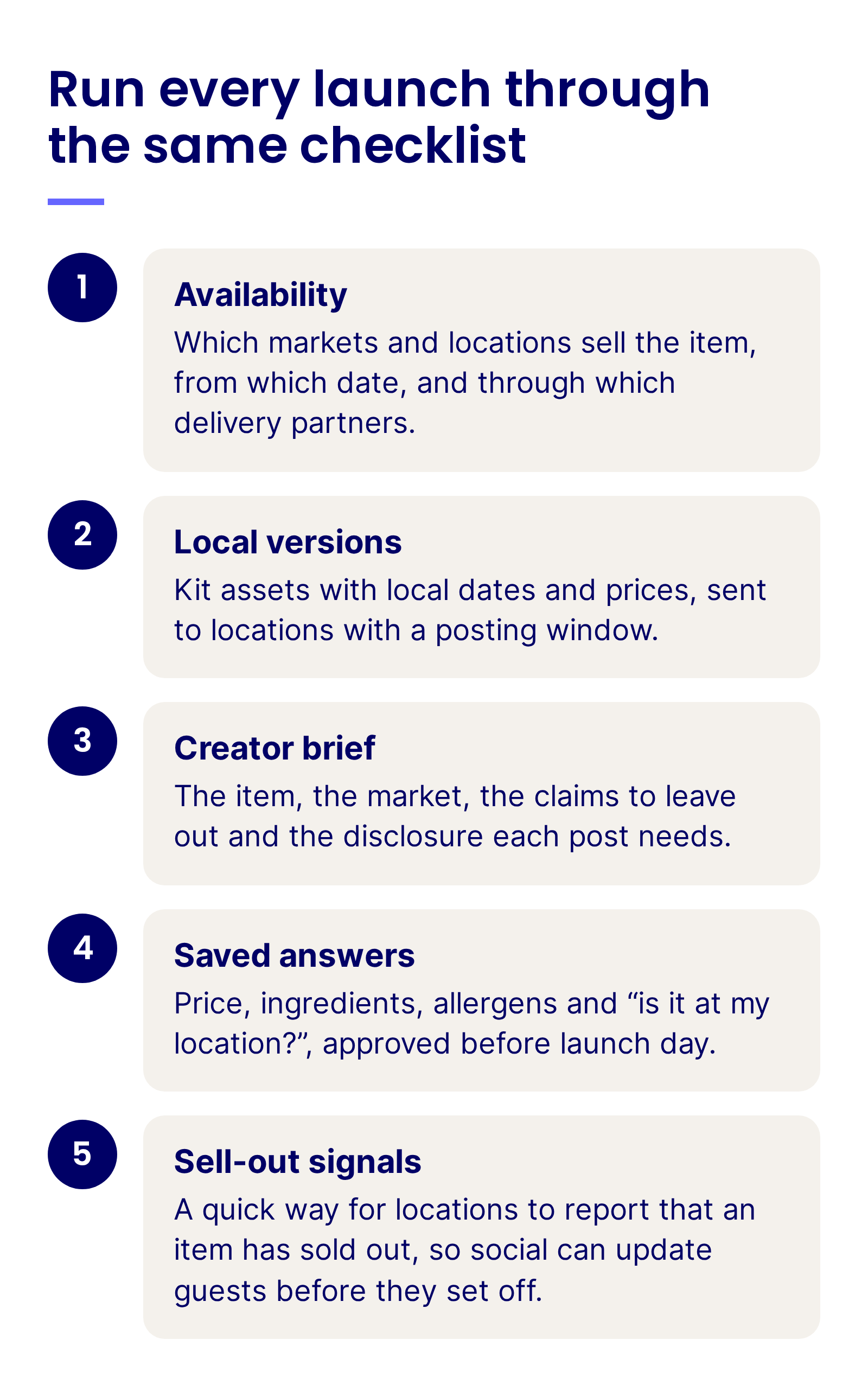
Build availability into the launch itself. Say in each post where the item is sold, give location pages a version with their own dates, and pin a launch-day post that answers “is it at my location?” with a link to a location finder.
Hardee’s announces a Bologna Egg and Cheese Biscuit in a post shared with Oscar Mayer, and the caption ends “Available in select locations.”
Some of the strongest menu drops are the ones guests asked for. Emplifi customer P.F. Chang’s brought back its Garlic Noodles “by popular demand after a frenzy of social media requests,” in the chain’s words, and opened the Instagram announcement with “you asked. we answered.” Tag requests for retired items by name and market, bring the count to menu planning, and when an item returns, reply to the people who asked.
P.F. Chang’s announces that its Garlic Noodles are back with a caption that credits the guests who asked: “you asked. we answered.”
Food creators carry a launch to people who don’t follow the brand yet, and an Instagram Collab puts the post on both accounts. A creator with a following in one city often suits a regional test better than a national name.
Creator @snachwithzach tries the new Domino™ pizza for one in a Collab with @dominos, and the caption opens with #ad.
Run every launch through the same checklist before anything goes live:

Paid creator posts need a clear #ad or paid partnership label on every platform, and in the US the FTC’s Endorsement Guides set out what that means for brands and creators.
A busy restaurant brand gets tagged in guest photos across its locations every day, so the gap is usually permission and a route back to each location’s page, where the next guest nearby is deciding.
Ask for rights when you find a photo worth using, and keep the request short: a friendly comment with a link to the terms and a reply to confirm. Once the guest agrees, tag the photo with the location and the dish, so it can appear on that location’s page and in the next local content kit, and the franchisee posts proof from their own dining room. A standing campaign gives guests a reason to post in the first place, especially when it invites them into the story.
Hardee’s asks followers to post a video, tag @Hardees and use #HardeesMeemaw to enter the grandmothers in their lives in its Meemaw search.
A national campaign like that collects entries from every market, so sort them by location and offer the best ones back to the restaurants they came from. A franchisee is far more likely to post a guest photo from their own town than a stock shot.
Crew content does something guest photos can’t: it shows the people behind the food. A chef walking through a new menu, a shift manager’s story or a cook rolling out biscuit dough gives followers a reason to like the people as well as the menu. Ask each location for one crew moment a month, so the kit always carries a local face.
P.F. Chang’s has Chef Steve introduce its new seasonal menu on camera, so the dishes arrive with a face from the kitchen.
Keep the rules for crew content simple. Employees opt in, faces and names appear only with consent, and nothing filmed in the kitchen shows a food safety shortcut. Then let locations nominate their own people, because a franchisee knows which cook the regulars ask for by name.
For many guests, the first impression of a location is a star rating on a map listing. Each reply is read by the next guest as much as by the reviewer, so review replies deserve the same response standard as social comments.
Bring reviews into a shared queue with comments and DMs where your tools allow it, so the team can see everything about a location in one view. Start with critical reviews: answer within your standard, name the location, apologize for the specific problem and offer a direct way to make it right. Positive reviews can be thanked in batches, with a line about what the guest ordered.
Then send the location, date and time of the visit to the general manager or franchisee, so operations can fix the cause, and watch for patterns, such as a run of reviews about slow drive-thru service at one location. A small library of approved replies, with room for a personal line, keeps replies from reading like copies.
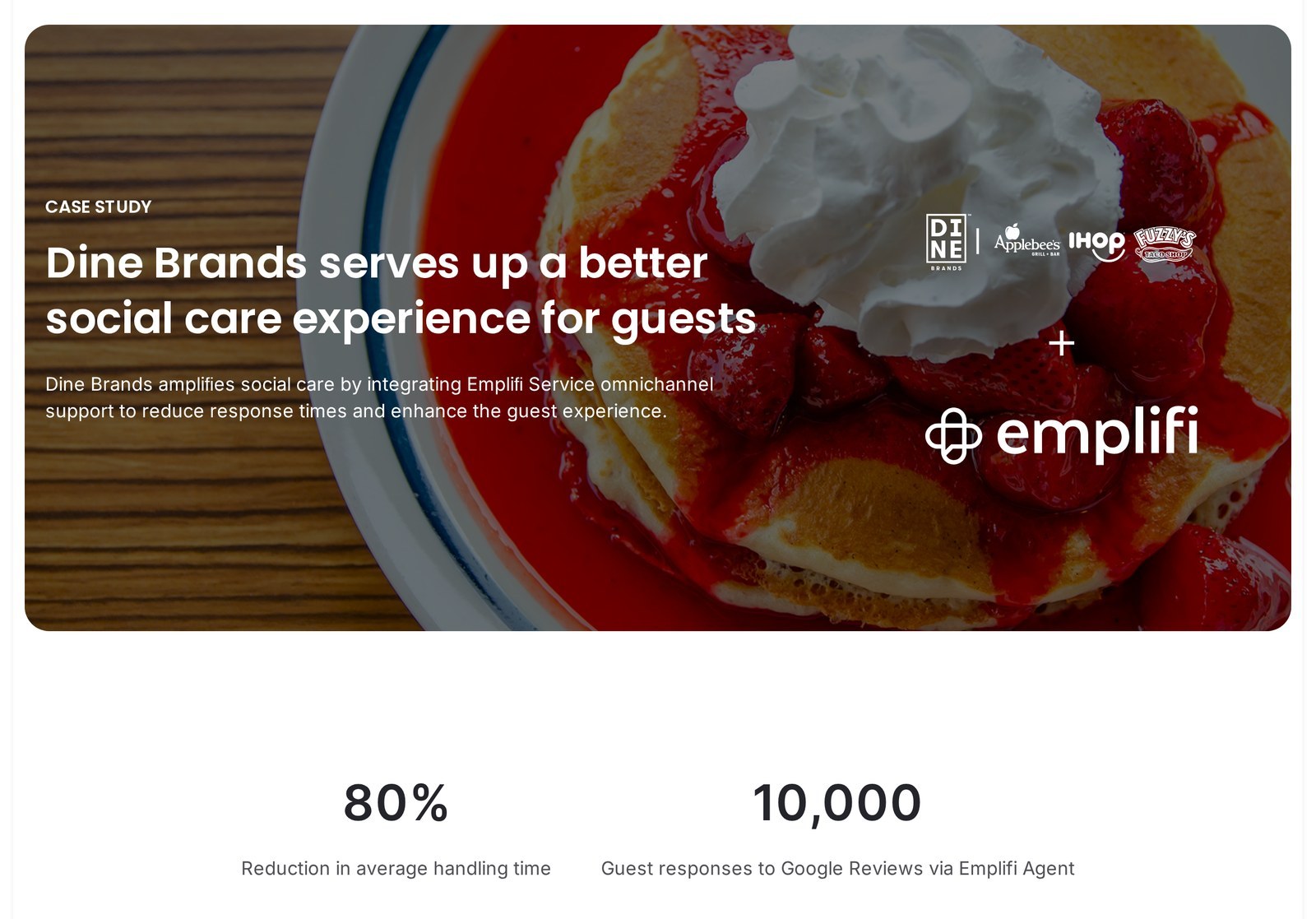
The guest relations team at Dine Brands, which serves Applebee’s and IHOP guests, works social messages in the same Emplifi Agent queue as its other channels and passes feedback back to franchisees quickly, with case details such as the restaurant location, the date and time of the visit and the check number. When the team began replying to Google reviews as a test with two of its brands, more than 10,000 guests responded, and that feedback flows into Emplifi Agent too.

Dine Brands, whose guest relations team serves Applebee’s and IHOP, in its customer story on emplifi.io.
A location profile with current hours and answered reviews gives a guest more reasons to choose it in local search, and the guest photos from your local content kit keep it fresh.
Try this: Take the 20 locations with the lowest reply rate and answer every critical review there for a month. Compare their average rating and review volume with the month before, and share the result at the next operations review.
When a delivery app takes the order, the brand often learns little about the guest. Its own app and loyalty program are where it can recognize a regular, and social is a natural place to invite people in, because followers already like the food enough to watch it.
Give followers a reason that feels like a reward rather than a pitch. Hardee’s ties My Rewards offers to moments its fans already follow, such as a free biscuit for members after a race driver it partners with finishes in the top 10. Member-only offers tied to a menu drop work the same way, and they give a follower a reason to download the app before the offer ends.
Hardee’s offers My Rewards members a free Bacon, Egg & Cheese Biscuit after a top 10 finish for its partner driver, with the race car on the image.
People also ask out loud which brand to order from, and Domino’s treats those posts as a chance to win a new guest. “When a customer tweets, ‘Who should I order pizza from today?’ we’re able to quickly respond and win the sale,” says Terri Haffey, Manager of Customer Care at Domino’s, whose contact center, in her words, “is becoming a real-time marketing operation.”
Domino’s invites followers to beta test its new app and website by placing an order, with a hooded figure at a laptop on the image.
Keep delivery app menus and photos in step with your social posts, and when a guest complains on social about a delivery order, solve it first, then invite them to order direct next time with a member offer. A guest won back that way is one the brand can recognize on the next visit.
Track app downloads, loyalty sign-ups and redemptions from social links and codes by market, and give each franchisee the numbers for their own restaurant, so it is clear which locations turn followers into regulars.

Each platform does a different job for a restaurant brand and its locations, from limited-time offer marketing to the local page that confirms the kitchen is open.
| Platform | Primary role | Best formats | Common pitfall |
|---|---|---|---|
| Appetite, menu drops and guest photos | Reels, carousels, Collab posts | Posting a menu board where a close-up of the food belongs | |
| A large following, local pages and community | Reels and other short video, links, local events | Leaving location pages with old hours and last month’s offer | |
| TikTok | Reaching new guests through creators and trends | Creator tastings, short behind-the-counter clips | Joining a trend with an item some locations don’t sell |
| Google and map listings | The local decision: hours, photos and reviews | Review replies, photo updates, local posts | Leaving critical reviews unanswered |
| Delivery apps | The order itself | Menu photos, item descriptions | Using photos that look nothing like the delivered dish |
| Private messaging | Order problems and personal details | DMs, saved replies | Letting a food poisoning report wait in the DM queue overnight |
| Honest recommendations and menu feedback | Answers from a verified brand account, AMAs with a chef | Dropping promotions into a subreddit without reading its rules |
Instagram is where these brands earn their engagement. In Emplifi’s Q3 Retail Food benchmarks for North America, which cover Emplifi’s category for restaurant, coffee and other food chains, the median account in the July to September quarter earned 36 interactions per Instagram post against five on Facebook. Reels (52 median interactions per post) and carousels (32) led, well ahead of single images (25).
Facebook still carries a large following and the local relationship: the median Retail Food account had 31,485 Facebook fans, not far behind its 37,392 Instagram followers, and Facebook remains home to location pages and local community groups. Short video is now its strongest format, with Facebook Reels at 6.5 median interactions per post, so a short clip from a new opening fits it better than a long Live stream.
TikTok is a common place for new guests to come across a menu item, often through a creator, so speed tends to count for more there than polish. Check that every location sells the item before you join a trend with it.
Google and map listings are where the local audience makes its final call, so replies there deserve the same standard as comments on your own pages.
Delivery apps own the order but still show your photos, so keep the images honest and the item names in step with your posts.
Private messaging is where order problems end up, with addresses and order numbers nobody should share in public. Send anything about illness, allergens or an injury straight to guest relations, whatever the hour.
Many guests check Reddit before they spend. In Emplifi’s peak season consumer research, 73% of consumers said they had searched Reddit before buying a product, and 85% found Reddit product recommendations somewhat or very trustworthy. For restaurants, those threads sound like “is the new sandwich worth it?” or “did they change the recipe?”, in communities such as r/fastfood and city food subreddits.
Reddit asks for a different kind of presence. Each community sets its own rules, volunteer moderators enforce them, and posts that read like ads get removed. Emplifi’s brand guide to building community on Reddit starts from the same place: listen before you post.
Borrow the language and leave the posts alone: the way guests describe a craving on Reddit can shape your menu copy, and their posts stay theirs.
Emplifi Listening tracks Reddit alongside other social networks and reviews, so a thread about one restaurant sits next to the reviews about the same location.
Even a quick lunch decision moves through stages, and social plays a different part in each.
| Decision stage | What the guest needs | Best content type | Primary channel |
|---|---|---|---|
| Discovering | A craving or a reason to try somewhere new | Creator Reels, menu drop posts, guest photos | TikTok, Instagram |
| Choosing a location | Hours, prices and proof the food is good there | Local posts, review replies, current menus | Google and map listings, Facebook, Reddit |
| Ordering and eating | Quick answers and help when an order goes wrong | Saved replies, order support | DMs, comments, delivery apps |
| Coming back | A reason to return and recognition as a regular | Loyalty offers, crew stories, guest features | Instagram, the brand’s app |
At the choosing stage, the Toast survey found price and value (55%) and food quality (51%) were the top factors that turned discovering a restaurant into a visit, so current prices and real guest photos on each location’s page do much of the work.
Coming back depends on how the brand handles a problem: in Emplifi’s Digital Authenticity research, 36% of consumers said they would switch to a competitor after an inauthentic experience, and for a restaurant the competitor is often next door.
Food delivery and restaurants ranked second, behind online retail, when Emplifi asked consumers where AI customer service would help most.
Emplifi research: In that AI in Social Media: Consumer Expectations survey of nearly 900 US consumers, 48% picked food delivery and restaurants, a point behind online retail.
People still lean toward a human, though: in the same survey, only 25% said they prefer AI-powered support, even though 71% were satisfied with the AI support they had used. That points AI at routine volume and leaves people with health questions and upset guests.
At Domino’s, automated monitoring searches hundreds of keywords on X and watches the brand’s Facebook page, so agents see only the posts that need attention, on average less than 3% of total volume.
Domino’s: A 128% increase in social media volume handled, with social case handling time down 53% and cases that used to take 15 minutes now typically handled in under five.
AI takes the most pressure off restaurant teams in three places:
Other calls stay with a person on the guest care team:
When a food safety issue breaks, stop the scheduled posts before a cheerful menu post goes out mid-crisis. On Emplifi, the Crisis Kill Switch in Emplifi Listening pauses all scheduled Emplifi Publisher content at once when a spike signals risk.
Settle on a disclosure line before any AI-drafted reply goes out, such as “Our guest care team uses AI to draft some replies, and a person answers anything about allergies or food safety.” Label AI-generated food imagery just as plainly.
Hardee’s films a cook rolling out biscuit dough, with “Absolutely ZERO frozen dough in our Bacon Beast Biscuits” as the caption.
On Emplifi, Fuel AI, the agentic intelligence layer built into Emplifi Fuel, sorts incoming comments, DMs and reviews by topic and by location, summarizes them and drafts replies from your approved answers. For a restaurant team, that means a missing-order complaint reaches the right location with the order details attached, and a sudden spike in posts about one restaurant or one menu item is flagged through Spike Alerts before the dinner rush, while anything about a guest’s health still goes to a person.
A useful report starts with followers by market and links them to replies, reviews and orders at each location.
| Metric tier | What to measure | Benchmark to use |
|---|---|---|
| Audience growth | Followers gained per market and per platform, and the share of locations posting from the kit | Emplifi’s quarterly Retail Food benchmarks for North America |
| Engagement quality | Interactions per post by format, plus saves and shares on menu posts | The format medians in the channels section above |
| Response standard | First response time by topic and hour, reply rate, and location issues closed | Your own standard, reviewed weekly during launches |
| Local reputation | Average rating, review volume and reply rate by location | Your own trend line by market |
| Guest and crew content | Permissioned guest photos and crew posts used per location | Your own baseline, checked each month |
| Business outcome | App downloads, loyalty sign-ups, redemptions and orders from social, by market | Your loyalty and ordering data, by location |
Your Customer Success Manager can point you to the Retail Food benchmark that fits each market you report on.
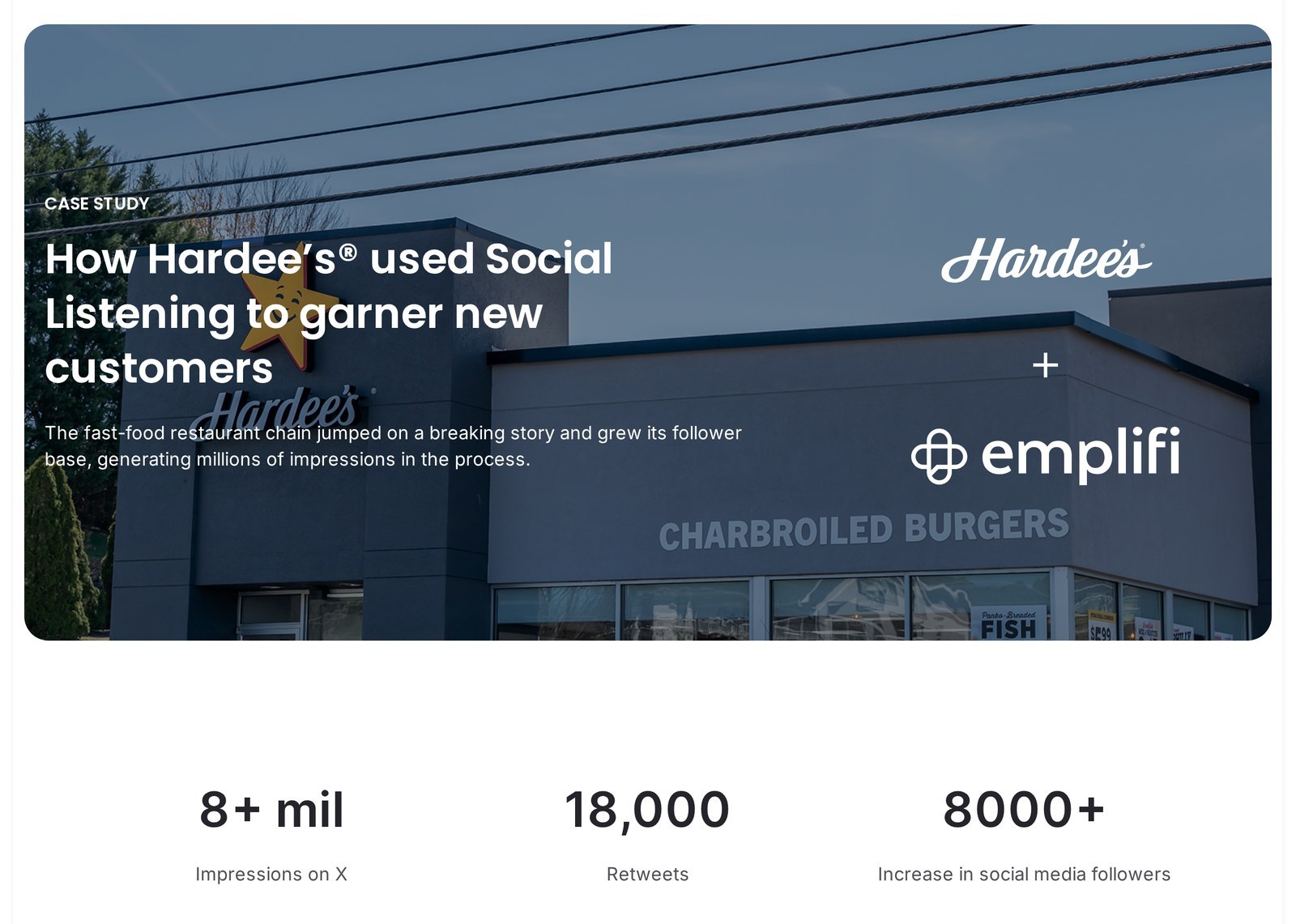
Hardee’s shows what happens when a moment at one restaurant reaches the national feed and the team hears about it in time.
The challenge. Hardee’s, the fast-food chain run by CKE Restaurants alongside Carl’s Jr., can see conversation about the brand spike without warning, often after the working day is over. One evening, a news story about a public figure, unrelated to Hardee’s food or service, unfolded in the parking lot of one of its restaurants and started trending on X, with the brand’s name all over it.
What they did. The team had Emplifi Listening configured with spike alerts, so the surge reached Brent Waible, Senior Media Manager at CKE Restaurants, that same evening. “We were notified afterhours via spike alert, which drew our attention to the conversation and allowed us to come up with the approach to lean into the conversation,” he says. After aligning internally overnight, the team posted a light reply the next morning inviting the new audience to try Hardee’s “pillowy biscuits,” a nod that, in Waible’s words, “didn’t come across as politically charged.”
A follow-up post with the loyalty team then invited people into Hardee’s restaurants to taste those biscuits.

The Hardee’s customer story on emplifi.io.
“I think it was a successful play for all of us, showing that we’re listening to consumers and plugged in,” says Waible.
The result. More than 8,000 new social media followers and an increase in app downloads and in traffic to the restaurants, along with more than 8 million impressions on X.
If a menu drop or limited-time offer is close: start here
With a launch only weeks out, start here.
First 30 days: map what you have
Start with an honest look at what you already have.
Days 31–60: build the engine
The second month turns the launch work into habits.
Days 61–90: show the results
In the third month, put the numbers in front of the people who run the restaurants.
Restaurant brands run on two clocks: the national calendar of menu drops and campaigns, and the daily rhythm of each location, from the lunch rush to the last delivery. Growth on social tends to follow the brands that mind the second clock as carefully as the first.
The kit from strategy 1 and the standard from strategy 2 do most of that work. If a limited-time offer is already on the calendar, begin with the fast track; if not, with the first 30 days.
On Emplifi, Emplifi Publisher lets the brand team schedule each month’s kit across location pages, with each team seeing only the accounts relevant to it and approval steps before anything publishes. Emplifi Care, the social care workspace, gathers comments, DMs and reviews from every location in a shared queue with routing rules and SLAs, so the standard holds in the evening as well as at noon, and cases that need a refund or a call from guest relations move into Emplifi Agent, the case management engine behind it.
This week, find the location page with the oldest post and send its manager the next kit along with your reply target.
Already an Emplifi customer? Talk to your Customer Success Manager.
Most grow by giving every location something worth posting through a local content kit and by answering guests within a clear response standard. Menu drops planned market by market, permissioned guest photos and crew stories, location-level review replies and an easy path into the app and loyalty program build on those two habits.
A restaurant brand serves a national audience and a local audience for every location, often through franchisees who run their own pages. Delivery apps often own the order, the food is made fresh in hundreds of kitchens and questions peak at mealtimes, which makes restaurant social customer care part of the growth work.
A local content kit holds a month of brand-approved videos and stills, slots for hours, prices and delivery partners, short caption options and a suggested posting window. Send it before the month starts and track which locations use it. Our restaurant social media strategy guide covers the content basics behind each asset.
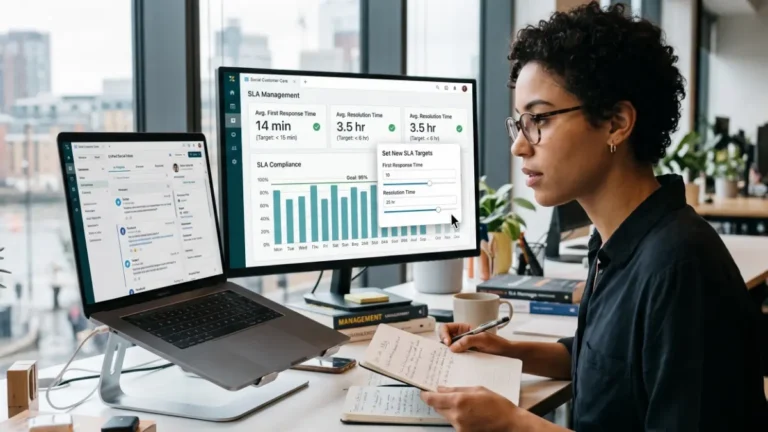
Set targets by topic: food safety and allergen mentions within 15 minutes, for example, order problems within the hour while restaurants are open, and other questions the same day. Staff evenings and weekends to match, and track the standard like any service level, as our guide to SLA management for social customer care describes.
Reply to every critical review within your response standard, and thank positive reviewers in batches with a specific note. Restaurant review replies work best when the location gets the details too, so the general manager or franchisee can fix the cause and the next guest sees it was handled.
Yes, for triage by topic and location, local versions of national posts, review summaries and suggested replies built on your approved answers and checked by a person. Keep allergy questions, illness reports, refunds and staff complaints with your guest care team, and label AI-assisted replies and AI-generated food images, because most consumers want to know when they’re dealing with AI.
Yes, starting with listening. Track threads about your menu items and locations, then answer questions from one verified, clearly labeled account, following each subreddit’s rules. Our guide to building community on Reddit covers how to participate without promoting.
Measure followers and engagement by market and by location, then put response times, review reply rates and ratings beside them. Add the share of locations posting from the local content kit and the orders and loyalty sign-ups that come from social, so the report shows growth in terms an operator recognizes.
Discover what Emplifi can do for you. We turn small teams into large ones, and large teams into well oiled machines, but either way, we offer the rocket ship, you just need to jump on.