EMPLIFI FUEL AI

Tell Fuel AI what you need. It gets it done. You approve everything.

See how our agentic layer saves you hours

Tell Fuel AI what you need. It gets it done. You approve everything. See how our agentic layer saves you hours

Blog
12 min read
Feb 07, 2025

How to build a social media strategy: the framework enterprise teams use, with AI built in

A social media strategy is the set of decisions your team makes on goals, audience, channels, content and measurement, so every account and market works from one plan. Build it in six stages, starting from a reporting baseline. Your team makes each call, while AI does the legwork of pulling the numbers and drafting the plans.

Jordan Lukes Director of Corporate Marketing
A social media team reviews performance charts on a screen while a colleague leads the planning session

Key points

  • A social media strategy is a short list of decisions, written down and owned by your team
  • Start from a reporting baseline, so every target has a real number to beat
  • Tie each goal to a business outcome such as awareness, leads or retention
  • Your team decides; AI pulls the data and drafts the plans for approval
  • Review results every month and reset the strategy every quarter

Ask five regional managers what your social team is aiming for this quarter, and you may get five different answers. One market wants followers, another wants leads, and nobody agrees on which numbers prove it worked.

That gap shows up when leadership asks what social delivered. Only 48% of marketers say their team can confidently demonstrate social ROI with clear attribution and data, according to Emplifi’s State of Social Media Marketing 2027.

A social media strategy fixes that. It writes down what you’re aiming for, where your team spends its time and how you’ll judge the results, so every account and market works from the same plan.

This guide walks through the six stages enterprise teams use to build one. It also shows where Fuel AI, the agentic intelligence layer built into Emplifi Fuel, takes on the reporting and first drafts, while your team makes the calls.

In this guide, you’ll learn:

  • What a social media strategy covers, and what an enterprise one adds
  • Six stages that take you from a reporting baseline to a quarterly reset
  • Where Fuel AI does the reporting and drafting, and where your team decides
  • How to use AI with approvals and an audit trail in place

What is a social media strategy?

A social media strategy is a goal-driven plan for how your brand uses content, platforms and data to reach the right audience and deliver measurable business outcomes.

It’s also more than a content calendar. The calendar tells you what goes out and when. The strategy decides which posts deserve a slot in the first place, and how you’ll judge whether they worked. Your social media management platform is where you put that plan into action day to day.

For an enterprise team, the plan also has to hold across dozens of accounts and a chain of approvers in several markets.

Emplifi pro tip: Give every decision an owner, and keep the document short enough that a new regional manager can read it in one sitting.

What should an enterprise social media strategy include?

An enterprise social media strategy should include six decisions, each with an owner:

  1. Goals tied to a business outcome, with a target for each one
  2. The audiences you want to reach in each market, and what they talk about
  3. The channels you’ll invest in, and the ones you’ll leave alone
  4. Content pillars and the campaigns that sit under them
  5. How often you publish, and who approves each post
  6. The KPIs you report, and when you review them

Add one more page for governance: who can publish where, and which AI tools the team may use.

See how social teams are getting reporting hours back with AI

Find out where 405 marketers in the US, UK, Australia and New Zealand use AI today, and how many can prove social ROI to leadership.

How do you build a social media strategy step by step?

Work through these six stages in order. Each stage ends in a decision your team owns, and each has a step where Fuel AI does the reporting or drafting. For the product story behind it, read How Fuel AI transforms the way social media marketing teams work.

1. Audit your accounts and set a reporting baseline

Start with reporting. Before you set a single target, you need to know who owns each account and how it performs today. In the State of Social Media Marketing 2027, 62% of marketers say they spend four or more hours a week on reporting and analytics, so a baseline built by hand has a real cost.

Take a team with 40 accounts across six markets. It lists every account with its owner and market, then pulls 90 days of reach and engagement rate for each. Accounts with no owner, or no posts in that window, are candidates to merge or close.

Then put the numbers in context. Compare each market with its main competitors’ share of voice: Emplifi Unified Analytics, Emplifi’s social media analytics platform, includes competitive benchmarking for this.

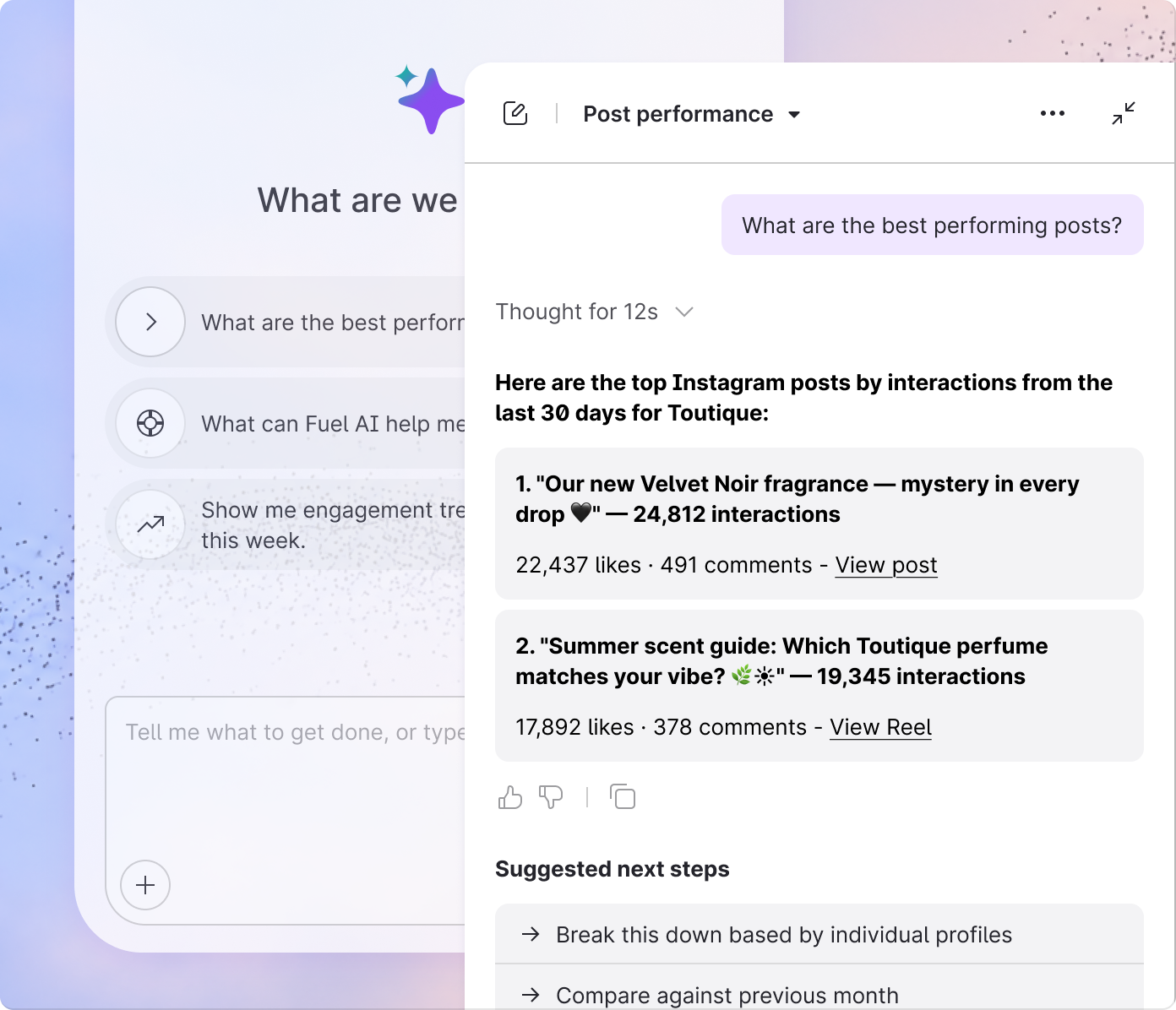
Where Fuel AI does the work: Ask Fuel AI in plain language for a performance report, and it builds the board. One example prompt could be: “What are the best performing posts?” Fuel AI ranks your top posts by interactions and suggests what to look at next.

Fuel AI answering "What are the best performing posts?" with the top Instagram posts by interactions and suggested next steps

2. Set goals tied to business outcomes

Every goal should connect to something leadership already measures, because that’s the first thing they’ll ask about. A goal written as a business outcome, with its KPI agreed up front, is easier to defend.

Pick one primary goal per account or campaign, then match the approach to it:

  • For awareness, put reach and engagement first, on platforms with high organic discovery and with creator partnerships.
  • For leads, focus on platforms where buyers look for professional insight, and send that traffic to gated content.
  • For retention, invest in community, with prompt replies and offers for existing customers.

Take a 12-person team supporting a product launch in three markets. The launch accounts carry an awareness goal, measured by reach in the target audience. The always-on accounts in those markets keep a retention goal, measured by response time and repeat purchases from social traffic.

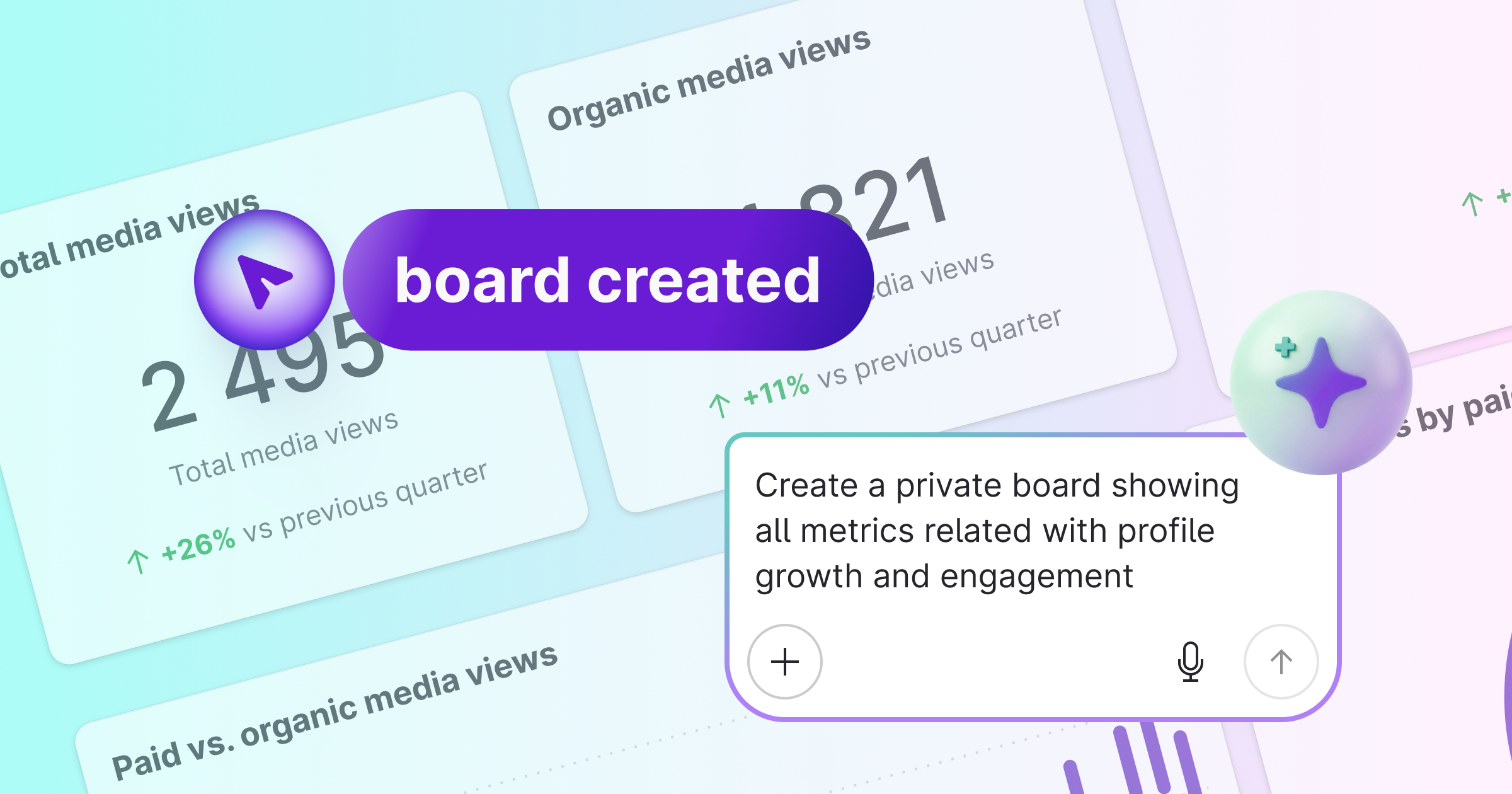
Where Fuel AI does the work: Your team sets the goals. Before you write a target down, ask Fuel AI for last quarter’s performance board, so each target starts from a real number.

Fuel AI creating a private board of profile growth and engagement metrics, with total and organic media views compared with the previous quarter

3. Learn what your audience talks about

Audience research answers two questions for each market: who you want to reach, and what they already say about you and your competitors. Demographics answer the first. Social listening answers the second.

Use Emplifi Listening, Emplifi’s social listening platform, to track your brand and your main competitors in each market.

For a skincare line sold in four markets, one listening topic per market shows which product questions keep coming up and which complaints repeat. Those patterns become content pillar ideas in stage five and saved replies for your care team.

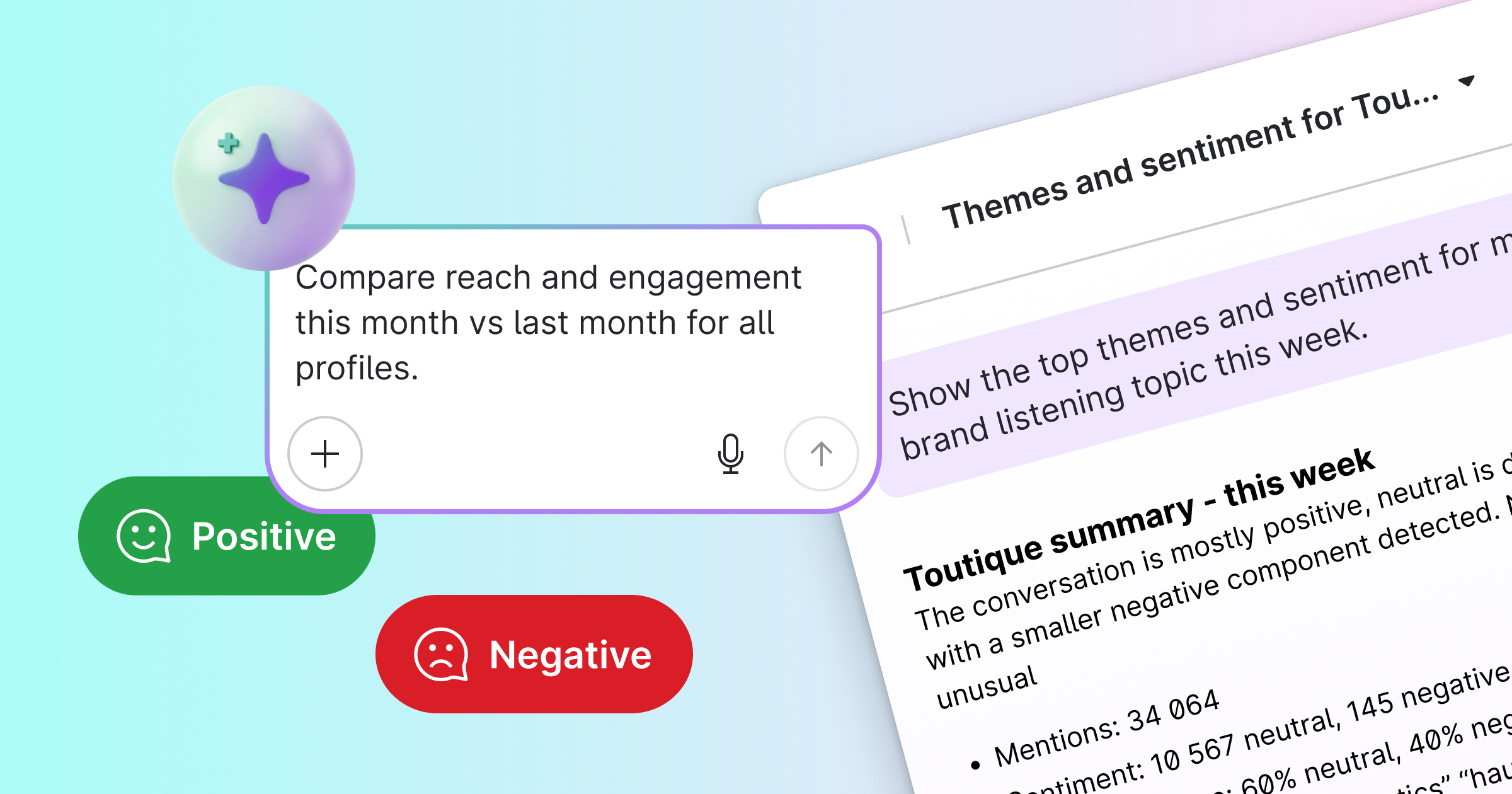
Where Fuel AI does the work: Ask Fuel AI for the top themes and sentiment for a listening topic, and it summarizes them. One example could be: “Show the top themes and sentiment for my brand listening topic this week.” Your team still decides which topics to track and what the findings change in the plan.

Fuel AI answering "Show the top themes and sentiment for my brand listening topic this week" with a summary, mention count and sentiment split

4. Choose your channel mix

Channel choice is a capacity decision as much as an audience one. Every extra network needs its own content and its own replies. Pick the networks where your audience is active and where your team can publish well, and drop the rest.

Benchmarks show where brand audiences are moving. In Emplifi’s Q3 2026 social media benchmarks:

  • Median impressions per brand post fell on every network Emplifi tracks: 48% on Instagram, 36% on Facebook and 60% on TikTok worldwide, year over year.
  • Instagram engagement rate per impression reached 1.52% worldwide, up 68% year over year, because interactions held steady while impressions fell.
  • Carousels and Reels earned about 75% more interactions than single images worldwide (39 and 38 median interactions per post, against 22), and shares are the second most common interaction after likes on every Instagram format.
  • For audience growth, Emplifi’s 2026 social media benchmarks report found TikTok’s median brand follower count grew 200% year over year, making it the fastest-growing platform for brand audiences.

Keep the networks where your stage one baseline shows you already do well, plus any local network that matters in a specific market.

Then match the mix to your team’s capacity. The more networks you run, the fewer posts each one gets: 60 posts a week across six markets and five networks is just two posts per network in each market each week.

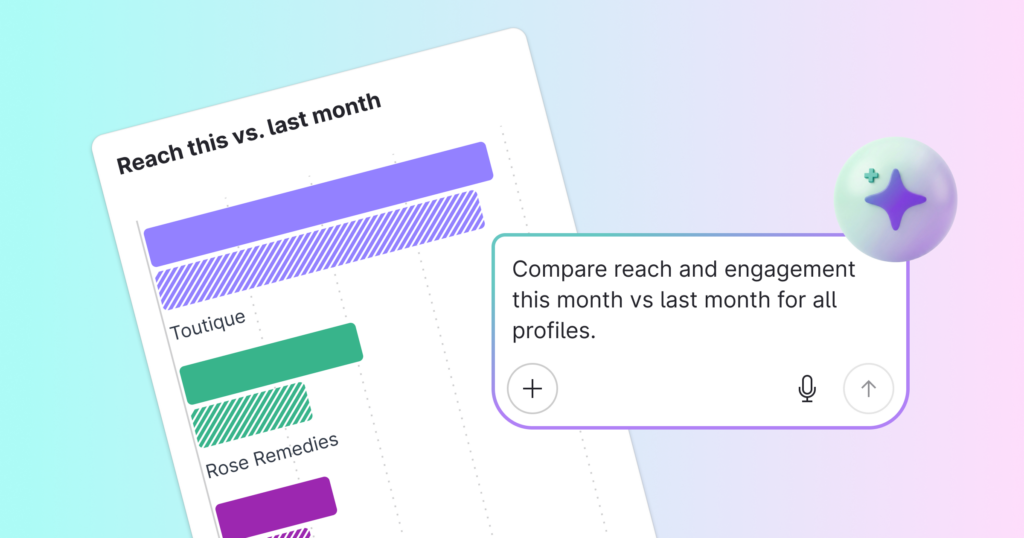
Click the image above to start the interactive tour and see Fuel AI compare reach and engagement across your profiles from one plain-language request.

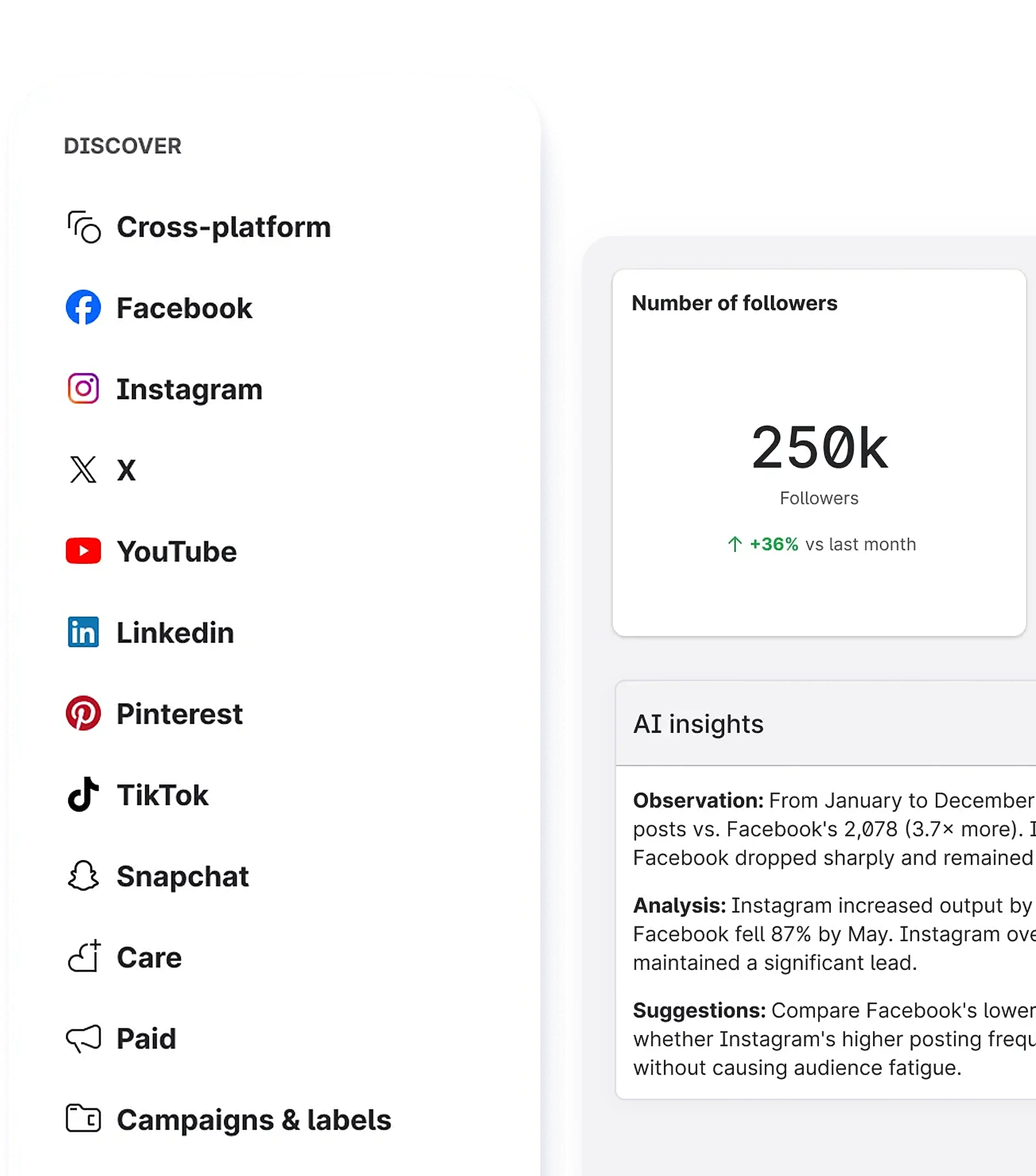
Where Fuel AI does the work: The mix is your team’s call. Emplifi Unified Analytics shows every network you run side by side, with follower growth and AI insights that compare how each platform performs. To dig into one network, ask Fuel AI to build a performance board for it, so the decision starts from your own numbers.

Emplifi Unified Analytics listing each social network beside follower growth and AI insights that compare platform performance

5. Plan content pillars and campaigns

Content pillars are the three or four themes every post should fit under. Tie each one to a goal from stage two and a finding from stage three. Anything that fits no pillar is easy to cut.

Campaigns sit on top of the pillars, as launches and seasonal pushes with a start and end date. Plan paid and organic together, so your paid budget goes behind posts that already perform well organically.

Take a global team running 12 campaigns a year across six markets. It writes one brief and one pillar list. Each market picks the pillars it runs, adds its own local campaigns, writes its own posts and sends them to its regional reviewer.

Mercy Ships, the international charity, runs social media from offices in 16 countries. It brought them all onto one platform, with content approvals every office can follow. With Emplifi, Mercy Ships saw:

  • A 236% increase in content impressions
  • A 328% increase in engagement rate
  • 107% growth in community size
Our goal was to have one voice, one brand, and one story.
Francesco Paolo Tuzzolino
Digital Marketing Director

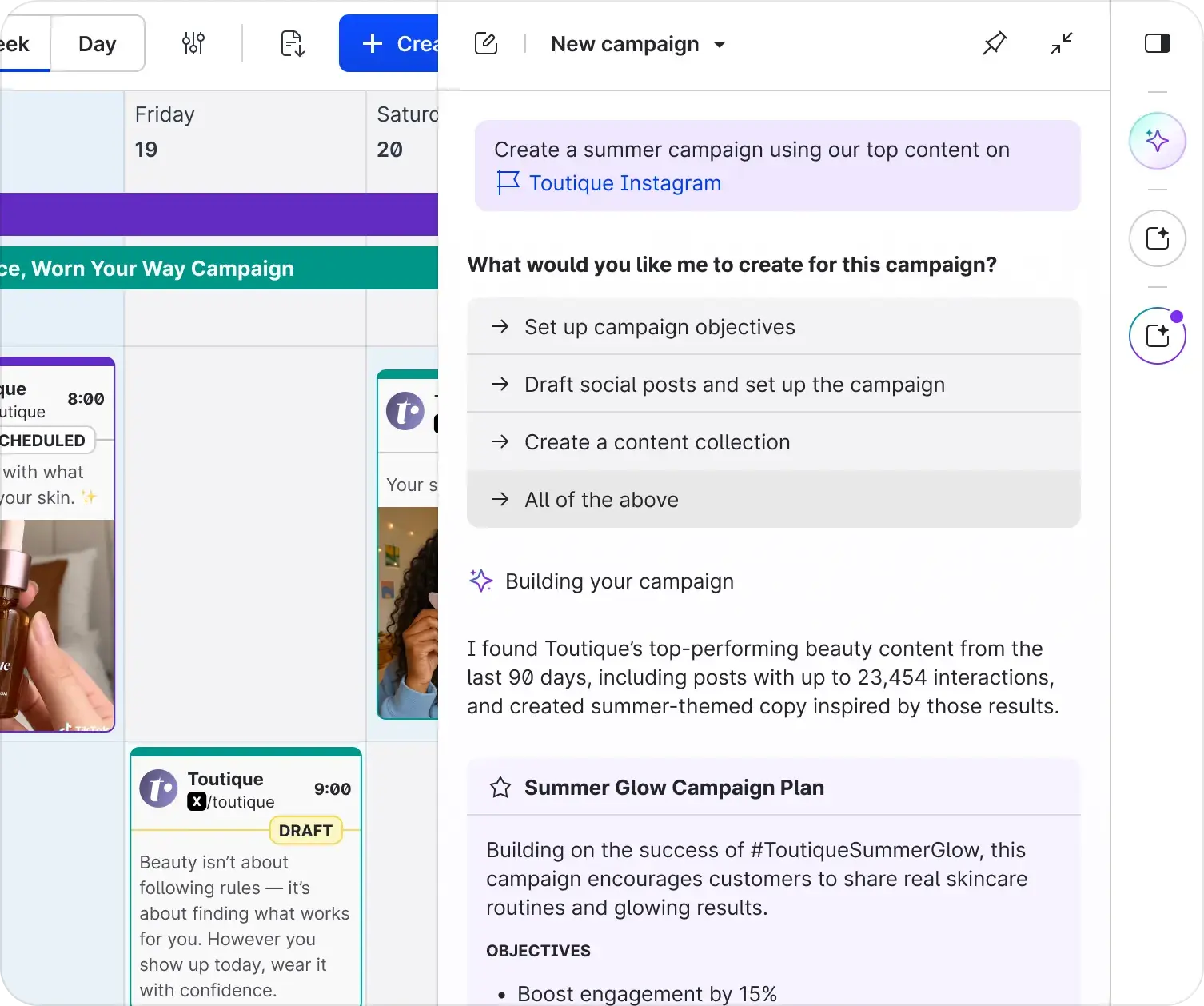
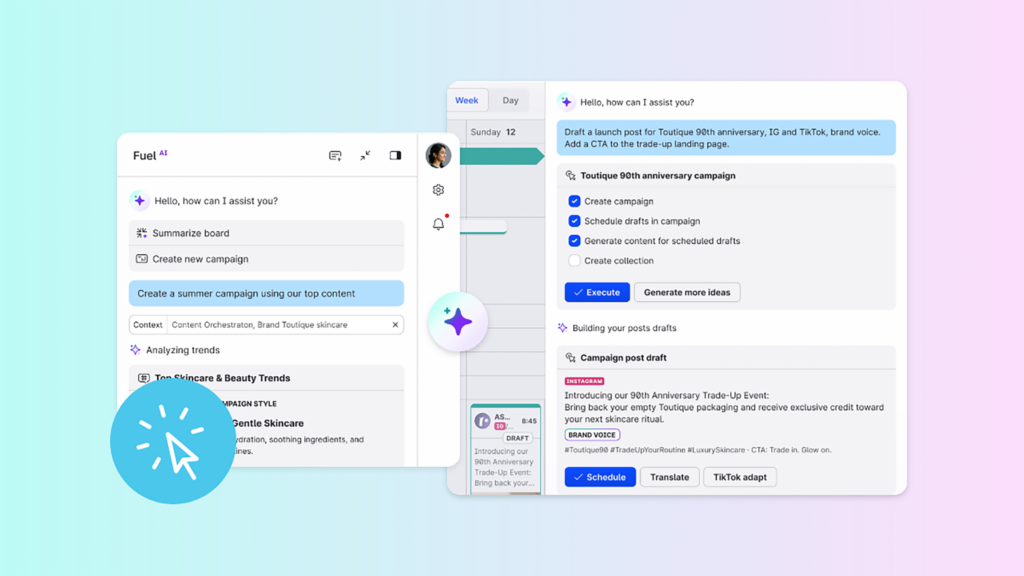
Where Fuel AI does the work: Describe the launch in one or two sentences. Fuel AI analyzes your top performing content and audience patterns, then drafts a campaign plan for you to review and edit. Nothing goes live until your team approves it.

The Fuel AI panel beside the Emplifi Publisher calendar, turning a request for a summer campaign into a drafted campaign plan

6. Set your publishing rhythm and measure results

Set posting frequency per network from your team’s capacity and the benchmarks in stage four.

For timing, pick posting slots from your own engagement data, or let AI PrimeTime in Emplifi Publisher, Emplifi’s AI social media publishing software, auto-queue posts for predicted peak engagement slots.

Measure each goal by the KPI you agreed in stage two, and run two reviews:

  • A monthly review that checks each KPI against its target and moves effort toward what’s working
  • A quarterly reset that revisits the goals and the channel mix, using the quarter’s numbers

At 60 posts a week, a team publishes about 260 posts a month, so start the monthly review with the top 10 and bottom 10 and look for what they share.

TUI fly Belgium uses Emplifi’s Performance Prediction to decide which posts to boost. With Emplifi, TUI fly Belgium has:

  • Cut reporting time by 75%
  • Lowered its cost per engagement by 81.5%
  • Seen 150% more comments on posts boosted with Performance Prediction
The introduction of AI-powered performance prediction changed the way we approach content promotion.
Ineke Vanhaelemeesch
Branded Content Coordinator

Where Fuel AI does the work: Before you publish, Fuel AI checks captions, hashtags and calls to action against each platform’s guidelines and your account’s performance data. For the monthly review, ask it for a report in plain language, and it builds the charts and summary.

How does AI fit into a social media strategy, with approvals in place?

AI fits best in reporting and first drafts, inside tools your company has approved. In the State of Social Media Marketing 2027, 51% of marketers say they use AI tools their company hasn’t approved at least some of the time, up from 42% in last year’s survey, in a separate sample. Only 37% of organizations have a fully defined AI policy for marketing, and a further 41% have partial guidelines.

So write your AI rules into the strategy, next to the approval steps. Name the tools the team may use, and review the list at each quarterly reset.

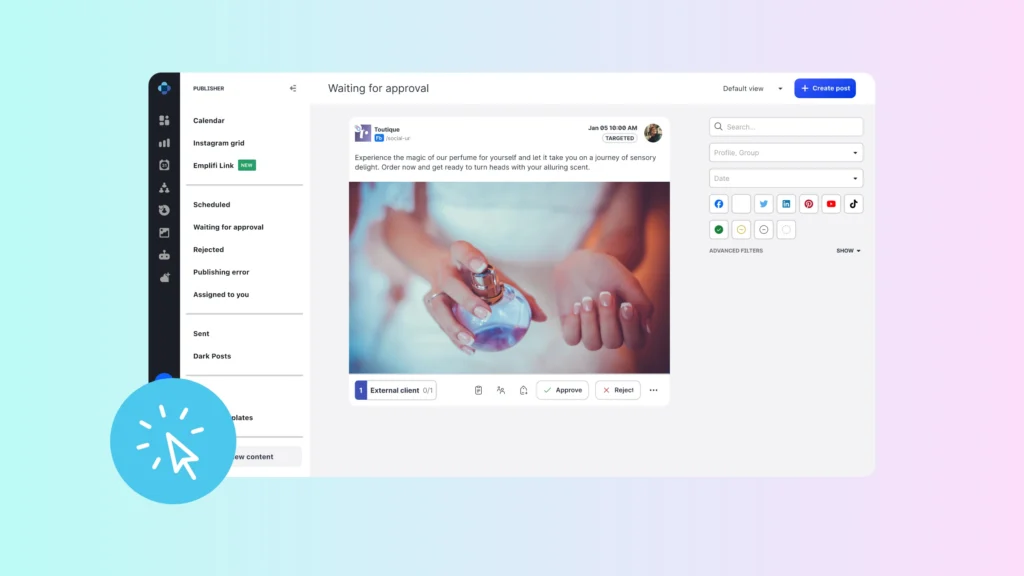
Click the image above to start the interactive tour and see a post wait for approval in Emplifi Publisher before it goes live.

Fuel AI asks for your approval before it creates or deletes anything, and it can only do what each user’s permissions allow. Every request is logged, so your team can see what Fuel AI did and who asked.

The publishing controls sit in Emplifi Publisher:

  • Approval workflows route each draft through your legal, brand and regional reviewers before it goes live.
  • An audit trail records every edit, approval and publishing action, so you can see who changed what.
  • Crisis Emergency Stop suspends all scheduled content in one click.

Digital agency Xplace gives every client its own suite in Emplifi, set up around that brand’s own workflows and approval structures. With Emplifi, Xplace has:

  • Built 15+ dedicated client suites
  • Given each client 100% access to and control over its own data
  • Saved 45+ hours a week
They own their suite. They have their own space.
Giorgia Mezzi
International Team Leader

Click the image above to start the interactive tour and see Fuel AI turn one brief into channel-ready posts, routed for approval and scheduled in Emplifi Publisher.

Fuel AI also works in customer care, where it summarizes long case threads in plain English. For the wider picture, read how Emplifi applies Autonomous Customer Experience (A-CX) to care.

What are the most common social media strategy pitfalls?

Check your strategy against these four pitfalls:

  • Chasing vanity metrics: Follower counts and impressions don’t show whether a post produced a lead or kept a customer. Report the KPI tied to each goal first.
  • Spreading the team across too many platforms: Every network you add needs its own posts and replies from the same people. Before you open a new account, divide your weekly posts by the networks and markets you’d run, as in stage four. If each network would get only one or two posts a week, run fewer networks and do them well.
  • Ignoring analytics between reviews: A format that stops working in month one shouldn’t wait for the quarterly reset. Check the monthly numbers and move effort early.
  • Posting content that doesn’t sound like you: Write in the words people use about you in your listening data, and reply the way a person on your team would talk.

Final thoughts: Start with the numbers you already have

Your first version doesn’t need to be long. One page that names the goals and the review dates is enough to start the monthly cycle.

Start with the baseline. Pull this month’s performance board this week, and your first monthly review has something real to compare against. Fuel AI for social and care teams builds that board from one plain-language request.

Ready to build your social media strategy on real numbers? Book a demo with the Emplifi team to see how Fuel AI handles the reporting and drafting while your team keeps the approvals.

About the data: The State of Social Media Marketing 2027 is Emplifi’s survey of 405 marketers in the US, UK, Australia and New Zealand, conducted in September 2026 (AI questions: n=389). The Q3 2026 social media benchmarks are medians from 167,493 Facebook pages, 77,038 Instagram profiles and 1,301 TikTok profiles worldwide, July to September 2026, with engagement rate measured as interactions divided by impressions. The 2026 Social Media Benchmarks report analyzes Emplifi data on brand accounts’ activity across the major social platforms in 2024 and 2025.

Frequently asked questions

The audit takes the longest, because every later stage uses its numbers, and it grows with the number of accounts and markets you run. AI can shorten the reporting part of that step: in Emplifi’s State of Social Media Marketing 2027, 69% of marketers say AI saved their team three or more hours a week on reporting. The later stages go faster once the baseline is in place.

Review it monthly and reset it quarterly. The monthly review moves effort between formats and posts, and the quarterly reset revisits goals and the channel mix. Reset sooner when a platform changes how it ranks content, or when a market’s results move sharply. At each reset, check your channel numbers against Emplifi’s quarterly industry benchmarks.

A content calendar is one output of the strategy. The strategy sets the goals and KPIs; the calendar schedules the posts that follow from them. Keep the calendar in your publishing tool, such as Emplifi Publisher, so approvals and timing sit with the posts.

AI does the reporting and drafting, and your team makes the decisions. Fuel AI builds performance boards and turns a short brief into a campaign plan, and it asks for approval before it creates or deletes anything. In Emplifi’s State of Social Media Marketing 2027, 87% of marketers say AI improved productivity, though only 38% report a significant increase.

Pick the KPIs that match each goal, such as reach for awareness or response time for retention. Put them in front of leadership first. In Emplifi’s State of Social Media Marketing 2027, only 48% of marketers say they can confidently demonstrate social ROI with clear attribution and data. Track them in a social media analytics platform.

Set the goals and pillars once at global level, and let each market write its own posts. Route every draft through regional reviewers with the approval workflows in Emplifi Publisher, and use its audit trail to see who changed what. Review results by market at each monthly review.

Insights from Emplifi

Explore our latest blogs and comprehensive guides designed to help you master customer experience strategies and drive growth.

Ready to fuel your teams with A-CX?

Discover what Emplifi can do for you. We turn small teams into large ones, and large teams into well oiled machines, but either way, we offer the rocket ship, you just need to jump on.

What can you expect?

  • A live walkthrough of Emplifi Fuel tailored to your specific social marketing, commerce, and care needs
  • A benchmark of how your brand performs against peers in your industry
  • A partner who understands your business, and 22,000 others
  • A concrete action plan to go from disjointed teams to A-CX
Get a demo
This site is registered on wpml.org as a development site. Switch to a production site key to remove this banner.