











How do we optimize social media channels to cooperate with SEO? Could we set metrics?
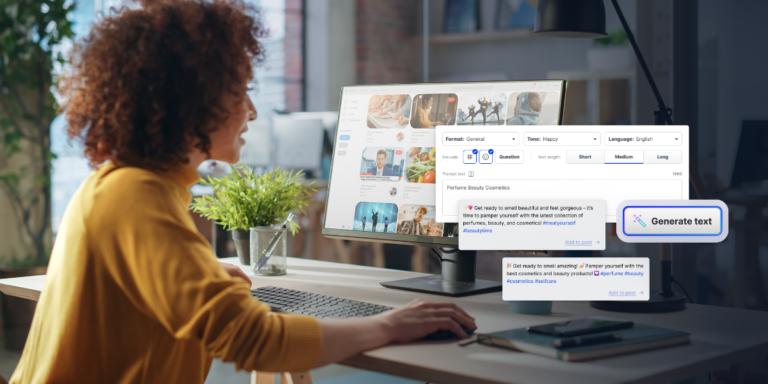
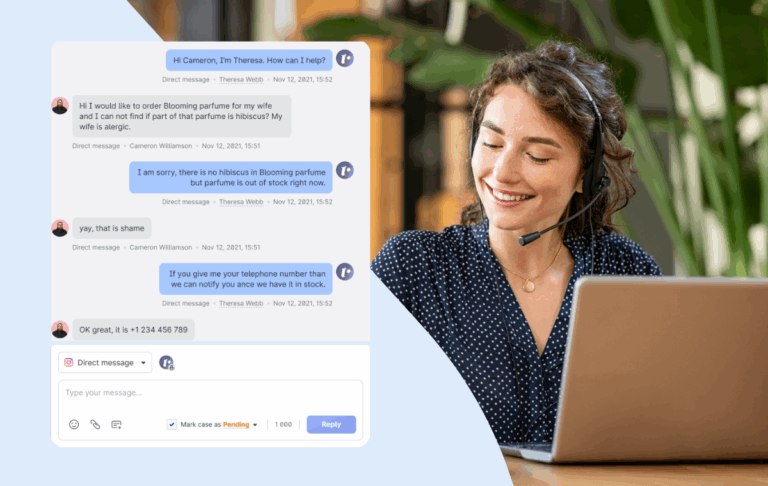
Stop running two content calendars: one for the website and one for social media. Start collaborating. Take a real customer question. It could be pulled from your social media DMs, online reviews, or a community thread. Then, create three pieces of content with it: a short-form answer video for your social media feeds, a structured Q&A page on your website to feed the search engine results page, and clear, sourced claims on your website for the AI answer. For metrics, build one scoreboard both your social and SEO teams stand behind: engagement quality (shares, saves, inbound DMs), search and answer visibility (rankings plus AI share of voice), share of conversation, and revenue influenced. A Semrush survey of 481 marketers found 81% of teams with fully-integrated SEO and AI search execution reported more traffic or leads from AI platforms, versus just 36% of teams running them separately.
Do we optimize social channels for more trusted signals for E-E-A-T, or brand awareness, or AI citations and mentions?
Good news! You don’t have to choose. That’s because the same work feeds all three. Google is explicit that the rater guidelines behind it don’t directly influence ranking, so there’s no E-E-A-T score to optimize toward. What you can optimize is the underlying material that both raters and AI models read: named authors with firsthand experience, consistent brand descriptions everywhere you appear, and third-party corroboration from people who don’t work for you. If you need a single KPI to organize around, make it AI mentions and citations. They’re something you can measure and move.
Can AI truly cite or “see” Facebook, Twitter, and LinkedIn conversations? Or is it only Reddit, Wikipedia, and YouTube?
LinkedIn, absolutely. Big time. Semrush analyzed 89,000 LinkedIn URLs cited in AI search and found LinkedIn was the second most cited domain in that dataset, appearing in roughly 11% of AI responses on average across ChatGPT Search, Google AI Mode, and Perplexity. Facebook, Instagram, and X do get cited, but at far lower rates, and the reason is technical: the main models you’re thinking of can only cite what’s publicly crawlable without a login, which rules out most of Facebook and limits Instagram to public accounts. So the ranking today is Reddit, YouTube, and LinkedIn doing the heavy lifting, with the Meta platforms and X playing a smaller supporting role.
How does this AI visibility conversation apply to B2B marketing?
If anything, it matters more in B2B. Semrush surveyed 600+ U.S. B2B professionals in March–April 2026 and found 66% regularly use AI to research vendors and solutions, 92% say AI has shaped their vendor shortlist, and 83% say it influenced their final decision — with 84% of respondents using AI to inform purchases of $1,000 or more. Here’s the part that should affect your strategy: only 7% said they notice a vendor in an AI answer because they recognize the name, while 53% said they notice one because it closely matches their specific use case. That’s a legitimate leveling of the field if you’re the smaller, more specialized player.
Which is the most important metric to follow for social and SEO: brand mentions, citations, share of voice, share of visibility?
If you only get one, make it AI share of voice — your brand’s mentions as a percentage of all brand mentions in your category — because it’s inherently competitive. But you need to understand that mentions and citations measure different things: a mention is your brand named inside the answer, a citation is your content linked as the evidence behind it. They diverge far more than people expect. Matter of fact, Semrush found that on Gemini, the overlap between mentioned brands and cited domains can be as low as 30%. So report share of voice as your headline, then use the gap between your mentions and your citations to diagnose whether your underlying problem is authority or content.
Does it mean that the more interactions you get on your content, the more you’re cited by AI?
No. In Semrush’s analysis of 248,000 Reddit posts cited by AI tools, 80% of cited posts had fewer than 20 upvotes, and the cited threads skewed old (averaging around 900 days) and short (median was about 80 words). The LinkedIn study told the same story: the median cited post had just 15–25 reactions and no more than one comment. AI retrieval rewards topical relevance and clear structure, not popularity, which means a modest post that answers a specific question precisely can out-cite something that went viral.
If I’m a digital manager whose site relies mostly on organic search, how do I justify continuing to optimize for both search and AI?
Don’t argue it in the abstract. Take the 20–30 prompts your buyers are using and record how often you’re named versus competitors, because “we appear in 3 of 30 answers, they appear in 19” ends the debate pretty quick. Back that up with your own Search Console data, finding queries where impressions hold steady but clicks are sliding. Pew’s study of nearly 69,000 tracked searches found clicks to a traditional result roughly halve when an AI summary appears (8% vs 15%), with only about 1% clicking a link inside the summary. Then fix your measurement, since AI referrals get misclassified as direct in GA4, go segment them. Semrush’s research found AI search visitors convert at roughly 4.4x the rate of traditional organic visitors. So, explain to the bosses that these are higher-quality referrals involving high-intent buyers. Be honest with leadership that these still only represent around 1% of sessions…If you volunteer the unflattering half while explaining the traffic you are getting is arguably better for business, you’ll bring credibility.
We don’t use Reddit, for a lot of reasons. Is it necessary?
Posting on Reddit isn’t necessary. Being accurately represented in Reddit conversations increasingly is, though. Semrush’s analysis of 248,000 cited Reddit posts found it was the top-cited domain on Perplexity and among the top three on ChatGPT Search and Google AI Mode, so those threads are shaping your category’s answer whether your brand shows up or not. If you need somewhere to start: go monitor what’s being said about your category. If you do eventually participate, do it authentically. The whole reason Reddit carries weight with both people and models is that brands don’t control it. Those mods will sniff out self-promotion quickly. Be honest about who you are and add genuine value when you reply.
So, answering FAQs with our content, aligned with the real interests of our consumers, will help us get AI visibility too?
Yep! That’s close to the whole game. In Semrush’s Reddit analysis, Q&A threads alone accounted for more than half of all Reddit citations, and Q&A plus comparison and discussion formats together made up nearly three-quarters. On LinkedIn, well over half of cited content was knowledge- or advice-driven, and for Google AI Mode it was closer to two-thirds. The one nuance: pull those questions from what people legitimately ask you — your DMs, reviews, and support tickets, in their words — because the question someone DMs you today is the prompt someone else types soon.
Do social metrics matter for SEO, like viewer count and comments? Can consistency of posts and tone of voice still signal a trusted source?
View counts and comments don’t move rankings directly. Google has been consistent for more than a decade that social signals aren’t a ranking factor. In fact, Semrush’s own guidance says the same thing. Consistency is a different story, and it shows up in the citation data. In the LinkedIn study, around three-quarters of cited post authors were frequent posters with 5+ posts in the previous four weeks. Consistent tone and terminology matter too, but for a specific mechanical reason: AI responses mirrored cited LinkedIn content fairly closely (semantic similarity of 0.57–0.60). So, vague or shifting positioning gets paraphrased into something you didn’t intend. Our advice: publish consistently and describe yourself the same way everywhere, but don’t expect likes to lift rankings.
How do social signals, entity recognition, and semantic SEO contribute to a stronger Knowledge Graph profile and increased brand visibility?
Treat it as one job: making your brand unambiguous as an entity. Search and AI systems recognize entities through structured data, a consistent identity (same name, same description, same sameAs links everywhere), and corroborating mentions across independent sources. Your social profiles are part of that corroboration layer, even though they pass no ranking value themselves. That off-site layer now carries some serious weight: Semrush’s 2026 AI Visibility Index found a brand’s AI narrative is no longer shaped by its own website alone, with models drawing on customer reviews, community discussions, publishers, and retailers to decide how to describe and recommend you. In practice, that means locking down your Organization schema and sameAs profiles, describing your category identically on every surface, and treating semantic SEO as covering a full cluster of related concepts rather than chasing single keywords.
Do podcasts contribute to AI visibility?
Yes, but only the written layer does the work. Most of the AI systems we’re talking about aren’t listening to audio. They’re reading the transcript, the show notes, and the episode page, which means a podcast living only inside Spotify and Apple is mostly invisible to them. Publish a full, human-corrected transcript on a page you own and that episode becomes a durable, quotable asset that can be cited. We should note: podcast-specific citation research is thinner and more vendor-published than the YouTube and Reddit datasets, so treat the mechanism as established but any specific numbers you see as more directional for now.
What if I don’t have products or services people talk about on social media — too complex, B2B only? Any suggestions?
Great question. If that’s the case, don’t try to manufacture consumer-style chatter and lean into expertise instead, because that’s what gets cited in your categories anyway. Semrush’s LinkedIn research found the majority of prompts in its analysis came from technology, business services, finance, and industrial sectors — and that citations skew toward educational, advice-driven content, with ChatGPT Search and Google AI Mode citing individual creators over company pages 59% of the time. So put your subject-matter experts on the record: long-form LinkedIn articles in the 500–2,000 word range, YouTube explainers with accurate transcripts, podcast appearances, and detailed use-case pages. Remember that the top complaint B2B buyers had about AI vendor recommendations was that they’re too generic for their specific use case (33%). In other words, your specificity is the opening as opposed to any obstacle.
What’s more important for measuring organic social success: engagements or organic impressions?
Engagements. But not all engagements are created equally, and that’s where a lot of scorecards go wrong. Impressions tell you the algorithm served your post, but they don’t tell you a single person cared. Weight the private-intent signals highest — shares, saves, and inbound DMs — because that’s where the behavior has moved: inbound brand-to-customer DMs are up 76% year over year and shares per reach are up 150%, while median Instagram engagement fell from roughly 17% in early 2024 to under 10% by late 2025 (Emplifi Social Media Benchmarks Report 2026; Emplifi platform data, 2025–2026). Keep impressions as a health check on distribution, but judge success on the actions that show someone moving toward a decision.
You mentioned YouTube is cited. Is that because of the written description, or is it referencing the chapters and bookmarks we input?
Mostly the transcript, actually, since that’s by far the largest body of text attached to the video. Most of the AI systems we’re describing aren’t sitting there watching video. They read the text layer around it — transcript and closed captions first, then title, description, and chapter markers, which mainly serve to segment that transcript so a model can point to a specific moment. So the highest-leverage thing you can do is upload a human-corrected transcript instead of relying on auto-captions, which routinely mangle brand names, product names, and technical terms (and those errors carry straight through into how you’re indexed). It really is the video itself being cited: Semrush found 99% of YouTube citations came from creator videos rather than supporting content like help documentation, with about 13% coming from Shorts URLs.
AI Visibility Sources:
- Semrush, 2026 AI Visibility Index (126M U.S. prompts, Jan–Apr 2026) — press release · index
- Semrush, We Analyzed 89K LinkedIn URLs Cited in AI Search — https://www.semrush.com/blog/linkedin-ai-visibility-study/
- Semrush, We Analyzed 248K Reddit Posts — https://www.semrush.com/blog/reddit-ai-search-visibility-study/
- Semrush, Only 22% of marketers have fully integrated AI search and SEO — https://www.semrush.com/blog/the-operational-gap-ai-seo-study/
- Semrush, How AI tools shape the B2B buying process — https://www.semrush.com/blog/how-ai-shapes-b2b-buying/
- Semrush, How to measure AI share of voice — https://www.semrush.com/blog/how-to-measure-ai-share-of-voice/
- Semrush, Social Signals & SEO — https://www.semrush.com/blog/social-signals-seo/
- Semrush, Entity-Based SEO — https://www.semrush.com/blog/entity-based-seo-strategy/
- Semrush Enterprise, LinkedIn and YouTube content are vital for your AI visibility — https://enterprise.semrush.com/resources/article/linkedin-youtube-ai-search/
- Google Search Central, E-A-T gets an extra E for Experience (Dec 2022) — https://developers.google.com/search/blog/2022/12/google-raters-guidelines-e-e-a-t
- Pew Research Center, tracked-browsing study of 68,879 real Google searches, 2025 — https://www.pewresearch.org/short-reads/2025/07/22/google-users-are-less-likely-to-click-on-links-when-an-ai-summary-appears-in-the-results/
- Emplifi Social Media Benchmarks Report 2026; Emplifi platform data, 2025–2026 — https://emplifi.io/resources/social-media-benchmarks/