The Instagram algorithm is a set of separate AI systems for Feed, Stories, Reels and Explore, each predicting what a person will watch, like and send. Instagram’s head, Adam Mosseri, names watch time, likes and sends as the signals that count most, and sends weigh more when a post reaches people who don’t follow you yet. Instagram also says it recommends original content over reposts of someone else’s work.
One week a Reel takes off, and the next one barely reaches your own followers. The Instagram algorithm can feel unpredictable, but it isn’t random. Instagram has said in public which signals decide how far a post travels, and people are passing brand posts on: shares are now the most common interaction after likes, according to Emplifi’s Q3 2026 social media benchmarks.
This guide lays those signals out for you, so you can plan posts around them and track the numbers that matter. For the wider picture across networks, see our guide to how social media algorithms work.
The Instagram algorithm works as a group of AI systems, one for each part of the app, that predict which posts each person will find most valuable and rank them in that order. Feed, Stories, Reels and Explore each have their own system, and Meta publishes how each one works.
Meta’s explainer for the Instagram Feed AI system says it “automatically orders the posts in your feed by predicting what you will find most valuable and relevant.” The process has four steps:
Instagram ranks content for two audiences: people who follow you (connected reach) and people who don’t follow you yet (unconnected reach). In a video on how ranking works in January 2025, Mosseri said: “For both, the top three signals that matter most for ranking are watch time, likes and sends.” He suggested watching “average watch time, likes per reach, and sends per reach” in Insights, and added that “likes are slightly more important for connected content, and sends are slightly more important for unconnected content.”
Mosseri names the three signals that matter most for ranking.
The Instagram algorithm ranks first on watch time, likes per reach and sends per reach. Originality and your history with each person also feed in, and negative signals can pull a post down.
Sends carry extra weight because a send puts your post in front of someone who may never have seen your account, which is the unconnected reach described above. Meta’s Feed explainer gives a clue about what gets sent: when it predicts how likely someone is to share a post in a direct message, one of the signals is whether the post is informative, such as news, a product review, a tutorial or a how-to.
Originality counts too. In April 2026, Instagram extended its originality rules from Reels to photos and carousels: accounts that mostly post content they didn’t create, or didn’t meaningfully edit, are no longer shown where Instagram recommends content. Their followers still see their posts. Instagram says 75% of recommendations in the US now come from original posts.
Negative signals pull the other way. Meta’s Reels ranking explainer lists how likely someone is to watch less than three seconds of a reel, and its Explore explainer lists how likely they are to tap “Not interested”. Both are predictions the systems use when they choose what to show.
Each part of Instagram ranks content with its own AI system.
Feed ranks posts from accounts a person follows, based on what and whom they’ve liked or interacted with recently, so a follower who often interacts with you is more likely to see your next post. Meta’s Feed explainer lists the predictions behind the order, including how likely someone is to swipe through a whole carousel, how long they’ll spend on a post and how likely they are to send it to someone.
Stories come only from accounts a person follows, ordered in the row at the top of the app. According to Meta’s Stories explainer, the system looks at how many times someone has viewed your stories, how often they’ve replied to them and how likely you are to be friends or family. It also predicts how likely someone is to answer a question in a story, so a question sticker gives followers an easy reason to reply.
Reels mixes accounts a person follows with reels similar to ones they’ve recently watched, so a reel can reach people who don’t follow you yet. A first model picks about 100 reels, then the system scores and orders them. Meta’s Reels explainer lists predictions such as how likely someone is to watch more of a reel than 95% of people who watched reels of the same length, reshare it or use its audio in a reel of their own.
Explore is built for discovery. It gathers posts linked to a person’s interests, narrows them down to 100, then ranks them on predictions of how the person will respond, such as how likely they are to like or save each one. Meta’s Explore explainer also lists how likely someone is to follow the author and to watch more than 95% of a video.
Since August 2025, people can repost public reels and feed posts. Instagram recommends reposts to the reposter’s friends and followers, with credit to the original account, so one repost can carry your post to people who don’t follow you. Emplifi’s Q3 2026 social media benchmarks now count reposts as Instagram interactions.
Collab posts appear on every co-author’s profile and in front of each co-author’s audience, so one post can reach two communities at once.
Emplifi research: More than 73% of brands in Emplifi’s analysis published Instagram collab posts in H1 2026. Collab posts outperformed the same brands’ standard posts, and accepted collabs (a creator publishes and invites the brand) delivered the strongest uplift. Collabs also earned more shares and reposts in every industry studied, and Reels saw the biggest gains. Read the full Instagram collab posts analysis.
Work with the Instagram algorithm by giving people a reason to watch to the end and then send the post to someone.
Make your own content for Instagram rather than re-sharing other people’s posts. When you join a trend, add something of yours, such as your own footage, text that adds context or a clear point of view, so the post counts as original. To share a creator’s post, use the repost button or a collab post, which both credit them.
Emplifi pro tip: Open each Reel with the payoff or the question, then explain, so people stay past the first three seconds.
Ask questions people want to answer, and reply while the thread is active. Community content gives people something to respond to: Delta reshared a creator’s Reel of her father’s last flight as a pilot.
Delta’s reshare credits the creator who filmed it.
Three brands show how the same signals play out:
Yakima shared a family hiking trip from creator @chasing.sage under #yakimaracks.
Puma’s running account co-posted this Reel about its Deviate 4 running shoe with other accounts.
Alo shows a creator in its Winter ’26 collection.
Hashtags aren’t dead, but their job has changed. Since December 2025, Instagram allows up to five hashtags on a post or reel, and it says fewer, more targeted hashtags can improve both how content performs and people’s experience on the app, as Social Media Today reported. Mosseri has said hashtags don’t improve a post’s visibility, but they’re “a great way to let people know what a post is about.”
So treat hashtags as labels, not a way to get more reach. Use one clear keyword in your caption and three to five hashtags that describe the post itself. Search each hashtag before you use it, to check it’s the conversation you want to join.
Carousels and Reels earn the most interactions per post, and shares make up more of Reels’ interactions than any other format’s, according to Emplifi’s Q3 2026 social media benchmarks. Images still have a place, since Meta says Feed aims for a balanced mix of formats.
Emplifi benchmarks, Q3 2026 (updated quarterly): what they mean for your posts
Engagement per impression is climbing. Across 77,038 brand Instagram profiles, the median engagement rate per impression rose to 1.52%, up 68% year over year. Instagram interactions held steady while impressions per post fell; impressions fell on every network Emplifi tracks. So judge a post on what it earns per view, not on raw reach.
The posts that travel furthest are the ones people pass on. Shares are the most common interaction after likes on every format, and the median brand post earned two. On the highest-reach posts, shares make up 12.4% of interactions, against 7.1% on the lowest. Before you publish, ask who would want to share the post, and why.
Reels lead on sharing, carousels on interactions. Shares are 9.7% of interactions on Reels, the highest of any format, while carousels earn the most interactions per post. Use Reels to reach new people and carousels for content people save and come back to.
About the data: engagement rate is interactions divided by impressions. Emplifi changed it from reach-based because Facebook no longer provides reach data. Instagram interactions are likes, comments, saves, shares and reposts. Figures are medians. Full results are in Emplifi’s Q3 2026 social media benchmarks, and your industry’s medians are in the industry benchmarks hub.
Design Reels to be shared, and use carousels for guides and step-by-step posts that people save. Our Instagram marketing strategy guide covers the full content mix.
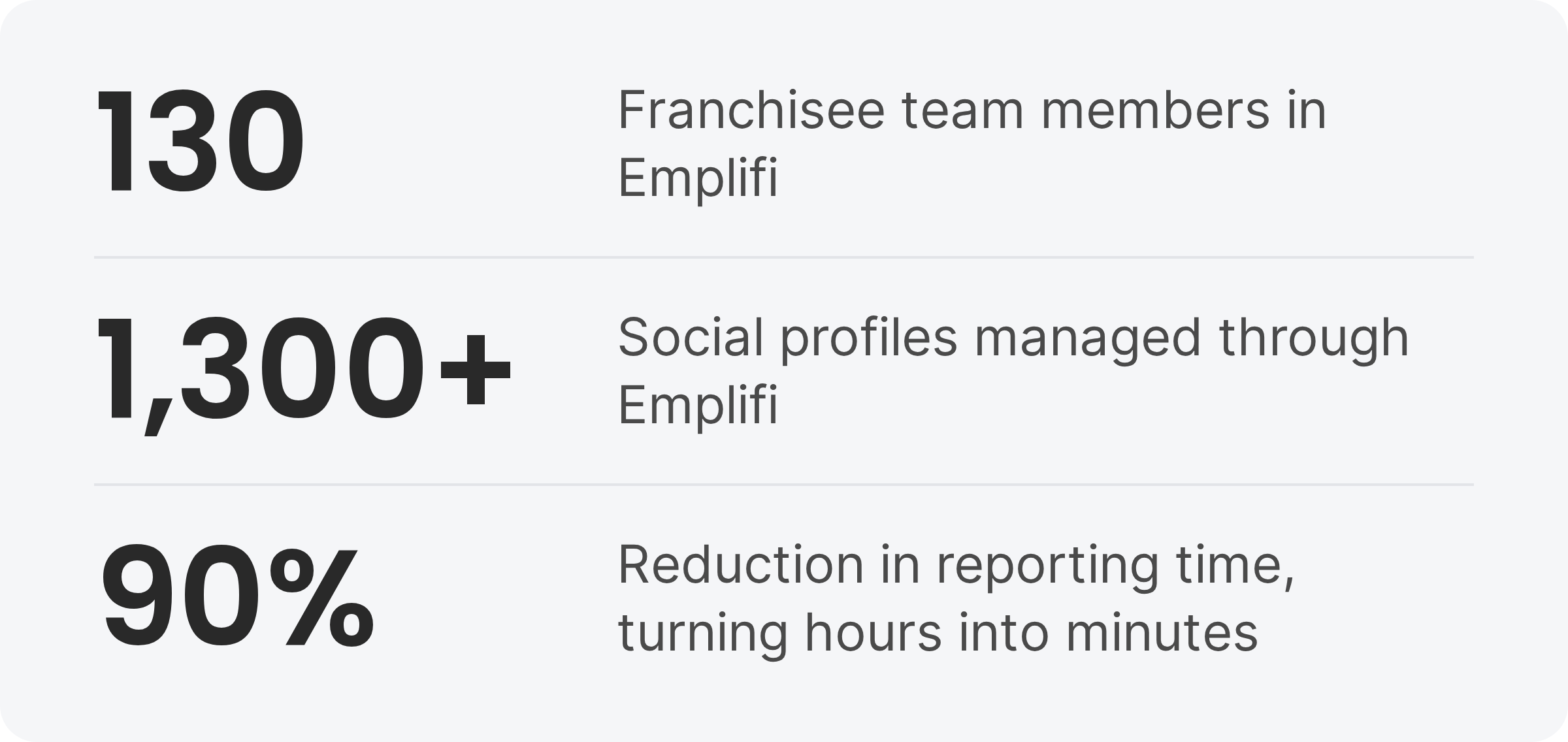
Crunch Fitness used Emplifi’s labeling and reporting to see which content types drove the most engagement across its franchise network. With Emplifi, the brand manages 1,300+ social profiles, has 130 franchisee team members on the platform and cut reporting time by 90%. “We’ve learned that Reels are our number one performer, with Carousels coming in second,” said Aminta Iriarte, Social Media Associate Director at Crunch Fitness. Read the Crunch Fitness story.

Crunch Fitness uses format results to guide posts across its franchise network.
Instagram is testing longer videos. Called Features, they’re horizontal videos of up to 90 minutes, in a test that’s open for now to selected creators. Short Reels clips from a Feature point viewers to the full video, which they can watch on their phone, with TV viewing planned.
If you get access, plan the long video and its clips together. The clips are how people discover the full video: they show up in Reels, where people find them and send them on. Judge each clip on sends per reach, as you would any Reel.
It’s still a test. Instagram leans into long-form video: What it means for brands and creators covers what Mosseri and Instagram’s Tessa Lyons announced.
You check your own numbers by setting them next to your industry’s medians, which Emplifi publishes every quarter for each industry and region in its industry benchmarks hub. Start with these:
Then look at your top 10 posts by reach. If shares make up more of their interactions than on your average post, make more posts like them.
You don’t need to pull these numbers by hand each month. In Emplifi Unified Analytics, Emplifi’s social media analytics platform, a Dynamic Board can track engagement rate per impression and shares per post by format, and you can save the view and schedule it as a regular report. Competitive Benchmarking in the same platform puts your profiles next to competitors and industry peers.
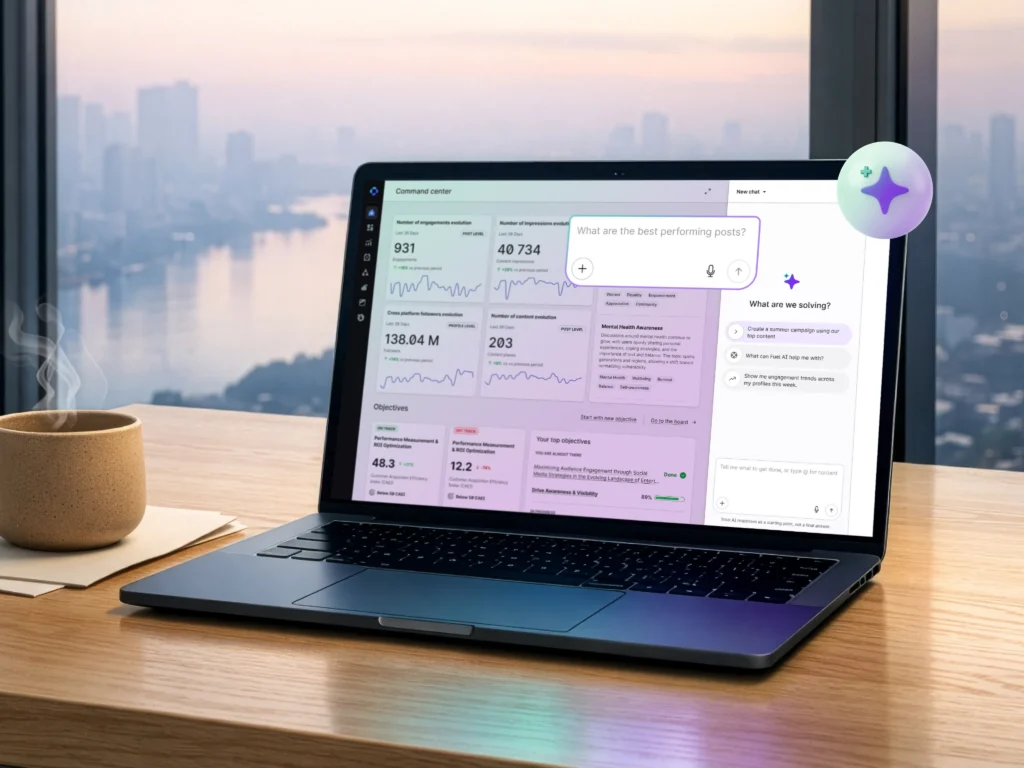
Fuel AI, the agentic intelligence layer built into Emplifi Fuel, analyzes your account data and builds boards from a plain-language request, and it asks for your approval before it creates or deletes anything. Existing Emplifi customers add it through their customer success manager. One example could be: “Compare our Instagram engagement rate per impression and shares per post this quarter with last quarter, by format, and explain what changed.”
Instagram will keep adjusting how it ranks posts, but the signals it names are simple: people watch to the end, like the post and send it to someone. That’s good news for brands. Reach comes from the work itself, not from tricks.
Start your next content review with sends per reach and watch time. Look at which posts traveled furthest and what they had in common, then make more like them. Keep your content original, and use collabs and reposts to reach new communities.
Then check how you compare. Set your engagement rate per impression against your industry’s median in Emplifi’s industry benchmarks hub each quarter, so you can tell whether a dip comes from your content or from the whole market.
Ready to see how your Instagram engagement compares with your industry? Book a demo with the Emplifi team.
Instagram hasn’t described any shortcut: each post is ranked on how people respond to it. Mosseri names watch time, likes and sends as the signals that count most in his January 2025 explanation of ranking, and our guide to how social media algorithms work covers the other networks.
Posting time shapes which of your followers are online when a post goes out, and Instagram ranks each post on how people respond to it. The best time is different for each brand. Check when your own followers are active in Insights or in a social media analytics platform, and test two or three slots for a month before you settle on a schedule.
Yes, as labels for what a post is about rather than a way to get more reach. Since December 2025, Instagram allows up to five hashtags on a post or reel, as Social Media Today reported. Keep to one clear keyword in the caption and three to five specific hashtags, and search each tag before you use it. Our Instagram marketing strategy guide covers captions and search in more depth.
Both work, for different jobs. In Emplifi’s Q3 2026 social media benchmarks, carousels and Reels earn the most interactions per brand post, and shares make up more of Reels’ interactions than any other format’s. Reels are also shown to people who don’t follow you. Use Reels to reach new people and carousels for content followers save and come back to.
A good Instagram engagement rate is one above the median for brands in your industry and region. Emplifi publishes those medians every quarter in its industry benchmarks hub, and its Q3 2026 social media benchmarks have the latest worldwide and US figures. Emplifi calculates engagement rate as interactions divided by impressions, so measure yours the same way before you compare.
When someone reposts your post, Instagram shows it to that person’s followers and friends, with credit to your account. That lets a post reach people who don’t follow you. Emplifi counts reposts as Instagram interactions in its Q3 2026 social media benchmarks, together with shares and saves.