2026 Gartner® Magic Quadrant™

Emplifi named a Leader in the 2026 Gartner® Magic Quadrant™ for Social Media Management and Listening

Get the Report

Emplifi named a Leader in the 2026 Gartner® Magic Quadrant™ for Social Media Management and Listening Get the Report

Blog
13 min read
Sep 23, 2026

Hotel social media: 6 proven ways to grow your audience

Hotel brands grow their social media audience by publishing content travelers save and share, then putting permissioned guest photos on the pages where people book. Six moves do the work: design for saves, collect guest content by property, run Instagram Collabs into new feeder markets, vet creators on audience geography, answer complaints in public and scale local content with AI. Most hotel programs still post for the audience they already have. The brands gaining ground build the one they don’t.

Jordan Lukes Director of Corporate Marketing
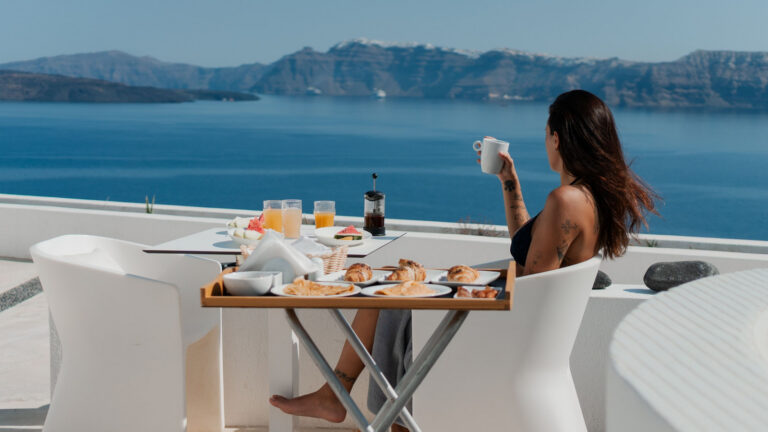
A hotel guest having breakfast on a terrace overlooking the sea.

That distinction matters more now than it did two years ago. Instagram shares per reach rose more than 150% across 2025, while median reach fell 30 to 40% across every major format.

Posting for impressions, the default setting of most hotel social calendars, delivers diminishing returns year on year. The brands closing that gap aren’t posting more. What they do instead:

  • Publishing content that earns saves
  • Putting guest photography in the booking path
  • Running creator collabs that reach new feeder markets
  • Handling complaints in public
  • Using AI to do all of it at a scale no team could manage manually

This guide is for social media leaders and heads of digital marketing at hotel groups, boutique brands, resort operators and accommodation marketplaces. It assumes the fundamentals in our hotel social media marketing playbook and focuses on growth.

It covers the strategies that separate growing hotel brands from static ones, the channels and formats that carry the work, how to measure what actually matters, and a 30/60/90-day plan to start.

Why social is different for hotel brands

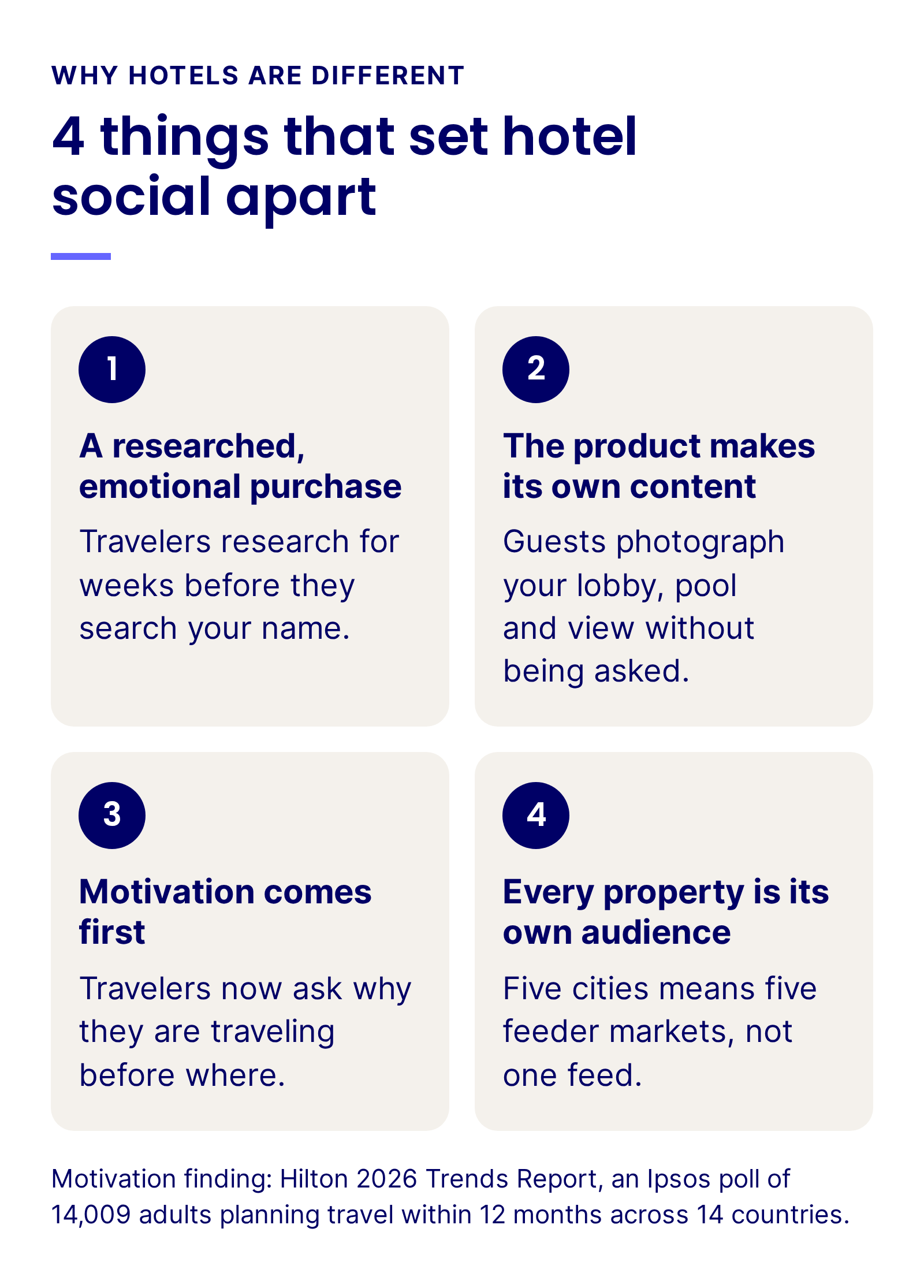
Four things separate hotels from most other categories on social.

Four things that set hotel social apart: a researched, emotional purchase, a product that makes its own content, motivation that comes first, and every property as its own audience

The purchase is high-consideration and emotional. A hotel booking is not an impulse decision. Travelers research across multiple surfaces for weeks (saving posts, reading reviews, messaging friends who’ve been) before they search a brand name. That research window is where hotel social programs win or lose.

The product delivers its own content. A guest photographs your lobby, pool, view and restaurant without being asked. The volume of content produced about any hotel in any given week dwarfs what most brand teams could produce themselves. The question isn’t whether that content exists. It’s whether there’s a system to collect, permission and deploy it where it does commercial work.

Motivation has shifted. Hilton’s 2026 Trends Report (an Ipsos poll of 14,009 adults planning travel within 12 months across 14 countries) found that the first question travelers now ask is why they are traveling, not where. Wellness, reconnection, personal milestones. A hotel publishing destination content without a human reason to go there is answering a question nobody is asking.

Multi-property brands have multiple audiences. A group with properties in five cities does not have one social audience. It has five, each with different feeder markets, seasonal demand patterns and reasons to visit. One global content calendar fails all of them.

What’s holding hotel brands back

The same four problems appear across hotel social programs everywhere.

Reach metrics reward the wrong creative decisions. Shares now travel further than reach, and median reach keeps falling across every major format. A post that earns saves and shares into new audiences outperforms one that reaches a large existing following, but most hotel teams are still reporting on reach, which means their creative teams are still optimizing for it.

Guest content is collected casually and deployed narrowly. In The State of Social Media Marketing 2026, 82% of 564 marketers called UGC important, and only 31% actively encourage it. In hospitality, that gap represents the largest unclaimed content asset in the business. The content exists in guests’ camera rolls, in tagged posts and on review platforms. It just isn’t being systematically collected, permissioned and deployed where it matters most: the booking path. Emplifi data shows that travel accounts for nearly 10% of total revenue generated by UGC.

Service volume arrives in public across too many channels to manage separately. One-third of consumers expect a direct message reply within an hour. Hotel brands field complaints simultaneously on Instagram, Facebook, Google Reviews, TripAdvisor and booking platforms. Without a unified response workflow, each becomes a silo, response times slow, and the public record works against the brand.

Small teams cannot run multi-property programs without a system. Fifty-seven percent of social teams have fewer than six people. A group of 20 properties cannot be served by a two-person team managing a single feed. The brands that grow have built a system that scales the inputs (content collection, rights management, scheduling, response) rather than scaling headcount.

Six strategies for hotel brand growth

1. Make the save your creative target, not the impression

The strongest distribution signal on Instagram is the share. Trips are planned in pairs and groups. A post someone sends to the person they would travel with reaches a new audience the algorithm cannot. Reels and Carousels earn roughly 44% more median interactions than images on Instagram, and in accommodation, the sequence that earns saves follows a consistent pattern: room, view, neighborhood.

Make the creative brief specific and decision-oriented. Which room faces the water? When does the light hit the terrace? How far is the market from the hotel? Specifics that resolve a genuine booker question are more shareable than aspirational hero shots, because they feel useful rather than promotional.

Extend the brief to the rest of the booking decision: how the transfer from the airport works, where you eat on a wet evening, and what the rate actually includes. Those are the posts travelers keep.

The Cosmopolitan of Las Vegas answers the question every booker actually has, what the view is like, in a single Reel. No room description does that job as fast.

Two habits raise the save rate. Put the answer in the first frame rather than the brand, because a traveler scrolling at speed decides in about a second whether a post is worth keeping. Then make the opening line of the caption do the same job: name the room, the beach or the transfer before you explain it.

Format follows the question. Use a Reel when the answer moves: the walk from the room to the water, the light coming over the terrace, the drive in from the airport. Use a Carousel when the answer is a comparison a traveler wants to hold on to: room types, meal plans, what a suite gets you that a standard room does not.

citizenM does both in one post. The frame below opens on a guest’s photograph of the room, and the caption names what you are looking at before it mentions the brand.

citizenM hands the frame to a guest and keeps the credit in the caption. The photograph does the selling, and the permission stays visible to everyone scrolling past.

Measure this: Track saves and shares per reach alongside impressions in every content review. If your creative team is rewarded only for reach numbers, they will optimize for reach numbers.

2. Build a guest content system by property, not by brand handle

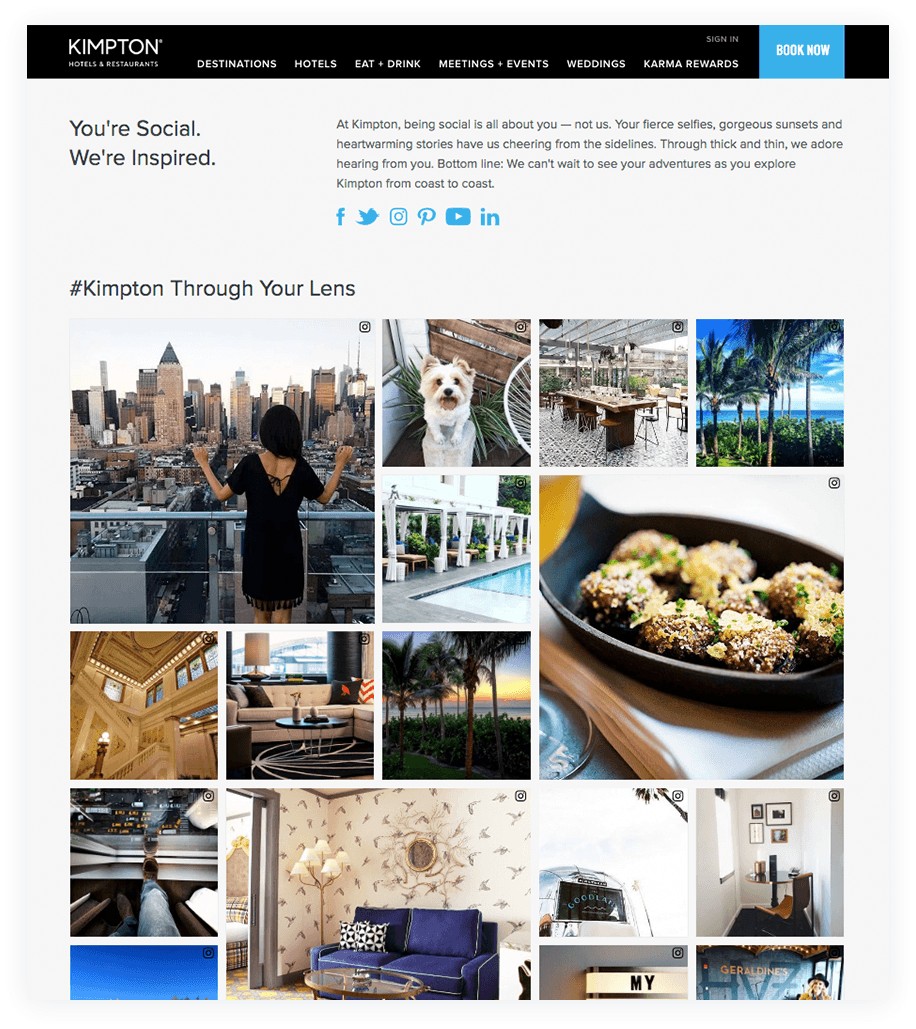
Kimpton Hotels & Restaurants runs one permissions system across 80+ destinations. The Cosmopolitan of Las Vegas turned guest content into a shoppable Instagram gallery, with the result in the case study below. Neither result comes from a casual approach to UGC.

Kimpton #KimptonThroughYourLens guest photo gallery on the Kimpton website

Kimpton’s #KimptonThroughYourLens gallery puts guest photographs on the website, where travelers compare properties. One permissions system supplies every destination in it.

Kimpton Hotels & Restaurants: 3.6 million traveler photos. 200 million engagements. One permissions system.

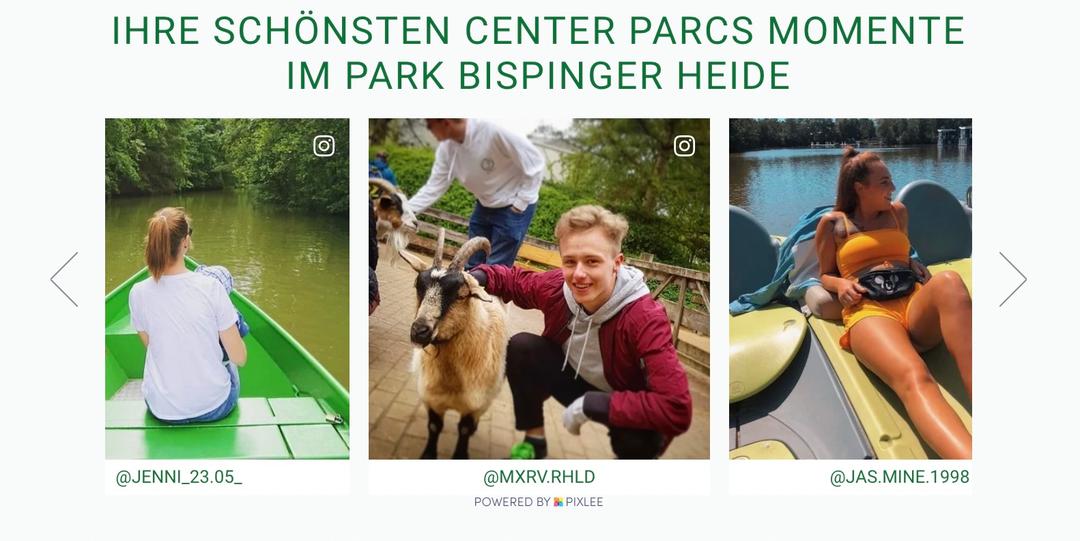
The system starts at collection. Center Parcs uses geo-fencing down to a 500-square-foot perimeter to gather guest content inside each of its 27 villages, then routes permissioned content into paid social, email and on-property screens. Around 600 booked nights per month are attributed to that content, because it appears where travelers are making decisions, not only in the feed.

Center Parcs guest photo gallery published in German for a local village market

Center Parcs collects guest photos village by village and publishes them back in each market’s language, which is why the on-screen text here is German. The credit line keeps the guest visible.

Skyscanner, operating a similar model in a travel marketplace context, hit a 70% consent rate in its first six months and collected more than 15,000 permissioned pieces. Half of its Instagram visitors were redirected to the website after interacting with that content.

The principle is the same for hotel groups. Set collection perimeters around individual properties, not the brand handle. Automate rights requests at the moment of engagement. Hold all permissions in a single shared library accessible to web, paid and CRM teams, then place that content on room and experience pages, where visitors are in active comparison.

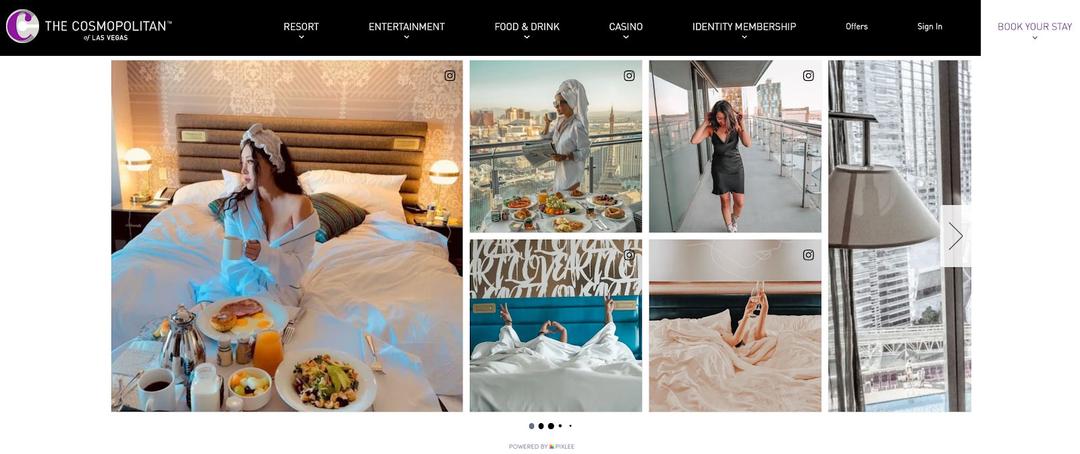
Guest photographs from The Cosmopolitan of Las Vegas placed on a booking page

Guest photographs placed on the room and experience pages rather than in the feed. This is where a traveler is already comparing, so the content has a job beyond awareness.

The commercial case is clear. Emplifi’s UGC research shows that guest content on a webpage lifts both average order value and purchase likelihood, with the figures in the booking journey section below. A guest’s photograph of the suite earns more trust on the suite booking page than any brand-produced image.

3. Use Instagram Collabs to extend reach into new feeder markets

Organic reach on Instagram is increasingly difficult to earn consistently. Instagram Collab posts, where two accounts co-author a single post that appears across both audiences, are one of the most effective tools hotel brands have to reach travelers who don’t yet follow them.

Emplifi’s H1 2026 analysis of Instagram brand profiles shows that collaborative posts outperform standard brand posts across industries, profile sizes and formats. Among the verticals analyzed, Travel & Hospitality stands out: nearly 60% of profiles in the sector publish a mix of owned and accepted collaborations, the highest dual-model adoption rate of any industry.

Owned collaborations: the brand publishes and invites a creator or partner to co-author. Useful when message control, product detail or campaign consistency matters most.

Accepted collaborations: the creator or partner publishes and invites the brand. These consistently deliver the stronger uplift, because the content feels native to the creator’s established audience.

Accepted Instagram collaborations reach more than 5x the amplification of non-collab posts in some verticals, and Reels see the strongest performance gains of any format.

For hotel brands, the practical implications are straightforward:

  • Start with Reels. When the priority is discovery in a feeder market you do not yet reach, this is the format to test first.
  • Match collaborator to feeder market, not follower count. Smaller, carefully matched partnerships see stronger uplift than broad programs with high audience overlap.
  • Connect your creator strategy to your guest content program. Brands with the highest UGC share of voice also see stronger engagement across both collab and non-collab content, so build the two together.
  • For multi-property groups: Consider destination boards, tourism authorities and local businesses as collab partners, not only individual creators. A joint post between your coastal property and the local tourism board carries built-in local credibility.

4. Vet creators on audience geography, not reach

Sixty-seven percent of marketers plan to raise influencer budgets this year. For hotel brands, that investment fails when it’s based on follower count rather than audience location. A creator with 500,000 followers whose audience is concentrated in the wrong feeder market books nobody a room.

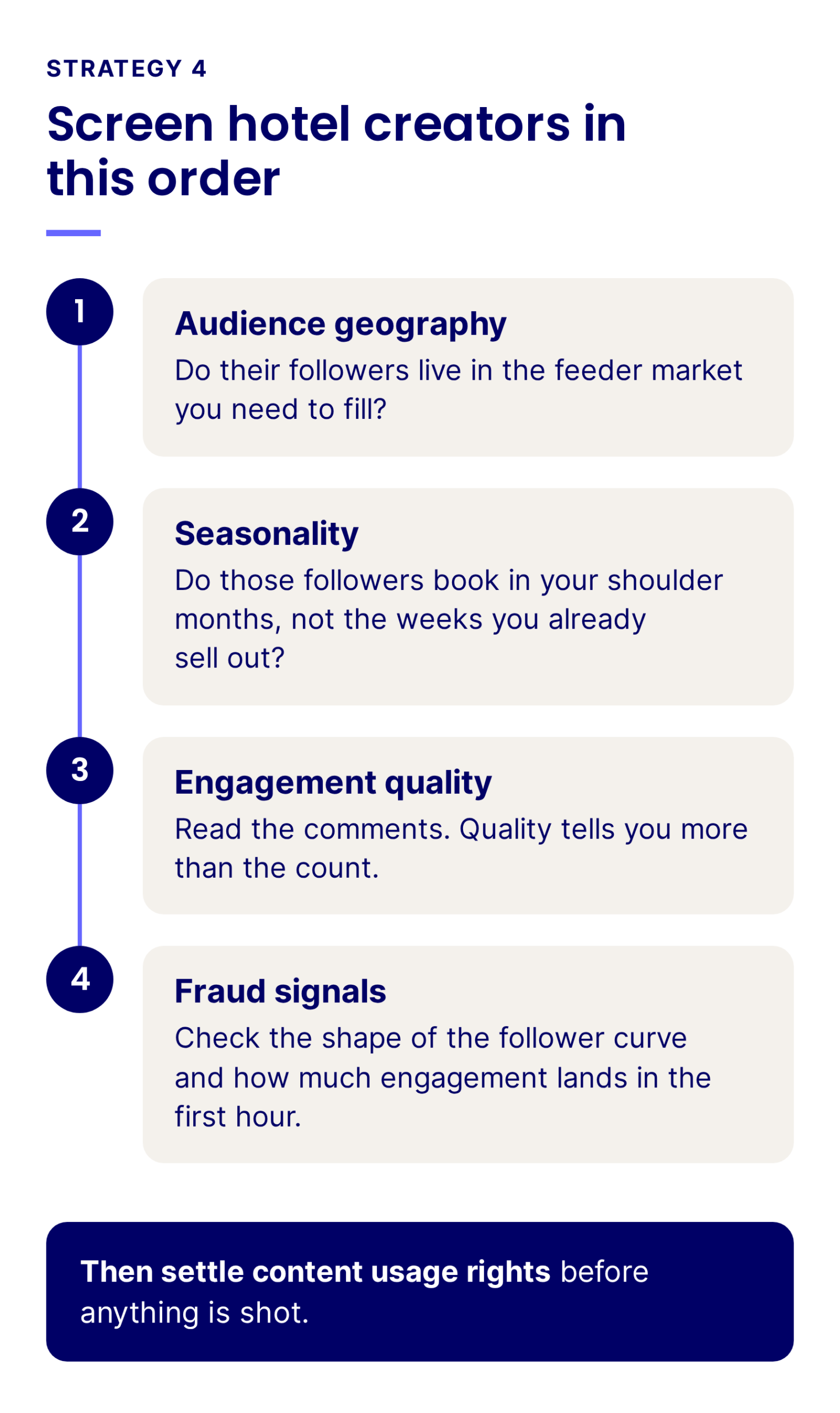
Screen first on audience geography and seasonality, then on engagement quality and fraud signals. Brief on the specific property and traveler profile you need to fill: a coastal resort needs content reaching urban weekend-breakers in drive markets, not a diffuse global travel audience.

Run the screen in the same order every time. A creator whose followers book in the shoulder months is worth more than one whose followers arrive in the weeks you already sell out. Then look at engagement authenticity: comment quality, the shape of the follower curve, the share of engagement landing in the first hour. Settle content usage rights before anything is shot.

Creator screening order for hotels: audience geography, then seasonality, then engagement quality, then fraud signals, then settle content usage rights before anything is shot

A 2026 TUI Musement study across Spain, Italy and the UK found TikTok ahead of friends and family as a source of holiday inspiration for Gen Z: 48% versus 43%. That makes creator selection for TikTok especially consequential: this audience uses it as a genuine discovery surface in a way they don’t use Instagram.

Pair every creator campaign with a guest content layer. Emplifi data shows 65% of consumers trust customer content more than influencer posts, and 51% say seeing people like themselves in content directly influences their purchase decision. Creator content drives awareness; it works best when peer-reviewed, guest-generated content is waiting when the curious traveler arrives.

5. Treat public complaint response as a growth channel

In hospitality, the recovery is public. A complaint handled well (resolved transparently, on-screen, before personal detail moves to a direct message) is social proof of how the brand treats people when things go wrong. Handled well, it does more for trust than a polished campaign.

One in four consumers will leave after a single bad experience. Nearly half will stay loyal when the issue is resolved well. Both outcomes are visible to every future guest reading your feed.

The 2026 Digital Authenticity in the Age of AI consumer survey found that 93% of consumers say authentic engagement builds trust, and 85% say they’d pay more for a brand they consider authentic. In the same survey, 79% said they read three or more reviews before buying, so the replies get read too. Fast, visible recovery is one of the most authentic signals a hotel brand can send.

For hotel brands, the complexity is platform depth. Complaints arrive on Instagram, Facebook, Google Reviews, TripAdvisor and booking platforms simultaneously. Without a workflow that pulls all of them into one place, response times slow, tone becomes inconsistent and the public record diverges from the brand’s stated values.

Build the workflow first. Set a response target per channel. Staff to it through peak season. For direct messages, one hour is the consumer expectation, and only 8% of customers are willing to wait 48 hours for a reply.

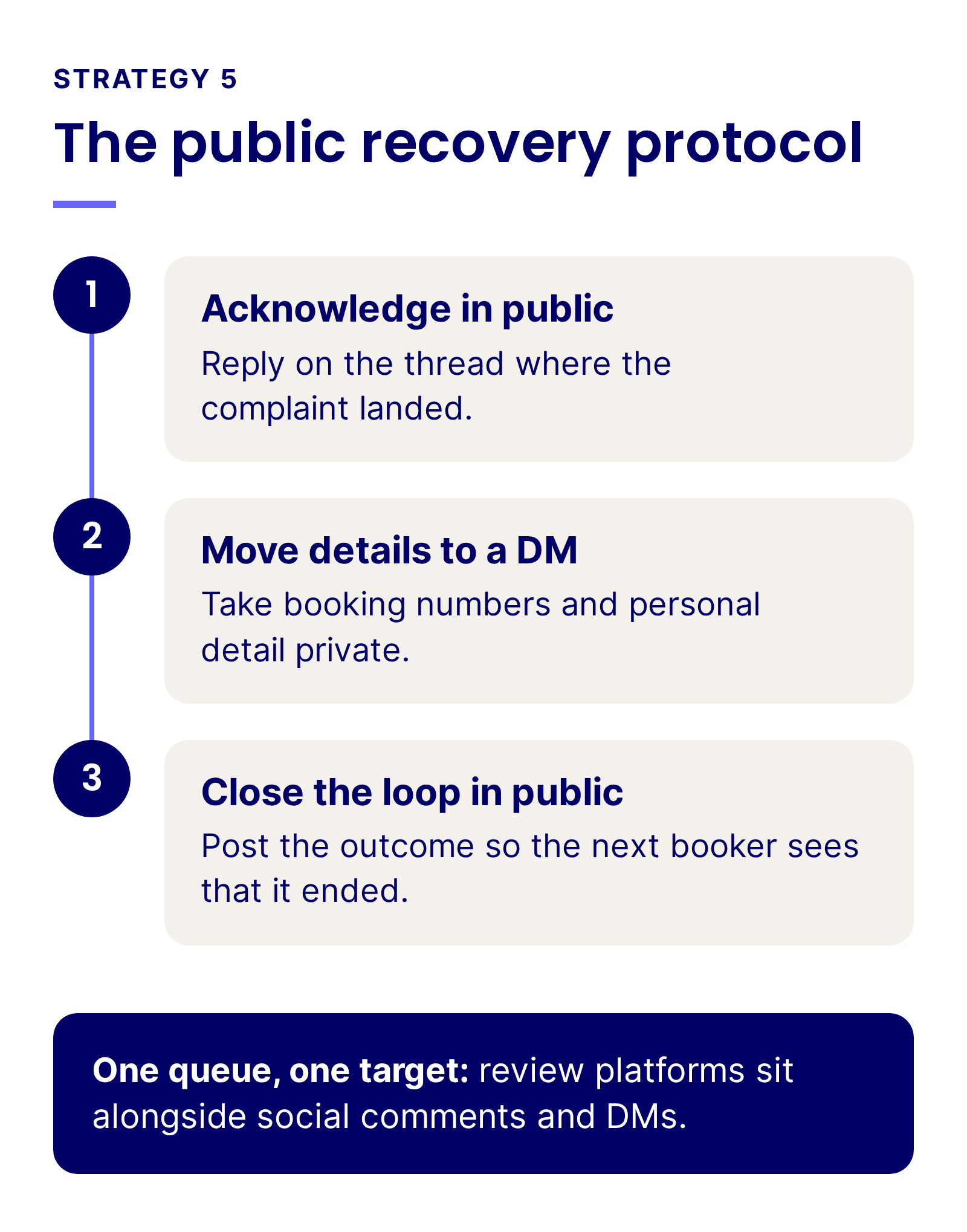
Write the protocol down before you need it: acknowledge in public, move the personal detail to a direct message, then come back to the public thread with the outcome. The booker reading that thread three weeks later needs to see that it ended. Review platforms sit in the same queue, on the same target.

Agree the escalation in advance: who can offer compensation and how much, and what goes straight to a duty manager on safety, medical or legal exposure.

Public recovery protocol for hotel complaints: acknowledge in public, move details to a direct message, close the loop in public, and agree the escalation in advance

6. Centralize the system, localize the content

Aeromexico consolidated performance analysis, benchmarking and cross-channel response into a single platform, then reinvested the recovered time into fewer, larger campaigns. In one year, content output fell 35% while engagement grew 786%, community size grew 40%, and response time dropped from four days to a few hours daily.

The lesson is not that less content is always better. It is that a centralized workflow producing many local outputs beats many local teams producing content without coordination or visibility into what’s performing.

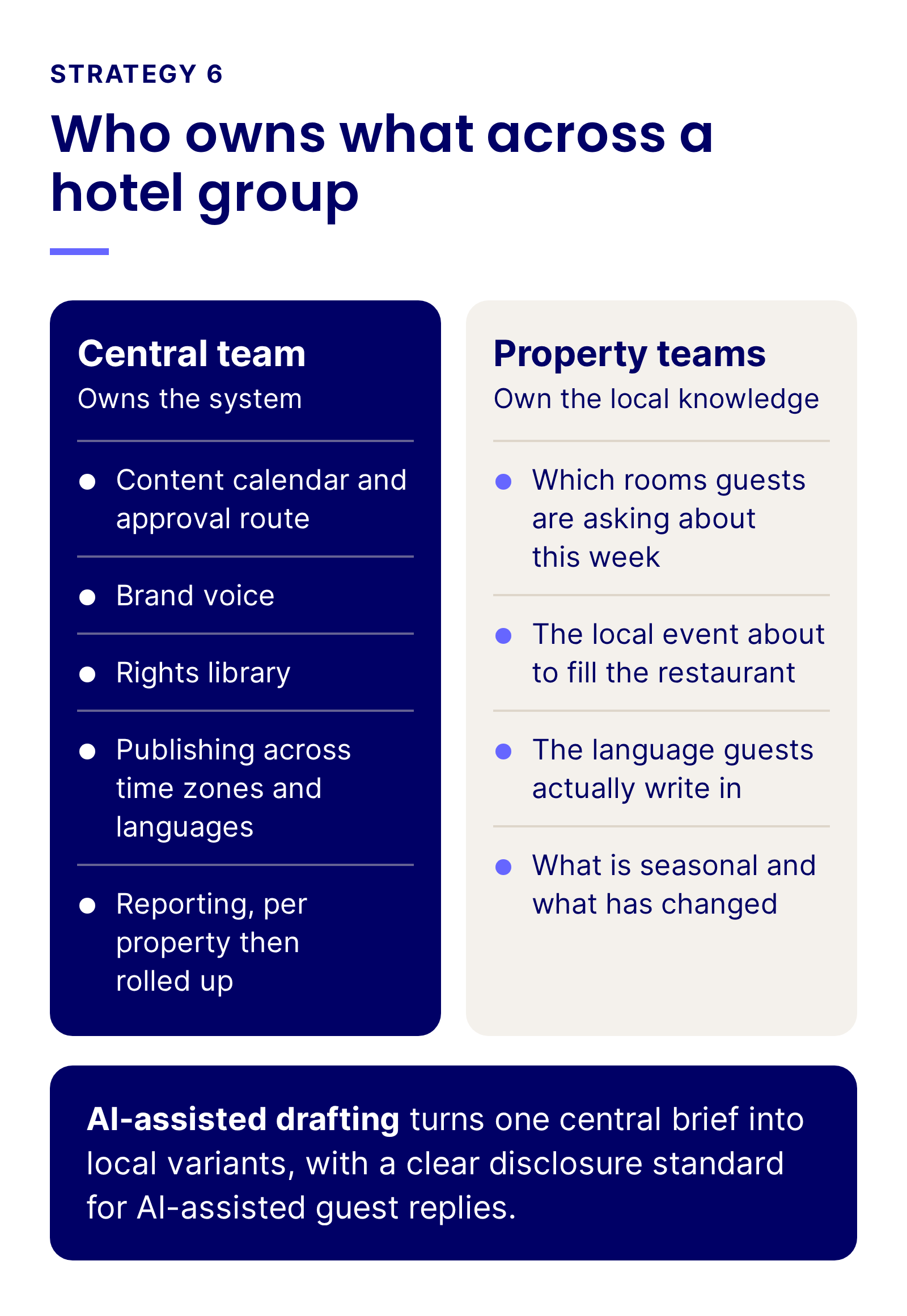
Make the split explicit and put it in writing. Central owns the calendar, the approval route, brand voice, the rights library and reporting. Properties own what central cannot see: which rooms guests are asking about this week, which local event is about to fill the restaurant, and the language guests actually write in.

Ownership split across a hotel group social program: the central team owns the calendar, brand voice, rights library, publishing and reporting, and property teams own local knowledge

For hotel groups: strategy and tooling are centralized. Content is localized. AI-assisted drafting handles local variants, scheduled across time zones and languages from a single workflow, with a clear disclosure standard for any AI-assisted guest-facing replies. Property teams contribute the local intelligence (what’s seasonal, what guests are asking, what’s changed) and the central team handles publishing, rights management and reporting.

Most teams plan to spend there next: 28% of marketers name automated content creation as a top planned AI use. Draft the local variants centrally, send them to the property team for a factual check, publish from one calendar. The disclosure wording travels with the draft, not with the property.

Report per property, then roll it up. A group report that shows only brand-level growth hides the two properties carrying the number and the three that have quietly stopped posting. Give every general manager the same monthly view (audience growth, saves and shares per reach, response time, guest content collected) and local intelligence starts arriving unprompted.

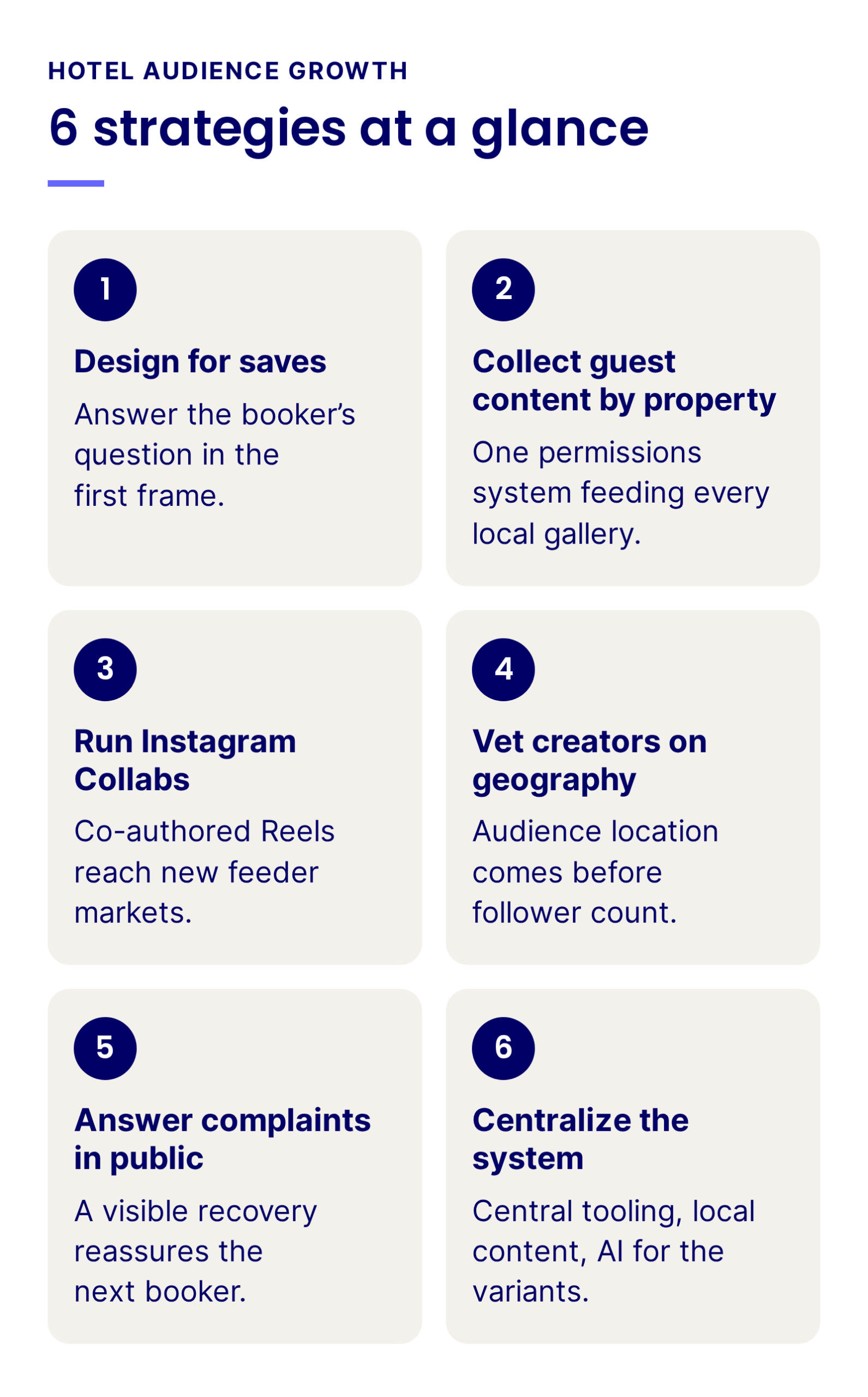
Six hotel social media strategies at a glance: design for saves, collect guest content by property, run Instagram Collabs, vet creators on geography, answer complaints in public, and centralize the system

Channels and formats: where to put your effort

Not all platforms serve the same job for hotel brands. The table below maps each channel to its primary role, the formats that perform, and the strategic error most hotel teams make.

Platform Primary role Best formats What hotel brands get wrong
Instagram Inspiration + high-intent DMs + creator collabs Reels, Carousels, Collab posts Posting for reach instead of saves and shares; treating collabs as one-offs rather than a program
TikTok Discovery: destinations travelers haven’t considered Short-form video, creator-led Ignoring audience geography when briefing creators
Facebook Operational updates, live video, older demographic segments Live video, Status, Link posts Treating it as a secondary Instagram feed
Google / TripAdvisor High-intent research and comparison Review responses Managing it separately from the social response workflow

Instagram is the primary inspiration and saves surface, and the highest-intent care channel. Travel & Hospitality leads every vertical analyzed on the mix of owned and accepted collab posts. Treat collabs as a standing program, not a campaign tactic.

TikTok is the discovery surface, particularly for destinations travelers haven’t previously considered. Accommodation reaches a median of 24.04 interactions per 1,000 impressions on TikTok. Treat it as first-encounter media, the place someone finds a property they didn’t know to search for.

Facebook performs better for operational updates, events and live video than for inspiration. Live property walkthroughs and destination Q&A sessions work on Facebook in ways they don’t on other channels. Keep it in the rotation for demographic segments and feeder markets where it remains a primary platform.

Review platforms (Google, TripAdvisor, Booking.com) belong in the same response workflow as social comments. They’re read by travelers in active research mode. The 2026 Digital Authenticity survey found 63% of consumers consider UGC ratings and reviews the most authentic type of online content. Response time and tone matter as much there as on Instagram.

Matching content to the booking journey

The biggest strategic gap in most hotel social programs is publishing the same content type regardless of where the traveler is in their decision. The table below maps content format to booking stage.

Booking journey stage What the traveler needs Best content type Primary platform
Dreaming Emotional inspiration, a reason to travel Creator Reels, accepted collab posts TikTok, Instagram
Researching Specifics that resolve a decision Guest UGC, Carousels, review responses Instagram, Google, TripAdvisor
Comparing Peer validation and social proof Permissioned guest photos on booking pages Website, paid social
Post-stay Shareable experience, re-engagement Loyalty content, UGC reposts, collab invitations Instagram, email

The commercial argument for the comparison stage is the strongest. Emplifi data shows webpages featuring UGC drive 11% higher average order value, 2.4x purchase likelihood, and 3x more repeat visits compared to pages without it. That is the level of evidence a revenue team will act on, and most hotel social reports don’t include it.

AI in hotel social media: where it earns its place

Forty-nine percent of consumers name travel as one of the industries that would benefit most from AI-powered customer service. At the same time, the expectation bar has shifted: Emplifi’s 2025 AI in Social Media report found 66% of consumers now expect immediate replies when interacting with AI, compared to 33% who held that expectation previously. The combination of high volume and high expectations is exactly the brief AI was built for.

That said, disclosure matters more than most brands currently treat it. Emplifi’s 2026 Digital Authenticity survey found 91% of consumers expect brands to disclose AI use in marketing and service interactions, and Emplifi’s 2025 AI in Social Media report found 56% say labeling responses as “AI-powered” actually increases their trust, not undermines it. Transparency is not a risk to manage. It is a brand asset to deploy.

What AI should own in a hotel social program:

  • Review and comment triage. Routing incoming messages by topic and urgency, flagging complaints that need immediate human attention, and surfacing demand signals (a surge in questions about a specific amenity or destination) before they become a volume problem.
  • First-line response drafting. Suggested replies to high-frequency queries: cancellation policy, breakfast hours, room type availability, local recommendations. Not sent automatically: reviewed and sent by a team member, but drafted at scale.
  • Content localization. Producing local variants of campaign content across languages and properties from a single brief. The brand voice and strategy are set centrally; AI handles the adaptation.
  • Performance prediction. Identifying which organic posts are candidates for paid amplification before budget is committed, based on early save and share signals rather than reach.
  • Reporting. Condensing multi-channel, multi-property performance data into a format that surfaces what changed and why, rather than requiring a team member to build a deck from raw numbers.

TUI fly Belgium provides a benchmark for what this looks like in practice. Reporting that previously took four hours now takes seconds, a 75% reduction in time. Posts selected using performance prediction saw a 150% increase in comments, and cost per engagement fell 81.5%.

What stays with humans: Anything irreversible. Compensation decisions, safety and medical situations, legal exposure, and complaints requiring genuine empathy and judgment. The rule of thumb: if a wrong response would make the situation worse, a human owns it. Emplifi data also shows 84% of consumers say a human tone matters in service interactions. That is not an argument against AI assistance, but a reminder that the output still needs to sound like a person.

On disclosure: Build your disclosure wording before you deploy, not after. A brief, transparent note such as “Our team uses AI assistance to respond quickly; complex queries are always handled by a person” manages expectations without undermining trust. Labeling it clearly is, per the data, more likely to build confidence than erode it.

How to measure what actually matters

Five tiers. A report that stops at the first will not survive a commercial review, and won’t justify the budget or headcount a growing hotel social program needs.

Metric tier What to measure Benchmark to use
Audience growth Net new followers by property and market, unpaid share of growth Accommodation benchmark for your region
Engagement quality Saves and shares per reach, interactions per 1,000 impressions, Reel completion rate ~3% Instagram median engagement (APAC Accommodation, Q2 2026)
Collab performance Interaction uplift vs standard posts (owned vs accepted), shares and reposts per collab post, reach beyond existing audience Emplifi H1 2026: accepted collabs outperform standard posts
Guest content Consent rate, permissioned pieces collected per property per month, AOV and conversion rate on booking-path pages featuring UGC Emplifi impact of UGC report: the AOV and conversion benchmark
Care performance First response time by channel and topic, DM resolution rate, sentiment tracked across social and review platforms 1-hour DM target; AI disclosure on assisted replies
Business outcome Room nights attributed to social and on-site guest content, booking path conversion from UGC galleries, cost per engagement on boosted posts Center Parcs: booked nights attributed to UGC

The Cosmopolitan’s shoppable gallery result below, and the booked nights Center Parcs attributes to guest content, are what the last tier looks like when it’s being tracked. That is the level of reporting that earns budget and headcount in a commercial review.

What The Cosmopolitan of Las Vegas did

The challenge. Operating a single iconic property in one of the most competitive hospitality markets in the world, The Cosmopolitan needed to generate consistent content at scale that felt authentic and drove booking intent, without inflating the content production budget.

What they did. Rather than producing more brand content, The Cosmopolitan built a systematic approach to collecting, permissioning and deploying guest photography. They treated UGC as content infrastructure, not a social team initiative, and placed that content where it could do commercial work: shoppable galleries that redirected social visitors into the booking path.

The result. More than 19,000 pieces of guest content collected. 250 million impressions generated. A 42% engagement rate on shoppable Instagram galleries, a figure that reflects content placed in front of travelers already in research mode, not passive feed browsing.

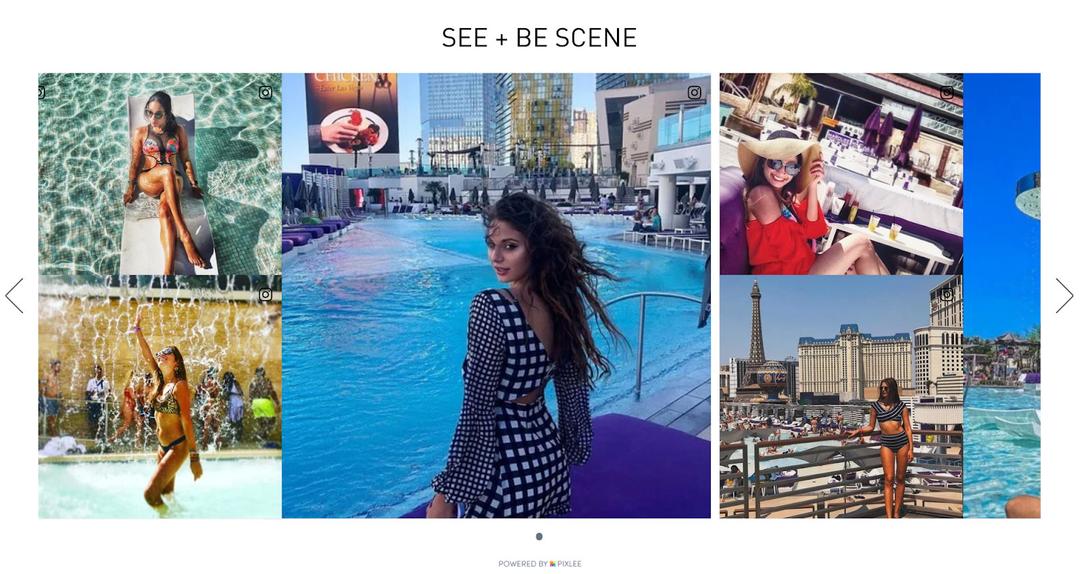
The Cosmopolitan of Las Vegas See + Be Scene shoppable guest photo gallery

See + Be Scene turns guest posts into a shoppable gallery, so a photograph taken by one guest becomes a booking route for the next.

Your 30/60/90-day plan

First 30 days: fix the inputs

Before building anything new, establish what’s actually working and where the gaps are. Most hotel social programs are sitting on underused data and uncaptured guest content. This phase surfaces both.

  • Rank last quarter’s content by saves and shares per reach, not impressions. Find out what your audience is actually forwarding and why. This becomes the brief for everything you build next.
  • Audit your guest content process end to end: where are permissions being requested, who holds them, which teams have access, and which surfaces are they currently deployed on? Map the gaps before activating anything new.
  • Set a written response standard for DMs and review platforms: channel, target time, who’s responsible. Measure your current baseline against a one-hour DM target so you know what you’re improving from.

Days 31–60: build the engine

With the data and gaps identified, start operationalizing the systems that will scale. This phase is about infrastructure, not campaigns.

  • Activate automated rights requests and set collection perimeters around your three highest-revenue properties, by location, not brand handle.
  • Place permissioned guest content galleries on the room and experience pages with the most booking traffic. These are your highest-intent pages; UGC placed there drives conversion, not just awareness.
  • Shortlist creators by audience geography for your next two primary feeder markets, and run your first accepted collab Reel. Measure interaction uplift against your standard non-collab posts in the same format. This becomes your internal baseline for the collab program.
  • Write and approve your AI disclosure wording before any AI-assisted replies go live. Don’t retrofit it after launch.

Days 61–90: prove the number

This phase is about translating what you’ve built into commercial language: the metrics that earn budget from a revenue team, not a marketing team.

  • Report room nights or booking path conversions attributed to social and on-site guest content alongside standard growth metrics. This is the number that earns next quarter’s headcount or budget.
  • Run one service recovery post-mortem: first response time by channel, sentiment before and after, and what the process change is for next time.
  • Benchmark your Instagram engagement rate against the Accommodation figures for your region, and your collab post interaction uplift against the Emplifi H1 2026 baseline.
  • Set next quarter’s targets in writing, with the benchmark as the reference point, not last quarter’s internal numbers.

Build the audience you don’t have yet

The argument at the top of this guide holds. A program tuned to the audience you already have will never build the one you don’t. Six moves get you there: chase saves, not impressions; put permissioned guest content in the booking path, property by property; use Collabs to open new feeder markets; vet creators on where their audience actually travels; treat public recovery as a growth channel; centralize the system and keep the content local.

What changes is the report. Reach stops being the headline number and room nights take its place. A two-person team stops asking for headcount and starts scaling inputs: rights requests, local variants, response targets, galleries on the pages that carry booking traffic.

None of that is theoretical. Pick the number you would have to defend in a revenue meeting next quarter, then find out where your program stands against the hotel brands chasing the same guest.

Already an Emplifi customer? Talk to your Customer Success Manager.

Frequently asked questions

Hotel brands grow their audience by publishing content travelers save and share, not content that chases impressions. The order after that matters: collect guest photos property by property and put them in the booking path, run Instagram Collabs into new feeder markets, vet creators on audience geography, treat public complaint recovery as proof, and centralize the system while the content stays local.

A Collab post is co-authored by two Instagram accounts and appears in both audiences’ feeds. There are two types: owned, where the brand publishes and invites a creator or partner, and accepted, where the creator publishes and invites the brand. In Emplifi’s H1 2026 analysis, accepted collaborations delivered the stronger uplift. Start with accepted collab Reels and measure them against your standard Reels.

Instagram grows a hotel brand’s audience fastest, because saves, shares and Collab posts carry a post to travelers who don’t follow the brand yet. TikTok is the discovery surface for destinations travelers haven’t considered. Facebook earns its place with operational updates, live video and feeder markets where it remains primary. Run review platform responses through the same workflow, since those readers are already comparing properties.

Hotel brands grow followers without discounting by publishing content that earns saves and shares rather than passive impressions. The specifics do the work: which room faces the water, when the crowds thin, where to eat a ten-minute walk from the property. Run accepted creator collabs on Instagram Reels. Handle visible service failures in public. Put paid budget behind the organic posts already earning shares.

A hotel brand needs enough permissioned guest photos to put a gallery on every room and experience page that carries booking traffic, not enough to fill the feed. Start with the highest-revenue properties, build consent infrastructure, then hold every permission in one shared rights library. Skyscanner built its consent base in the first six months. The Cosmopolitan put guest photos directly in the purchase path.

Yes, for triage, routing and first-line drafting on repeat queries: cancellation policy, breakfast hours, room availability, local recommendations. Keep humans on complaints carrying compensation, safety or legal exposure. Disclose the assistance in the reply itself, in plain words: our team uses AI assistance to respond quickly, and complex queries are always handled by a person.

A hotel social media report should include follower growth by property and market, saves and shares per reach, interactions per 1,000 impressions against the Accommodation benchmark for the region, collab uplift against standard posts, guest content consent rate, first response time by channel, and room nights attributed to social and on-site guest content. That last line is the one most hotel reports still miss.

Insights from Emplifi

Explore our latest blogs and comprehensive guides designed to help you master customer experience strategies and drive growth.

Social media benchmarks for accommodation brands

Emplifi's latest quarterly social media benchmarks for accommodation brands, by region.

Social media marketing for hotels: The ultimate hospitality playbook

Tomorrow’s hotel guests are scrolling their phones today, just one aspirational post away from booking a trip.

Your guide to effective social media marketing for travel businesses

Social media is where travel decisions start now. Not in a search bar but in a swipe, a save, or a share.

Ready to fuel your teams with A-CX?

Discover what Emplifi can do for you. We turn small teams into large ones, and large teams into well oiled machines, but either way, we offer the rocket ship, you just need to jump on.

What can you expect?

  • A live walkthrough of Emplifi Fuel tailored to your specific social marketing, commerce, and care needs
  • A benchmark of how your brand performs against peers in your industry
  • A partner who understands your business, and 22,000 others
  • A concrete action plan to go from disjointed teams to A-CX
Get a demo