Quick answer: Ratings and reviews tell shoppers what other customers think. UGC shows them the product in real life. Bringing both together on the product page gives shoppers more of the proof they need to buy and gives brands a way to measure the impact on conversion. In Emplifi’s Q1 2026 benchmarks, UGC drove 6.73x higher conversion rates than non-UGC content.
Consumers landing on a product page have plenty of information to work with: the product, the price, and the description.
What they don’t have is proof that it lives up to the promise.
That’s where social proof comes in.
In Emplifi’s 2026 Digital Authenticity in the Age of AI report, 79% of consumers said they read three or more reviews before buying, and for purchases over $500, 56% visit three or more websites before buying.
If your product page can’t answer, “what do other people think about this?”, a competitor page just might.
Here’s how the three layers of social proof work, how to bring them together, and how to measure UGC conversion on your own product pages.
In this guide, you’ll learn:
Shoppers want to know that a product lives up to its promises. Hearing from other customers helps build that confidence and it can influence how much they’re willing to spend.
In Emplifi’s Digital Authenticity survey, 85% of consumers said they’d pay more for a brand they consider authentic, while 93% said authentic engagement builds trust.
That’s particularly important if average order value is one of your KPIs.
So, what else does the data tell us about the impact of social proof?
Bring a product page and we’ll show you what’s missing.
The three layers of the social proof stack are:
You might currently run these layers as separate programs with a reviews vendor and a UGC tool owned by separate teams.
But bringing them together helps you to see the fuller picture of the buying decision.
Let’s look at each one in more detail:
This layer answers, “Is it any good?”
To build it, you should increase your review volume. Then make those reviews useful and easy to find.
Emplifi Ratings & Reviews uses zero-click collection, so customers can leave a rating directly from post-purchase email or SMS. Verified reviews can then be syndicated to Google, Walmart, and 600+ other retail destinations.
With Emplifi, Gemplers grew its monthly review volume by 232%, with 293K reviews syndicated across 600+ retail partners.

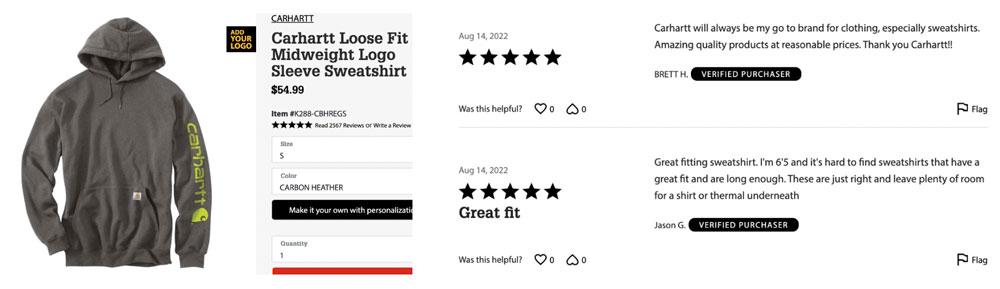
Carhartt reviews syndicated to a Carhartt sweatshirt page on Gemplers’ site. Shoppers read what verified buyers said about fit and quality without leaving the retailer’s product page.
But volume isn’t everything. Reviews need to be visible at the point of decision, while negative reviews and recurring customer questions can reveal where the product page or experience needs attention.
For example, Sur La Table saw its average product rating rise from 4.1 to 4.5 stars after switching to Emplifi, while tripling the number of reviews it received almost immediately.
AI-generated topics and summaries can then turn those reviews into another source of insight, surfacing recurring questions, complaints, and product strengths.
The result is more useful social proof at the moment a shopper is deciding whether to buy.
This layer answers, “What does it look like in real life?”
UGC gives shoppers something product photography can’t: a view of the product being used by real customers.
Emplifi’s Fuel AI can identify relevant customer content, match it to specific products, manage usage rights, and surface it across product pages, the homepage, and emails.
Carhartt shows the commercial impact. Its UGC converts at 27%, with user-submitted content generating $150,000 in revenue.

Customer photos in a gallery on a Carhartt product page.
Emplifi’s Impact of UGC report found that shoppers who engage with UGC make 4.9x more repeat visits, while pages featuring UGC hold visitors for more than twice as long.
This is where social and commerce connect: customer content discovered through social can become part of the product experience without a separate hand-off between teams.
This is where the layers start working together.
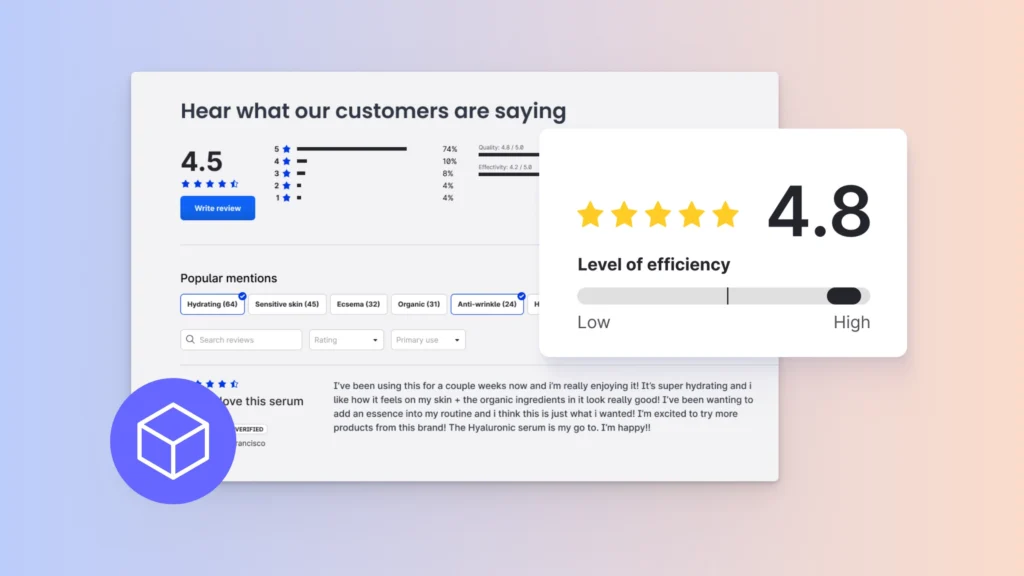
Emplifi’s UGC solution can bring star ratings, review excerpts, and customer photos into the same gallery, giving shoppers multiple forms of proof in one place.
A/B testing with Emplifi development partners found that adding text reviews to visual UGC increased shopper engagement and conversion, showing the value of bringing both forms of social proof together.

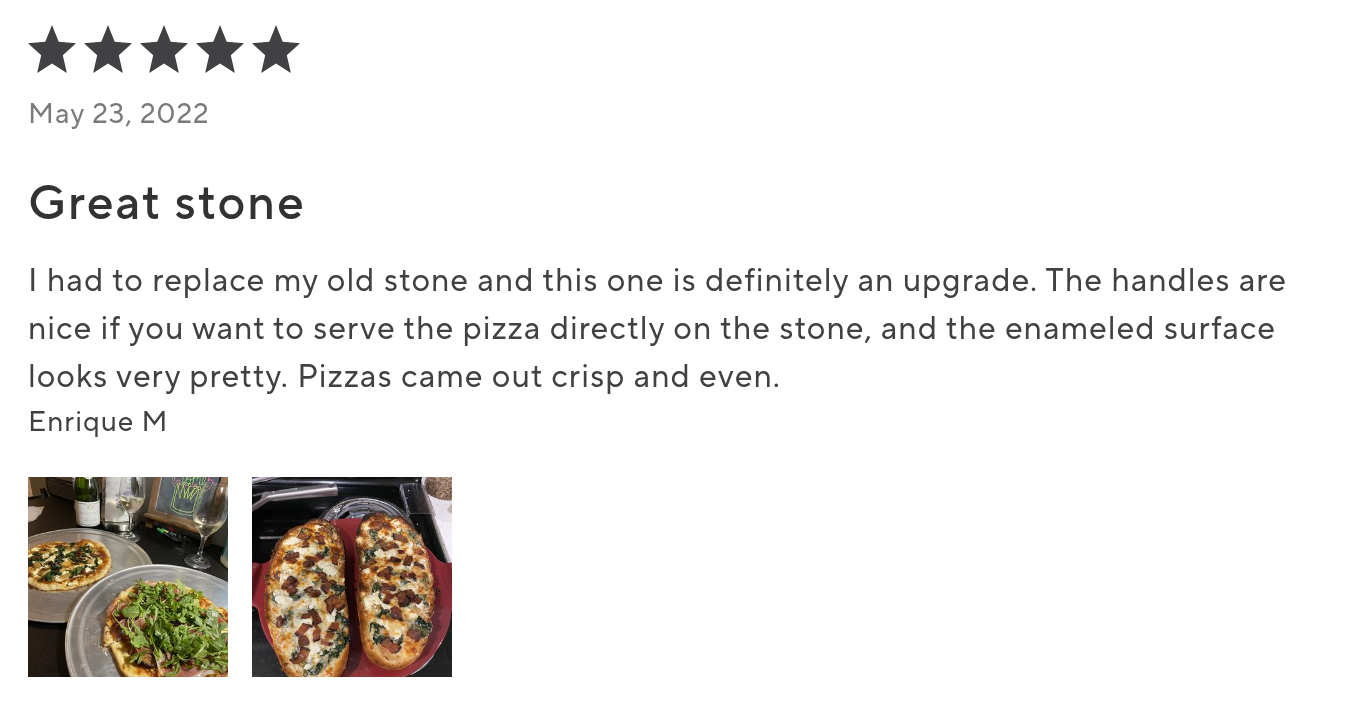
A five-star Sur La Table review with the customer’s own photos attached: the rating, the reviewer’s words and the result, in one place.
Think about the decision from the shopper’s side:
A rating, review excerpt, and customer photo can answer all three in a single scroll.
Then test it. Add the full stack to a group of product pages and compare the results to a matched set without it.
That gives you a UGC conversion result based on your products and your audience, which should tell you all you need to know.
Watch a 20-minute product tour on how Emplifi Ratings & Reviews and UGC work together.
Social proof sets expectations before the order, reducing the demand on your care team.
Sur La Table shows how this can work in practice.
When a shopper asks a question on a product page, Emplifi Community Q&A emails it to customers who already own the product. 90% of questions receive an answer, and the median time to the first answer is under an hour. That gives shoppers useful information while reducing pressure on the care team.
Its Checkout Comments give customers a way to share feedback as soon as a product goes on sale, helping new products build social proof from day one. They accumulate three times faster than reviews.

Sur La Table’s Cart Talk shows the short comments customers leave at checkout, so a product has real buyer feedback from the day it goes on sale.
The opportunity for your team is to connect what customers are asking, saying, and reviewing.
Social listening shows what people are saying about products, while Unified Analytics brings commerce and care data together to show where more proof is needed and where the experience itself needs attention.
Not every product needs the full stack at once. Start with the products where better social proof could have the biggest impact, then match the starting point to the situation using the table below:
| Situation | Start with | Why |
|---|---|---|
| High traffic, low conversion | The full stack on one page | Most visitors are waiting to be convinced |
| New launch, few reviews | Collection and syndication | The first five reviews give the biggest sales lift, 9.5% on average, according to Emplifi’s review syndication guide |
| Good ratings, thin visuals | A UGC gallery of product-in-use content | Adds the “what does it look like?” evidence |
| Many questions, few answers | Community Q&A | Customers answer each other, so your team doesn’t have to |
Emplifi customers give you some benchmarks to compare against:
| Brand | Result |
|---|---|
| Carhartt | UGC converts at 27%, with $150,000 in revenue from user-submitted content |
| Gemplers | Monthly review volume up 232%, with 293K reviews syndicated across 600+ retail partners |
| Sur La Table | Average product rating up from 4.1 to 4.5 stars |
| Sun & Ski Sports | Average order value up 26% and time on site up 97% in under six months |
Before you start, record the baseline for the products you’ll change. Think about:
Then compare those numbers after a full buying cycle.
The buying decision ultimately comes down to three questions: Is it any good? What does it look like in real life? And will it work for me?
Ratings and reviews, UGC, and a community Q&A help answer each one on your product page.
If you’re putting this into practice:
Emplifi UGC, Emplifi Ratings & Reviews, and the Social Commerce solution bring all three layers into one connected program, so social proof stops being three separate projects.
Want to see the full social proof stack on your own product page? Get a demo, bring a product page, and we’ll show you what’s missing.
Five is the number to reach first. Emplifi’s review syndication guide states that a product’s first five reviews produce the biggest sales lift. Shoppers don’t stop there: 79% read three or more reviews before buying. If a new product has none, syndication can bring in reviews already collected at your retail partners.
Yes. Emplifi UGC can show text reviews and star ratings next to curated UGC in one gallery, and it imports reviews from Emplifi Ratings & Reviews and other platforms. Reviews are approved once in the system you already use, refreshed daily, and the display can be switched on without code changes. For some platforms, Emplifi support sets up a data feed.
Make it a single tap. Emplifi Ratings & Reviews uses zero-click collection, so customers can leave feedback straight from a post-purchase email or SMS. Syndication adds reviews collected elsewhere: Gemplers grew monthly review volume by 232% across 600+ retail partners. Checkout Comments help too, accumulating three times faster than reviews at Sur La Table.
It can take pressure off your care team by helping shoppers find answers themselves. At Sur La Table, Community Q&A sends shopper questions to past buyers, and 90% of questions receive an answer. See how Emplifi Care handles the conversations that start after a purchase.