Few things inspire lifelong loyalty like sports. From hometown heroes to college dynasties to global icons, sports teams have a rare kind of audience, one that wants to wear the logo, needs to know the score, and lives for the next big moment. That passion goes far beyond the stadium on game day. It spills onto phones and feeds, turning highlight reels into viral clips and team news into community conversation.
For marketing teams, that’s an incredible opportunity, along with a serious responsibility. Social media is where fandom lives 24/7. The right strategy strengthens bonds, grows global audiences, and turns everyday moments into emotional touchpoints. Doing it well takes a clear plan, the right tools, and a deep understanding of what makes fans care and share.
Why social media marketing for sports changes the game
Not all that long ago, a fan’s connection to their favorite team was limited to what they could watch on TV or read in the paper. The team controlled the message, and the fan consumed it passively, often days after the game had ended. Social media reversed that model.
Now, fans expect to be part of the action in real time. They comment, react, create, and connect. They want behind-the-scenes moments, post-game emotion, and instant access to the stories that matter most, all on the platforms where they already spend their time.
This shift has changed how sports teams build and maintain fan relationships. Social media allows for a direct, unfiltered connection between the brand and the people who love it. And with AI in the mix, teams can now deliver smarter, more personalized content at scale, whether that means surfacing the right highlight to the right fan, identifying the next viral trend, or quickly jumping into conversation as it’s happening. The result is a fan experience that goes far beyond game day, building deeper loyalty and a stronger brand every step of the way.
Building a social media strategy for sports teams
Before you can create standout content, you need a clear game plan. The best social media strategies for sports teams start with specific, measurable goals, such as:
- Growing your fan base, at home or in a new market
- Selling more tickets and merchandise
- Improving sponsor visibility
- Lifting fan sentiment
Your answer shapes what you post, along with where, when, and how you show up. If you have more than one goal, give each channel a primary one.
It’s just as important to understand who you’re talking to. Your fan base is a mix of diehards, casuals, students, alumni, families, and out-of-market followers, and each segment responds to different types of content on different platforms.
AI does that sorting at a scale no social team can match by hand. Teams use it to analyze audience behavior, uncover patterns, and tailor content to match fan interests. It also shows which platforms deserve your focus, so you stop spending effort on channels that won’t move the needle.
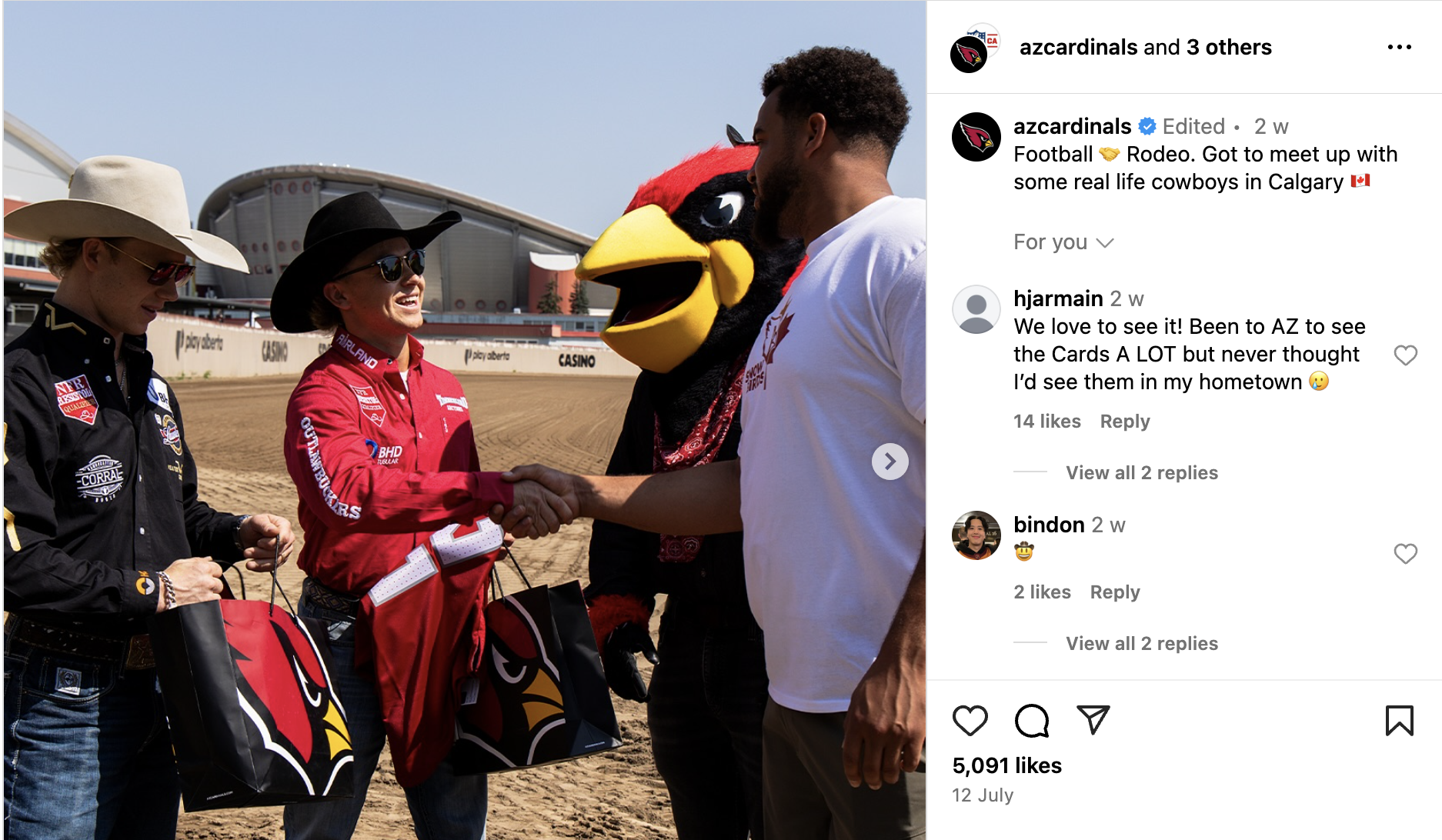
The Arizona Cardinals show what this looks like in practice. The team was building weekly reports for more than 350 sponsors by hand, which took more than four hours a day. Using Emplifi’s social analytics, they automated post labeling and report generation, cutting manual reporting by 90% and saving the team more than 500 hours of reporting work. Their business development and activation teams now get presentation-ready data on every piece of content, so each post can be tied back to a sponsor or a broader brand objective.
A written strategy keeps every post tied to a goal. Write your goals and segments down, share them with every group that touches the accounts, and check each new content series against them.
Engaging sports fans with social media content that connects
Fan engagement runs on two things above all: access and authenticity. Fans want to feel like insiders, close enough to know how the locker room felt after tonight’s game. Social media gives teams the chance to pull back the curtain and bring fans closer to the action, the athletes, and the heart of the organization.
The strongest content strategies balance hype with humanity. Here are the formats that consistently win with fans:
- Behind-the-scenes access: locker room moments, team travel, pregame rituals, postgame emotion
- Game-day energy: short highlight reels, real-time reactions, buzzer-beaters and big plays
- Player spotlights: birthdays, Q&As, hobbies, family moments, and milestones that show who they are off the field
- Interactive content: Instagram polls, TikTok duets, “pick our warm-up song,” and other formats that invite fan input
- Community connections: charity work, school visits, youth clinics, and hometown shoutouts that reinforce local pride
These moments are the opportunities for amplification that every team should be looking for. Fans who comment, tag friends, and share your content extend your reach organically, and with far more credibility than a paid post ever could.
The trick is delivering content in the formats fans already love. Short-form video, live Stories, and native platform features like reels, stickers, and comments create natural entry points for interaction. And when a major moment hits, like a walk-off win or a record-breaking goal, you need to jump in fast, manage the surge of responses, and keep the tone personal.
Emplifi Community, Emplifi’s social media engagement tool, is built for that surge. AI-Assisted Replies draft on-brand responses in seconds, and AI Priority Scoring pushes the comments that need a person to the top of the queue. Your team keeps up when fan activity spikes into the thousands, and fans still hear a human voice.
The goal is to create moments fans want to be part of, and make it easy for them to join in.
Building a loyal sports fan community on social media
The strongest sports brands treat social media as a community space, and it shows in everything they share. The more you invite fans into the story, the more invested they become in telling it with you.
That starts with user-generated content (UGC). When fans go out of their way to create a game-day outfit, a TikTok dance, a custom sign, or a homemade highlight reel, they’re signaling identity. They want to be seen. The smartest teams make that easy, and more importantly, make it mean something.
- Feature UGC regularly in your own channels, from pregame videos to halftime shoutouts and branded highlight reels
- Run hashtag campaigns that encourage participation and offer fans a clear way to join the conversation
- Celebrate superfans and spotlight their stories, from viral posts to heartfelt traditions
- Use contests and giveaways to reward creativity and fuel friendly competition
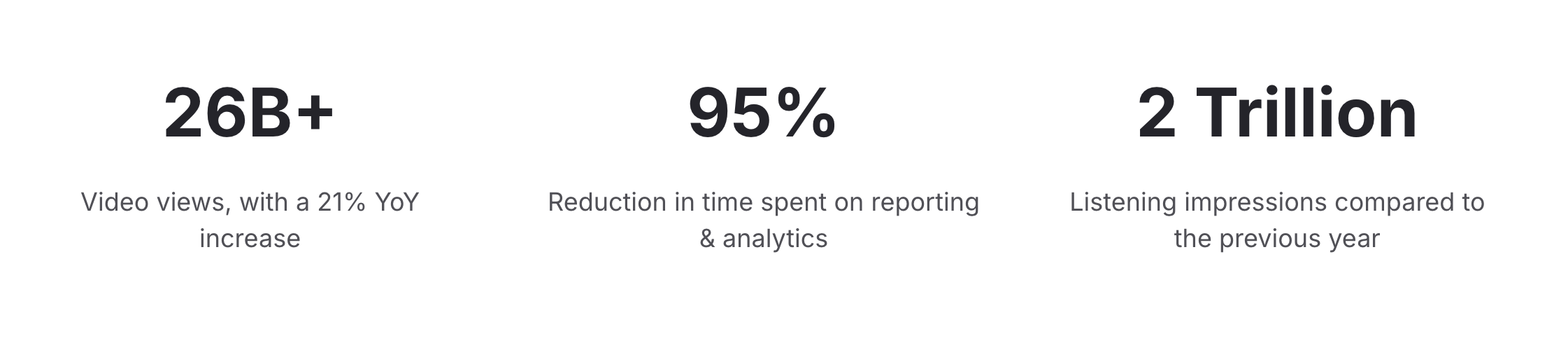
UFC does this exceptionally well. With a massive global fan base and nonstop action across its roster, the organization needed to scale its community engagement without losing authenticity. Using Emplifi’s AI-powered social marketing tools, UFC’s digital team tracks fan buzz in real time, spots the fighters and moments breaking through in each market, and engages fans at scale.
The result is a digital community that feels as intense as fight night: more than 300 million followers across UFC’s social platforms and more than 26 billion video views, up 21% year over year.
These community-building moments also create valuable brand equity. A fan who feels seen is far more likely to stick around, bring friends into the fold, and advocate for your team in meaningful ways, online and off.
Monetizing social media and driving sponsor ROI for sports teams
Social media is a direct revenue channel for sports teams, and the hype is what feeds it. Engagement turns into measurable results in four places:
- Ticket sales
- Merchandise conversions
- Premium content subscriptions
- Sponsor value
Every scroll is a chance to capture attention and move fans from awareness to action.
But monetization only works when it feels organic. Fans spot a forced ad fast, and they scroll past it just as fast. The sponsor integrations that perform best feel native to the moment fans are already watching.
A player’s mic’d-up hydration break becomes a highlight sponsored by a sports drink partner. A buzzer-beater replay is presented by a streaming partner. A behind-the-scenes video from team travel is powered by the airline that got them there. The brand becomes part of the story.
Sponsors value this kind of exposure most when performance data backs it. With Emplifi Unified Analytics, teams track exactly how branded content performs on each channel, from reach and engagement to demographics and conversions. That insight proves ROI and gives teams what they need to build stronger sponsor packages season after season.
The most effective teams show brand partners exactly what their social presence delivers, and back it up with data. A one-page recap after each sponsored series, with reach, engagement, and clicks against the agreed targets, turns fan love into a renewal conversation.
Tapping into athlete influence to amplify your sports brand
Your team’s most powerful voices often sit outside the official account. In many cases, the players themselves hold the real influence. Whether it’s a rookie going viral on TikTok or a veteran with a loyal following on Instagram, athletes extend your brand’s reach in ways that feel immediate, personal, and authentic.
The key is collaboration. When teams work with their athletes on social rather than treating their personal channels as separate or off-limits, everyone benefits. Teams gain stronger emotional connections with fans, higher reach, and more opportunities to tell their story in a human voice. Athletes get support in building their personal brands and engaging their audiences more effectively.
To make this work, teams need to strike a balance between freedom and oversight. That means:
- Providing social guidelines that outline expectations for tone, brand alignment, and content sensitivity
- Offering support resources like templates, team photo and video access, or content calendars they can pull from
- Defining guardrails for risky or controversial content, without micromanaging every post
- Encouraging collaboration between athletes and the social and communications teams to align messaging where appropriate
G2 Esports has built an entire ecosystem around this kind of structure. With a roster full of creators and personalities, the organization allows for individual expression while keeping a consistent brand identity. Its data team set up about 100 rules in Emplifi that label content automatically across every account, so campaign performance gets measured against KPIs without slowing down the creators who keep fans engaged.
“Everything related to esports is on social media,” said Natascha Sturm, Senior Data Analyst, G2 Esports. “It’s how we connect with and entertain our fans, in addition to memeing ourselves and our competition. Emplifi gives us effective, automated reporting so that we can dive deep into our social media metrics and optimize our content.”
Athletes are becoming media brands in their own right. The sports organizations that build smart systems to support them are the ones that grow their reach and keep fans loyal for longer.
Measuring the roar: social media metrics that matter for sports
Likes show only part of the picture. If sports teams want to grow their digital presence and prove real value to sponsors, executives, and partners, they need a more complete picture of what’s working and why. That means moving past surface-level stats to the numbers that explain how fans behave.
Five KPIs stand out for most sports teams:
- Engagement rate, especially during live events, tells you how compelling your content really is. High reach with low interaction means you’re showing up in feeds without resonating. It’s the clearest indicator of fan connection and the first place to look when refining creative strategy.
- Fan sentiment tracks how your audience feels: excited, frustrated, loyal, or skeptical. Watching how sentiment shifts during key moments (wins, losses, trades, controversies) guides messaging and response strategies. Emplifi Listening uses AI to track these shifts at scale across platforms.
- Follower growth and retention measure the long-term health of your audience. A spike in followers after a big win is great; the number that matters is how many are still following a month later, and whether you’re reaching new demographics or global markets.
- Conversions, from ticket purchases to merch sales and sign-ups for exclusive content, are where fan interest turns into business impact. Social platforms become commerce engines when you track performance and adjust as you go.
- Response time is the least glamorous KPI on this list and one of the biggest drivers of fan satisfaction. In Emplifi’s survey of 854 US consumers, 66% said they want an immediate reply when they reach out to a brand on social, and only 24% would wait even an hour. Fast, empathetic replies during peak moments build trust, while slow responses, or silence, chip away at loyalty.
Tracking all of this by hand across multiple platforms, formats, and teams eats hours your staff doesn’t have. A unified social media analytics platform puts every account in one view, so nobody has to hop between dashboards or stitch insights together. From there, you can:
- Track KPIs in real time
- Compare content types
- Understand audience behavior
- Report outcomes to executives, a sponsor, or your own team
With the right data in hand, you shape the fan experience before the big moment arrives and make decisions that pay off on and off the field.
What’s next: AI, AR, and the future of fan engagement in sports
Fan expectations keep moving. Teams are testing AI-driven personalization, AR filters, and virtual venues that give fans an experience they can step into, online and off. The Atlanta Braves, for example, built Digital Truist Park, a virtual version of their ballpark where fans created avatars, met players, and hunted Easter eggs that unlocked digital and real-world rewards.
You don’t need a metaverse budget to start. Pick one format, like an AR jersey filter for opening week or a personalized highlight reel for season-ticket holders, and run it as a test with a clear success metric. Emplifi Listening shows you what fans are already asking for and reacting to before you build anything. Emplifi Unified Analytics then measures whether the test beat your standard content on reach and engagement, so you know which ideas earn a place in next season’s plan.
Final whistle: Turn fan engagement into advantage
Teams that win on social plan each post against a goal and answer fans fast. Build that habit one game at a time.
Pick your next home game and run it as a test. Before kickoff, write down one goal (sponsor clicks or reply time, say), the content series that serves it, and the person who owns replies when the game gets tight. Afterward, compare the result with your last three home games and keep the one change that moved the number.
With Emplifi, your team runs that test in one unified platform: publish the series, handle the replies, and pull the sponsor report from the same dashboard.
Want to see how it all comes together? Book a demo to find out how Emplifi can help your team turn fan engagement into a competitive advantage.