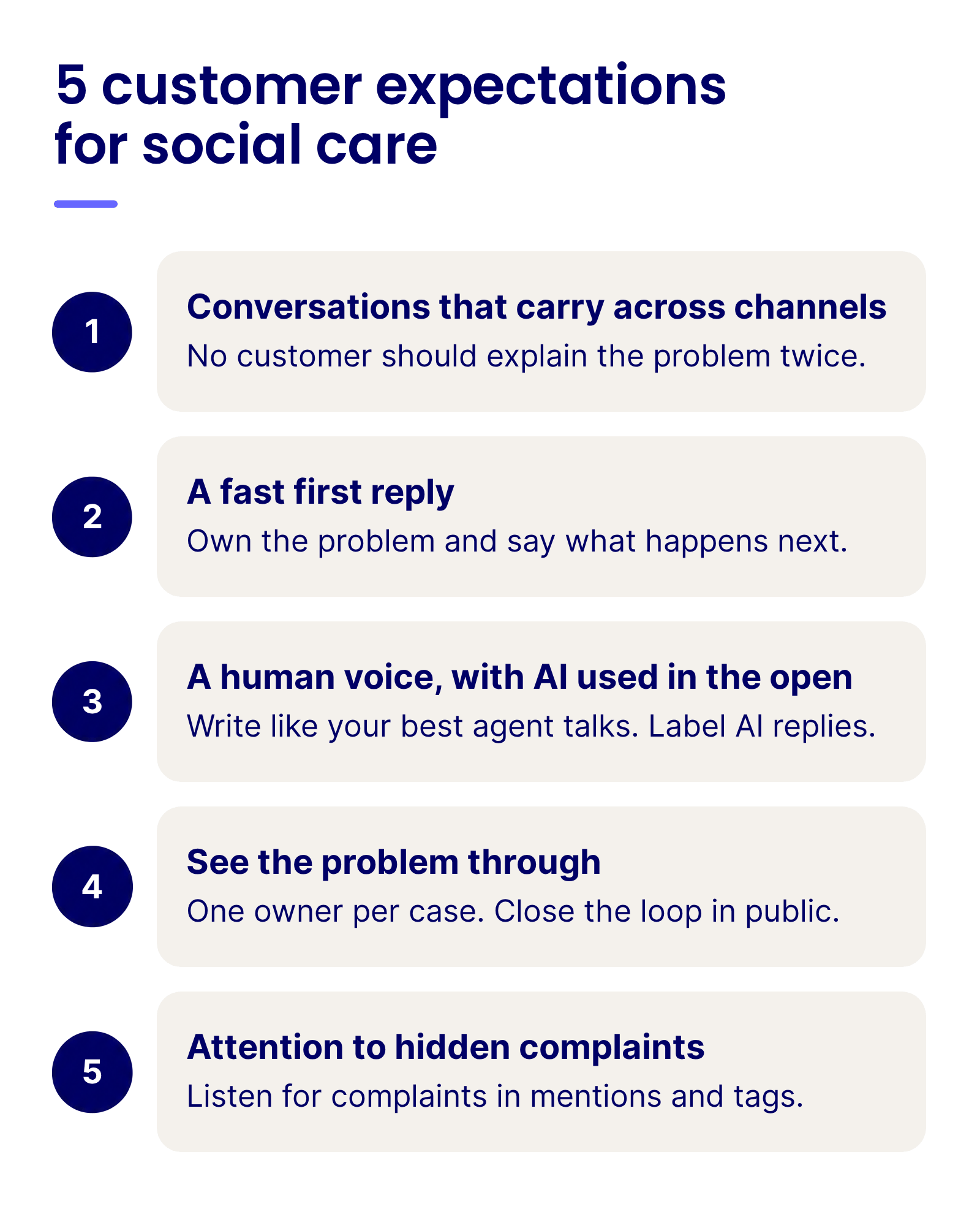
The five customer expectations that shape social customer care are one conversation that carries across channels, a fast first reply, a human voice with AI used in the open, a problem seen through to the end, and attention to complaints that never tag your support account. The sections below set out a working process for each, and a 50-conversation audit shows which one to fix first.
A customer who posts about a missing order on Instagram at 9 p.m. has started a clock, even if nobody on your care team has seen the post yet. In Emplifi’s survey of 1,650 US and UK consumers, 84% said quick response time is critical to authentic service. As a signal of authenticity, personalization trailed at 67%.
A six-person care team covering Facebook, Instagram, X and TikTok gets judged on five things at once, and each one needs a process the whole team follows. Here’s what customers expect from social care, and what to put in place for each.

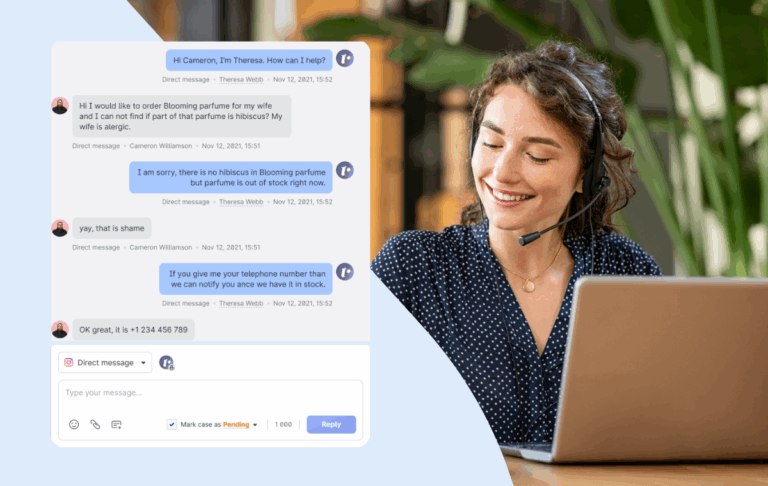
A customer comments on your Facebook post, hears nothing, then sends an Instagram DM the next morning. To them, that’s one conversation. If the agent who picks up the DM can’t see the comment, the customer explains the problem a second time. The second message is usually angrier than the first.
People expect to pick the channel themselves. In the same digital authenticity survey, 82% said they value flexibility in communication channels. That flexibility only works for the customer when the context moves with them.
Four habits keep one conversation intact across channels:
Emplifi Care brings DMs, comments, chats, mentions and reviews into one workspace and shows customer history from Salesforce or Microsoft Dynamics inside the case view, so the agent starts with the full story.
People bring problems to social media to skip the phone menu and the hold music. They expect the reply to keep pace. In Emplifi’s AI in social media survey of 854 US consumers, 66% said they expect an immediate reply from AI-powered support on social, and only 24% would wait even an hour.
A good first reply shows that someone owns the problem and says what happens next: “Sorry about the wait on your order. I’ve found it, I’m checking with the store now, and I’ll update you here within 20 minutes.” Then keep the promise.
Set first-response targets by priority rather than one number for everything. Write them down as your team’s own SLA, staff to them, and review them every month:
Emplifi’s guide to SLA management for social care walks through setting first-response and resolution targets by inquiry type. In Emplifi Care, SLA policies put a countdown timer on each case and alert a supervisor before a target is missed.
Customers can tell a template from a person. In the digital authenticity survey, 81% said a human tone matters in service interactions. Write the way your best agent talks: short sentences, the customer’s own words played back to them, a first name or initials at the end, and no “we apologize for any inconvenience.”
AI belongs in the workflow, and customers accept it when the brand is upfront about it. Emplifi’s AI in social media research found that 83% of consumers want brands to disclose when AI is used. Preference still leans human: 56% prefer human support, while 25% prefer AI.
Four rules for using AI in social care without losing trust:
Freshpet’s consumer care team splits the work this way. Its FAQ bot, Scout, answers routine questions on freshpet.com, while live agents take the sensitive conversations about feeding, nutrition and pet health. The pet food brand saw a 40% reduction in overall call volume and 29% faster response times for live agents on high-stakes pet parent inquiries.
“Emplifi has helped us scale care in a way that still feels very Freshpet, which is helpful, personal, and certainly centered around our pet parents,” said Lisa Diehl, Senior Director of Consumer Care at Freshpet. Read the Freshpet story.
A quick, friendly first reply buys time. The customer judges the brand on what happens after it, and on whether anyone tells them.
Give your team a resolution protocol everyone follows:
Closing the loop in public matters. A complaint answered in DM is resolved in your queue, yet to anyone reading the public thread it still looks ignored.
Plenty of complaints never reach your support handle. They sit in posts that tag your main brand account, in replies under a creator’s video, or in posts that name the product without tagging anyone. Left alone, a post like that collects replies from people with the same problem.
What to listen for:
How to triage what you find:
Emplifi Listening tracks sentiment and conversations across social channels, news sources and online communities, and its Spike Alerts flag unusual jumps in conversation volume. Agents escalate critical mentions to Emplifi Care, so whoever replies has the full context.
Domino’s runs its social care this way. Emplifi searches X for hundreds of keywords and monitors Domino’s Facebook to find the posts that need attention, on average less than 3% of total volume. Before that, agents sorted through the other 97% by hand. When a preselected alert keyword appears, the team gets a notification even if nobody is logged in to the platform.
“Emplifi allows us to hear the social media concerns and intervene quickly to make things right, even on nights and weekends,” said Terri Haffey, Manager of Customer Care at Domino’s. With Emplifi connected to its CRM, Domino’s handles 128% more social traffic and has cut social case handling time by 53%. Social cases that used to take 15 minutes are typically handled in less than five. Read the Domino’s story.
Pull the last 50 complaints your team handled from at least two channels. Score each one against three questions:
Whichever question fails most often is the expectation to fix first. Share the results with the teams that own the fixes, such as billing, product and operations, then run the audit again next month with a fresh sample.
Social customer care is customer service delivered on social channels, through public replies, comments, DMs and reviews. It covers questions, complaints and order problems wherever customers raise them, including posts that never tag your support account. It works best from one queue that the social team and the contact center share, so every case has a single owner.
Customers expect a fast first reply from someone who can already see their history. They also want a human tone and a problem that actually gets fixed, even when they complained without tagging your support account. Carrying that history from one channel to the next is the core of omnichannel customer service.
Answer public complaints first, within minutes, because everyone scrolling the thread can see how long the customer has waited. Then set your own targets for DMs, questions and general comments, and track every miss.
Yes. Label AI-assisted replies the same way every time and offer a person in the same thread, because most consumers want to know when AI is involved.
Move to DM as soon as you need personal details such as an order number, address or account information. Say so in one public line, then return to the public thread once the issue is fixed so readers see the outcome.
Track first-response time, time to resolution, customer satisfaction (CSAT) and first contact resolution, split by channel and priority. Response time shows whether you hit the targets you set. Resolution and CSAT show whether customers left with the problem fixed, so review all four every month next to complaint volume.
Reply in public quickly, name the issue in plain words and say when the next update will come. Then alert the teams that own the fix, agree on one holding statement and post updates in the same thread until the issue is resolved. If the volume points to a wider incident, switch to your crisis management plan.
Discover what Emplifi can do for you. We turn small teams into large ones, and large teams into well oiled machines, but either way, we offer the rocket ship, you just need to jump on.
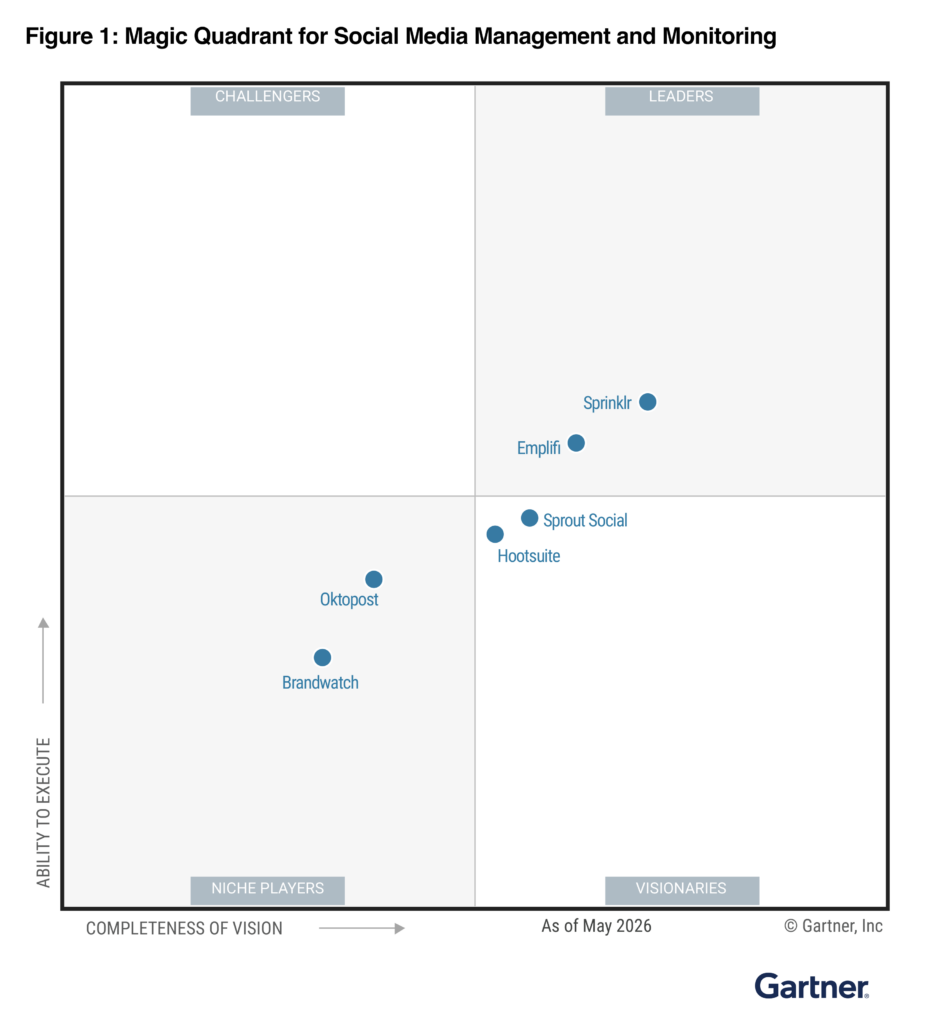
We’re recognized as a market leader in innovation, customer support, and ease of use from these organizations.